


















































A crew short by two laborers can turn a normal workday into a schedule problem fast. Materials sit, skilled tradespeople get pulled into cleanup or moving tasks, and a job that should finish Friday slips into next week. Knowing how to hire laborers quickly is less about rushing the decision and more about removing the delays that do not improve the hire.
The fastest employers are prepared before they need help. They know what work must be done, what skills matter, where the job is located, and who can approve a candidate immediately. That clarity helps qualified workers say yes and helps you avoid bringing in someone who is not ready for the work.
Start With a Job Scope Workers Can Say Yes To
A vague post creates a slow hiring process. "Need general labor ASAP" may bring responses, but it also creates back-and-forth messages about the shift, tasks, pay, tools, and transportation. Every unanswered detail gives a dependable worker a reason to take another job.
Write the job around the actual shift, not a broad job title. State whether the work involves site cleanup, demolition support, material handling, concrete prep, landscaping, moving, warehouse loading, traffic control, or another specific task. Include the jobsite city, start date, start time, expected duration, pay structure, and whether workers need to bring tools or personal protective equipment.
Be direct about physical requirements. If the job requires lifting 50 pounds, working outdoors in heat, climbing stairs, or arriving before sunrise, say so. This is not about narrowing the candidate pool unnecessarily. It is about getting responses from people who can show up ready.
A useful job post answers five questions before a worker has to ask: What am I doing? Where am I going? When do I start? What do I need to bring? How and when will I be paid?
How to Hire Laborers Quickly: Use the Right Hiring Channel
Speed depends on reaching people who are actively looking for field work, not just people who may see an ad days later. Traditional job boards can be useful for long-term roles, but they are often too slow for a next-day crew gap. Word-of-mouth can work well, but it is hard to scale when several workers are needed at once.
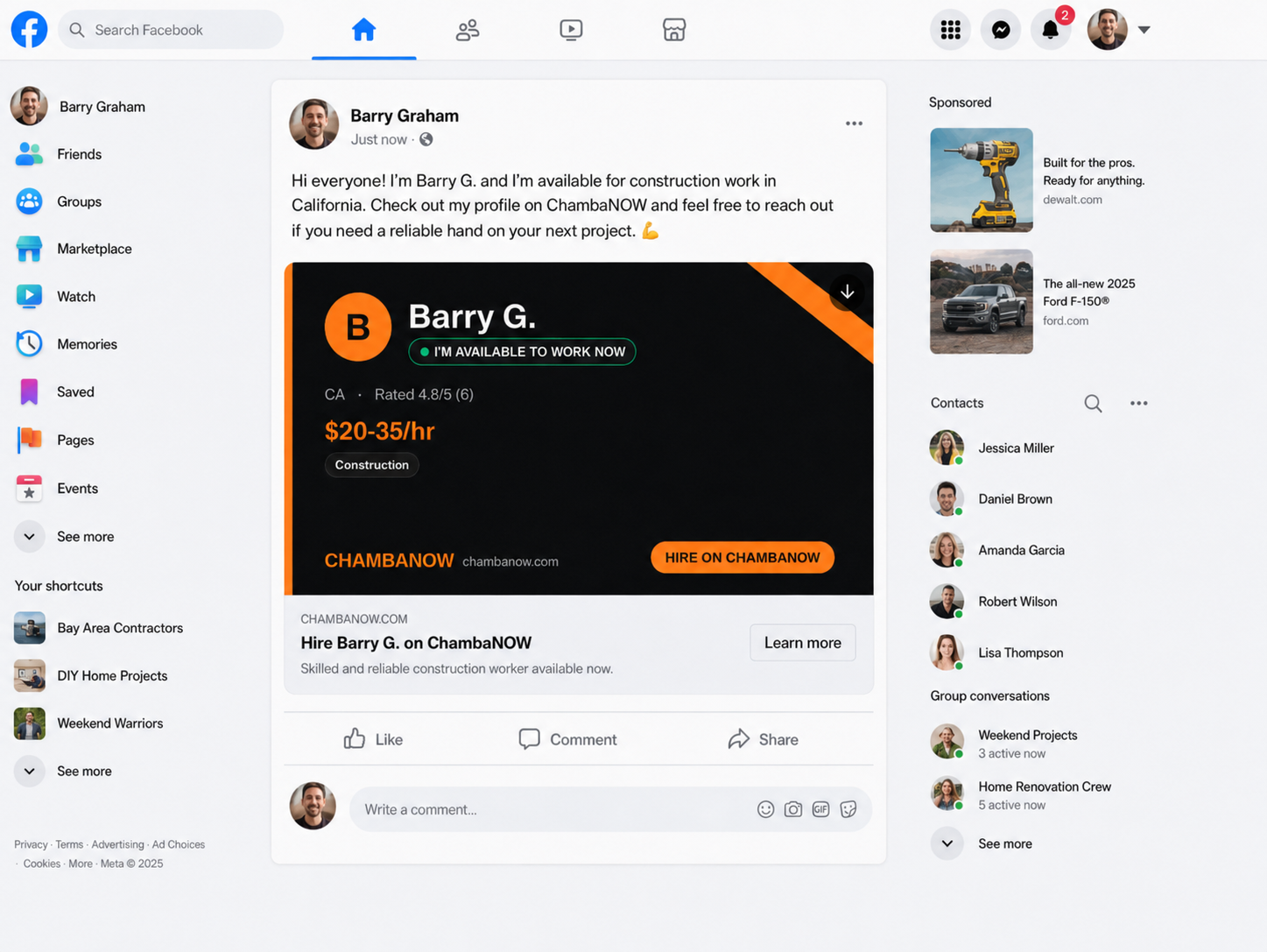
Use a hiring channel built for trade and labor work when urgency is high. A marketplace such as ChambaNow lets employers post jobs and connect with available workers without making a staffing agency the only route to a crew. That matters when you need to make decisions in minutes, not wait through multiple layers of intake and follow-up.
Use more than one source when the job is large, specialized, or in a tight labor market. But keep all candidates moving through the same simple process. If one person receives a call, another gets a text, and a third waits two days for an email, you lose control of the timeline.
Respond While the Worker Is Still Available
Good laborers are rarely available for long, especially during busy construction seasons or after weather delays. The gap between a worker applying and an employer responding is where fast hiring efforts usually fail.
Set a response standard before posting. For urgent jobs, review interested workers within 15 to 30 minutes. Send a clear message or call with the key details, then ask only the questions needed to make a decision. If you need a foreman or project manager to approve the hire, make sure that person is available during the hiring window.
A short screening call can cover a lot:
- Have you done this type of work before?
- Can you be at this location at this exact time?
- Do you have the required tools, PPE, license, or certification?
- Do you have reliable transportation to and from the site?
- Can you complete the full shift or assignment length?
Keep the conversation practical. You are confirming job readiness, not conducting a long corporate interview. A laborer who can describe similar work, confirm the site details, and communicate clearly may be ready to hire that day.
Verify What Matters for the Assignment
Fast does not mean skipping checks that protect your crew, property, and customers. The right level of screening depends on the work. A one-day cleanup assignment requires a different review than work involving equipment, occupied properties, confidential access, driving, or regulated tasks.
Confirm identity and work authorization processes appropriate to your hiring arrangement. Review relevant licenses or certifications for roles that require them, such as forklift operation, flagging, welding, electrical support, or specialized equipment work. Check prior work experience when it is central to safety or quality.
For jobs on active construction sites, verify that the worker understands site rules and has the required PPE. For facilities work, explain access procedures, customer-facing expectations, and any restricted areas before arrival. A five-minute pre-shift confirmation can prevent a no-start situation at the gate.
Do not promise a worker the job and then introduce undisclosed requirements. If there is a background check, drug screening, safety orientation, or document review, explain it early. Transparency helps workers plan and protects your schedule.
Make the First Shift Easy to Start
A confirmed hire is not the same as a worker who arrives ready to work. Many quick hires fail in the last mile: an unclear entrance, no site contact, a missing badge, a changed start time, or a worker who does not know where to park.
Send a written confirmation immediately after hiring. Include the address, parking or gate instructions, site contact name and phone number, start time, pay terms, expected hours, clothing and PPE requirements, and a brief description of the first task. Ask the worker to reply and confirm receipt.
For early starts, confirm again the afternoon before or the evening prior. A simple message such as "Please reply YES to confirm you will be at the north gate at 6:30 a.m." gives you time to fill a cancellation before the day begins.
Assign one person to receive the worker on site. New hires should not spend their first 20 minutes trying to find a supervisor. A quick introduction, safety briefing, and clear first assignment improve both productivity and the odds that the worker returns for the next shift.
Pay Clearly and Pay as Promised
Labor hiring moves on trust. Workers who have had unclear pay terms, delayed checks, or surprise deductions will choose employers who communicate better, even if the hourly rate is similar.
State whether pay is hourly, daily, by project, or based on production. Explain overtime expectations when applicable. Make sure the classification and payment arrangement fit the real working relationship, and follow federal, state, and local wage and employment rules. Misclassifying workers or treating payroll details as an afterthought can create a much bigger problem than an unfilled shift.
For recurring needs, keep records on dependable workers: their trade experience, preferred job types, availability, location, and any site-specific qualifications. You should not have to restart from zero every time a crew member calls out. A small, well-maintained bench of proven workers is one of the fastest staffing tools a contractor can build.
Match Speed to the Risk of the Job
Not every opening should be filled at the same pace. For general cleanup, material movement, or extra hands under close supervision, a focused same-day process may be appropriate. For work involving heavy equipment, high-voltage areas, occupied homes, hazardous materials, or unsupervised access, slow down enough to confirm qualifications and safety fit.
The trade-off is simple: a fast hire saves today’s schedule, but a poor match can cost more in rework, damage, injury, or turnover. Define the nonnegotiables for each role before the emergency arrives. Then your team can move quickly without debating basic requirements under pressure.
If demand changes from job to job, build a repeatable process rather than relying on last-minute calls. Use a standard job-post template, a short screening script, a ready-to-send confirmation message, and a clear approval path. These small systems make urgent hiring feel routine instead of chaotic.
The next time a jobsite needs hands quickly, lead with a specific offer, answer fast, verify the right details, and give the worker a clean start. The laborer who knows exactly what to expect is far more likely to show up ready to keep your project moving.