
Briefing Temporary Helpers on a Contractor’s Jobsite
A clear morning briefing helps a temporary helper start safely and stay useful throughout the day.
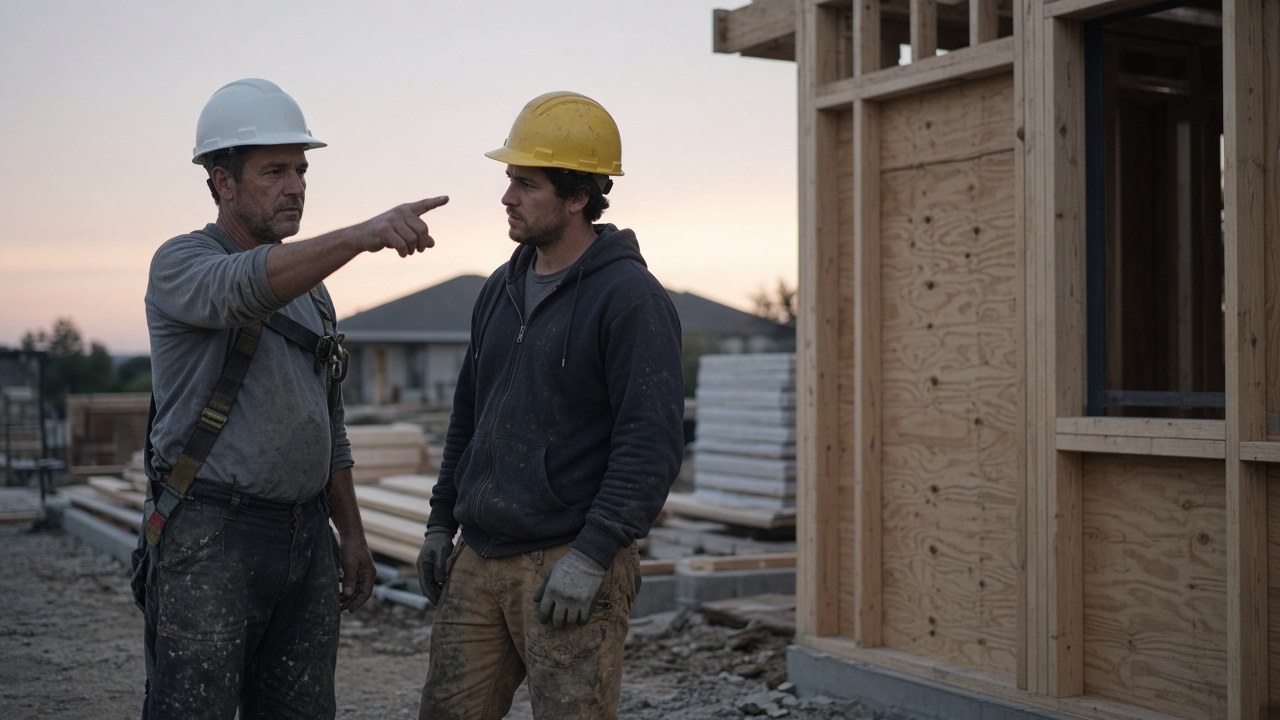
A clear morning briefing helps a temporary helper start safely and stay useful throughout the day.
A contractor can hire a good helper and still lose the morning if the person does not know the task, the tools, or who is in charge. A short briefing at the start of the day fixes that. It is not a formal class and it is not a substitute for filling out a crew. For crew size and hiring, see how contractors can fill out a crew with temporary labor (https://chambanow.com/chambamatters/how-contractors-can-fill-out-a-crew-with-temporary-labor).
Why the first 15 minutes matter
A temporary helper is new to your site even if the work is familiar. OSHA's construction standard requires an employer to instruct each employee in the recognition and avoidance of unsafe conditions, and in the regulations that apply to the work (https://www.osha.gov/laws-regs/regulations/standardnumber/1926/1926.21). That duty is written for employers and employees, but it is also a good habit whenever you bring a new person onto a jobsite.
OSHA's Protecting Temporary Workers page adds that host employers and staffing agencies share safety responsibilities when temporary labor is sent to a site (https://www.osha.gov/temporaryworkers). If you hired the helper directly, you are still the person who knows the hazards of the day.
What to cover in the briefing
Keep it short, in the language the worker understands, and walk while you talk.
- Who the helper reports to, and who can change the plan
- The task for the first hour, and what "done" looks like
- Areas that are off limits, including other trades' work, open holes, and occupied rooms
- Tools the helper may use, and tools they should not use
- PPE you require, and what you will provide. OSHA's construction PPE rule is at 29 CFR 1926.95 (https://www.osha.gov/laws-regs/regulations/standardnumber/1926/1926.95)
- Lifting limits, team lifts, and the location of carts or dollies
- Breaks, water, restrooms, and where to eat
- How to stop work and who to tell if something looks unsafe
- The pay, the expected end time, and what happens if the work runs long
If English and Spanish are both in use on your site, say the safety points in the language the helper actually uses. How to advertise jobs in Spanish (https://chambanow.com/chambamatters/advertise-jobs-in-spanish) is about the job post, but the same idea applies on site.
Tools, materials, and housekeeping
Tell the helper where materials should be staged, where scrap goes, and what has to stay clear for other trades or a forklift path. OSHA's housekeeping rule for construction, 29 CFR 1926.25, requires that debris be cleared and that the site be kept orderly enough to work safely (https://www.osha.gov/laws-regs/regulations/standardnumber/1926/1926.25). A helper who knows the dump pile at 7:30 a.m. will not block a doorway at 11.
Do not hand a helper a tool they have not used until you have watched them use it, or until you have assigned only simple tasks. Confirm skills before the day starts when you can, using how to confirm a worker's skills without a formal resume (https://chambanow.com/chambamatters/how-to-confirm-a-worker-s-skills-without-a-formal-resume).
A briefing that is too long
You do not need a classroom. You need the hazards of this site today, the first task, and a person to ask. Save the rest for the next short check-in after an hour. If the helper is still standing around, the briefing missed the first task or the staging location.
A simple briefing sequence
- Step 1: Meet at a fixed time and place, not "somewhere on the site."
- Step 2: Walk the work area, point out hazards, and name the supervisor.
- Step 3: Hand over PPE and any tools the helper is allowed to use.
- Step 4: Give the first task and the first material location.
- Step 5: Watch the first few minutes, then leave a way to ask questions.
- Step 6: Recheck at the first break and adjust the plan if needed.
For a written version of the work itself, see how to write a clear scope of work (https://chambanow.com/chambamatters/how-to-write-a-clear-scope-of-work-before-a-day-labor-job-starts). For broader site basics, see OSHA basics every temporary labor site should cover (https://chambanow.com/chambamatters/osha-basics-every-temporary-labor-site-should-cover-before-work-starts).
What to pay
A briefing is paid time if the helper is already on the clock, and it should be. Do not ask someone to arrive early for an unpaid "orientation." Use a fair labor or helper rate for the trade and the city. Bureau of Labor Statistics May 2025 national medians include $22.66 an hour for construction laborers and $20.51 for helpers of construction trades, all other. Local rates vary. See how much should you pay a day laborer in 2026 (https://chambanow.com/chambamatters/how-much-should-you-pay-a-day-laborer-in-2026-rates-by-job-type).
A one-page briefing card
You can keep a card or a note in a site folder and walk it in the same order every time.
- Supervisor name and phone
- Today's first task and where materials sit
- Off-limits areas
- Required PPE
- Water, restroom, and break times
- How to stop work if something is unsafe
- End time and pay reminder
The card does not replace the walk. It keeps you from skipping the restroom or the off-limits zone when the morning is busy.
What good looks like after an hour
The helper should be on the first task, in the right PPE, and able to tell you who they report to. If they are still wandering, waiting for tools, or doing work you did not assign, the briefing was incomplete. Reset once, quickly, rather than letting a whole morning drift. A short praise of what is going right also helps a new person stay on that path.
Hiring a helper you can brief on ChambaNOW
ChambaNOW is a bilingual marketplace for contractors who need short-term helpers. Posting a job is free. Put the start time, the trade, and the site conditions in the post, then message workers about that posted job. Start on the hirer page (https://chambanow.com/for-hirers), or browse workers in cities such as Houston (https://chambanow.com/hire/houston-tx) and Dallas (https://chambanow.com/hire/dallas-tx).
Quick answers
How long should a morning briefing take?
Often 10 to 15 minutes, plus a short check after the first task. Longer is fine if the site has serious hazards, but the helper should still have a first task.
Do I have to brief a helper I hired for only one day?
Yes, if they are new to your site. A short walkthrough is part of a safe and useful day.
What if we do not share a language?
Use the language the worker understands, a bilingual lead, or simple demonstrations on site. Do not skip the hazards.
Should the briefing be unpaid because it is not "production work"?
If you asked the person to be there, pay for the time. An unpaid start sets the wrong tone and can create wage problems if the helper is an employee.
Sources
- Occupational Safety and Health Administration, 29 CFR 1926.21, Safety Training and Education (https://www.osha.gov/laws-regs/regulations/standardnumber/1926/1926.21)
- Occupational Safety and Health Administration, 29 CFR 1926.95, Criteria for Personal Protective Equipment (https://www.osha.gov/laws-regs/regulations/standardnumber/1926/1926.95)
- Occupational Safety and Health Administration, 29 CFR 1926.25, Housekeeping (https://www.osha.gov/laws-regs/regulations/standardnumber/1926/1926.25)
- Occupational Safety and Health Administration, Protecting Temporary Workers (https://www.osha.gov/temporaryworkers)
- U.S. Bureau of Labor Statistics, OEWS May 2025, Construction Laborers (47-2061) (https://www.bls.gov/oes/current/oes472061.htm)
- U.S. Bureau of Labor Statistics, OEWS May 2025, Helpers, Construction Trades, All Other (47-3019) (https://www.bls.gov/oes/current/oes473019.htm)
Written by Barry Graham, Founder, ChambaNOW
Construyendo conocimiento que funciona.