
How Do You Get MSHA Training to Work at a Mine?
To work at a mine, you need MSHA-required new miner training, which the mine operator must provide and pay for.
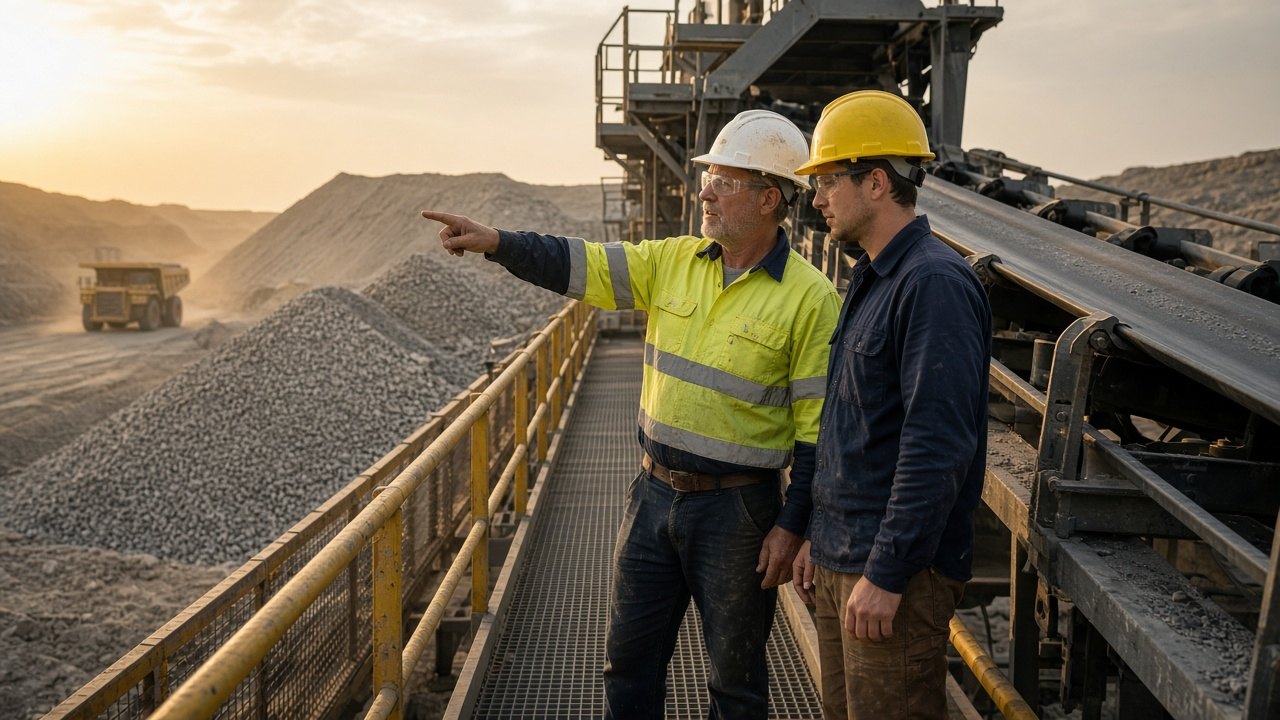
To work at a mine, you need MSHA-required new miner training, which the mine operator must provide and pay for.
Mining jobs include quarries, sand and gravel pits, cement plants, and coal and metal mines. Every one of them falls under the Mine Safety and Health Administration, and federal law requires training before and during your work. Knowing which rules apply helps you understand what to expect when you are hired.
MSHA training is not a general license you buy once. Requirements depend on the type of mine, and the mine operator or contractor is responsible for providing the training and recording it.
Which MSHA training rules apply?
MSHA says training requirements are governed by two parts of federal regulations, 30 CFR Part 46 and Part 48. Federal law requires that all miners receive basic and annual refresher training and that mine operators maintain an effective training plan.
According to MSHA, Part 48 covers all underground mining and surface mining of coal and some metals, like gold. Part 46 covers the aggregate industry, including granite, sand, gravel, lime, and cement operations.
There are other differences. MSHA says Part 48 trainers must be approved by MSHA, while Part 46 trainers do not need MSHA approval but must be competent persons designated by the mine operator. Part 48 training plans must be approved by MSHA.
How much training does a new miner get?
Under Part 46, a new miner must receive at least 24 hours of training. At least 4 hours must happen before the miner begins work, and that training must address site-specific hazards.
Until a new miner finishes the full 24 hours, Part 46 says the miner must work where an experienced miner can observe that the work is being done in a safe and healthful manner.
Part 48 has separate requirements. For underground mines, new miners must receive at least 40 hours of training before being assigned to work duties, with approximately 8 hours given at the minesite. For surface mines and surface areas of underground mines covered by Part 48, new miners must receive at least 24 hours.
What happens every year?
Under Part 46, miners must receive at least 8 hours of annual refresher training. Part 48 also requires a minimum of 8 hours of annual refresher training for underground and surface miners. Ask the mine operator which schedule applies to your job and when your next refresher is due.
You may also receive task training when you are assigned to new equipment or work. Training is not a one-time event in mining.
Who pays for MSHA training?
Part 46 says training must be conducted during normal working hours, and persons required to receive training must be paid at the rate they would have received for their normal work tasks. If training happens somewhere other than the normal place of work, the rule says they must be compensated for additional costs.
Part 48 has similar compensation language, saying training shall be conducted during normal working hours and miners attending shall receive the rate of pay defined in the rule.
That means the employer provides and pays for required training. Be careful with outside programs that charge for a new miner card without a connection to an employer or mine.
What record do you get?
MSHA Form 5000-23 is the standard training record. Under Part 48, the operator records and certifies on Form 5000-23 that the miner received the training, and a copy of the certificate must be given to the miner at completion.
Under Part 46, operators must record and certify the training on Form 5000-23 or a form with the same required information. Keep copies of your training records and bring them to new employers. Part 48 also has rules for experienced miner training, so ask a new operator what records it needs to place you in the right course.
Can you take training before you are hired?
Some training providers advertise new miner courses for people who are not yet hired. Whether those hours count depends on the mine's training plan and the rules that apply. Under Part 48, trainers must be MSHA-approved and plans must be approved by MSHA. Ask the mine operator before paying for anything.
Site-specific hazard training still has to come from the operator at the actual mine. Part 46 requires the first 4 hours before work to address site-specific hazards, so no outside class can cover that part for you.
MSHA also offers resources for training programs and courses, including materials for mine operators and trainers. Its website has a contact for training questions, which can help you understand the rules.
What jobs are available at mines?
Mines employ equipment operators, maintenance workers, truck drivers, plant workers, and laborers. Many of these jobs use skills learned in construction or warehousing, and the operator will explain which roles need extra task training. Experience with heavy equipment, CDLs, welding, or electrical work can be useful.
BLS reported a May 2025 national median annual wage of $59,600 for construction equipment operators, a group that includes many workers who run excavators, loaders, and bulldozers. Mining pay varies by employer, location, and job.
How do you prepare for mine work?
Mine sites are demanding. Expect early shifts, dust, noise, weather exposure, and strict safety rules. Hard hats, safety glasses, hearing protection, high-visibility clothing, and steel-toe boots are common, and the operator will explain site requirements.
Before applying, practice safe habits around moving equipment, ask questions about hazards, and be ready to follow rules even when they slow you down. Those habits matter in new miner training too. Trainers watch whether new miners ask questions, follow instructions, and report hazards instead of working around them.
Workers can find local trade and labor jobs free at https://chambanow.com, including construction jobs in Phoenix at https://chambanow.com/jobs/in/phoenix-az/construction and demolition jobs in Dallas at https://chambanow.com/jobs/in/dallas-tx/demolition that can build equipment and site experience.
For general safety habits, read a beginner's guide to construction site safety at https://chambanow.com/chambamatters/a-beginner-s-guide-to-construction-site-safety and how to speak up about safety on a job site at https://chambanow.com/chambamatters/how-to-speak-up-about-safety-on-a-job-site.
Frequently asked questions
Is MSHA training the same as OSHA 10?
No. MSHA covers mines under the Federal Mine Safety and Health Act. OSHA Outreach cards do not replace MSHA training.
How long is MSHA new miner training?
At least 24 hours under Part 46, and at least 40 hours for underground mines under Part 48.
Do I have to pay for MSHA training?
Required training must happen during normal working hours and be paid at your normal rate under Parts 46 and 48.
Does my training transfer to a new mine?
Records on Form 5000-23 help, but the new operator still provides site-specific training. Ask what they will accept.
Sources
- MSHA, Safety and Training (https://www.msha.gov/training-education)
- eCFR, 30 CFR Part 46, Training and Retraining of Miners (https://www.ecfr.gov/current/title-30/chapter-I/subchapter-H/part-46)
- eCFR, 30 CFR Part 48, Training and Retraining of Miners (https://www.ecfr.gov/current/title-30/chapter-I/subchapter-H/part-48)
- BLS, Construction Equipment Operators, May 2025 (https://www.bls.gov/ooh/construction-and-extraction/construction-equipment-operators.htm)
Written by Barry Graham, Founder, ChambaNOW
Building knowledge that works.