
Where Can Day Laborers Get Free Job Training and Safety Classes?
Day laborers can find free training and safety classes at public job centers and official OSHA programs.
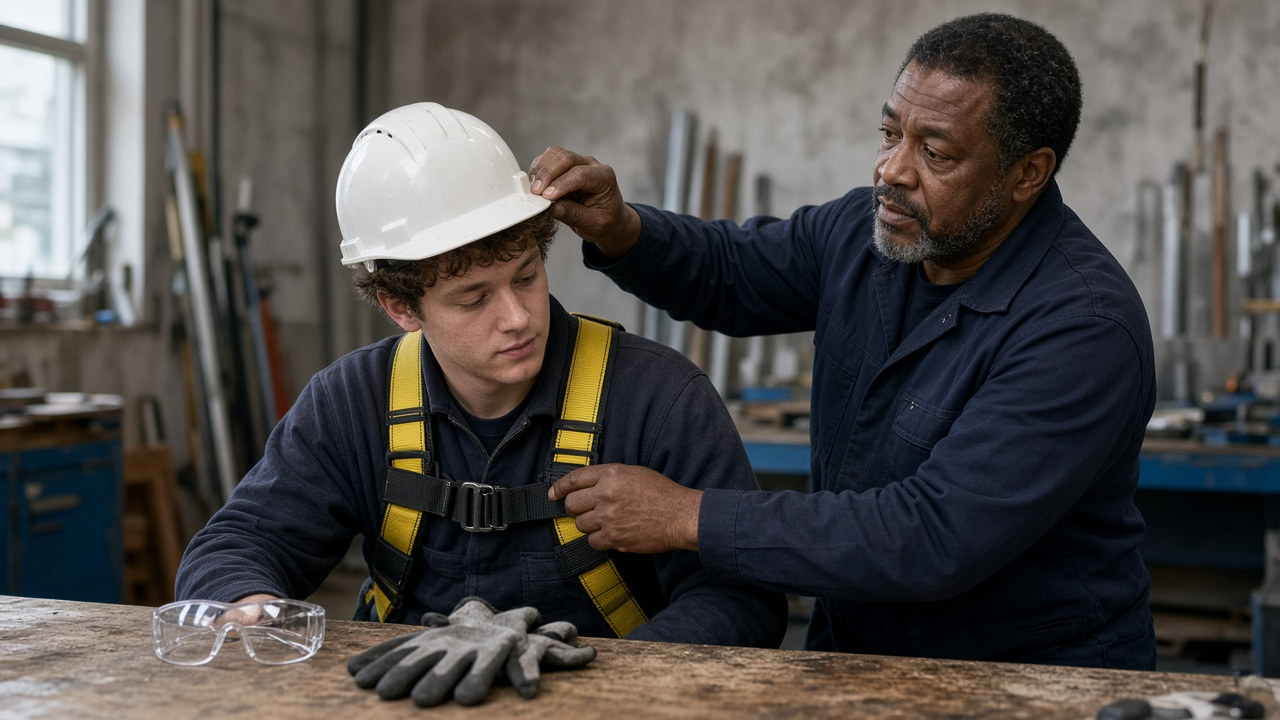
Day laborers can find free training and safety classes at public job centers and official OSHA programs.
You do not have to pay a private school to learn basic job skills or construction safety. The United States has a public system of American Job Centers, workforce programs, and official OSHA training providers. Some classes are free to attend. Some are low-cost. Some can be paid for if you qualify for public training funds. The first step is knowing where to walk in and what to ask for.
This guide covers the main public options, what they can and cannot do for you, and how to use them without wasting a trip.
Start at an American Job Center
American Job Centers are public offices that help with job search, training referrals, and sometimes funding for classes. CareerOneStop, which is sponsored by the U.S. Department of Labor, has a finder for local centers at https://www.careeronestop.org/LocalHelp/AmericanJobCenters/find-american-job-centers.aspx. You can walk in, create a profile, and ask about labor, construction, and safety training near you. Using the center is free.
What you may get there includes these services.
- Help building a simple work history and finding openings
- Referrals to local construction or trade pre-apprenticeship classes
- Information on whether you qualify for training funds, including programs under the public workforce system
- Computer access and workshops on applications and interviews
- Connections to vocational rehabilitation or veterans' services if those apply to you
Bring a photo ID if you have one, and a list of the work you already do, such as moving, landscaping, painting help, or general labor. You do not need a polished resume to start. CareerOneStop also has a training search at https://www.careeronestop.org/FindTraining/find-training.aspx that you can use before you visit.
OSHA 10 and other safety classes
An OSHA 10 card is a common first safety credential for construction laborers. It is not a license, and it does not replace site training, but many crews and sites like to see it. OSHA's Outreach Training Program (https://www.osha.gov/training/outreach) is the official path for OSHA 10 and OSHA 30 classes. Classes are taught by authorized trainers, including OSHA Training Institute Education Centers (https://www.osha.gov/otiec) and other approved providers.
Outreach classes are not automatically free. Some unions, nonprofits, employers, community colleges, and workforce programs sponsor seats or reduce the cost. When you visit a job center, ask whether a funded or low-cost OSHA 10 class is available in your area. See whether an OSHA 10 card is worth it for day laborers (https://chambanow.com/chambamatters/is-an-osha-10-card-worth-it-for-day-laborers) and what certifications help construction laborers get hired faster (https://chambanow.com/chambamatters/what-certifications-help-construction-laborers-get-hired-faster) before you spend a day in class.
Other safety topics worth asking about include first aid and CPR, fall protection awareness, and, if you will work on older homes, lead-safe (RRP) training under the EPA's Renovation, Repair and Painting Program (https://www.epa.gov/lead/lead-renovation-repair-and-painting-program). Forklift training is different. The employer has to certify you on the equipment you will actually use. Our guide on how to get forklift certified (https://chambanow.com/chambamatters/how-to-get-forklift-certified-steps-time-and-what-employers-expect) explains that process.
Apprenticeships and pre-apprenticeships
If you want to move from day labor into a trade, an apprenticeship pays you while you learn. The official finder is at https://www.apprenticeship.gov/apprenticeship-job-finder. Pre-apprenticeship programs, often run by community colleges, trades groups, or nonprofits, can get you ready for that step. Our guide on how to get into a trade apprenticeship from day labor (https://chambanow.com/chambamatters/how-to-get-into-a-trade-apprenticeship-from-day-labor) walks through the path in more detail.
These programs have entry rules, and not every applicant is accepted on the first try. A job center or a current tradesperson can help you understand the local process. Helper work in carpentry, plumbing, electrical, painting, or drywall can support an application if you can show that you already work carefully on sites. See how to become a carpenter helper (https://chambanow.com/chambamatters/how-to-become-a-carpenter-helper) and how to move from general labor into a skilled trade (https://chambanow.com/chambamatters/how-to-move-from-general-labor-into-a-skilled-trade).
How to use these resources well
A free or low-cost class only helps if it matches the work you can actually get.
- Step 1: Write down the jobs you already take and the jobs you want next, such as drywall help, warehouse work, or a plumbing apprenticeship.
- Step 2: Find your nearest American Job Center with the CareerOneStop finder (https://www.careeronestop.org/LocalHelp/AmericanJobCenters/find-american-job-centers.aspx) and ask about funded training and safety classes for that path.
- Step 3: Confirm that any OSHA class is an official Outreach course taught by an authorized trainer, using OSHA's Outreach page (https://www.osha.gov/training/outreach) as the reference.
- Step 4: Keep working while you wait. Training is a supplement, not a reason to stop looking for jobs. On ChambaNOW, which is free for workers at https://chambanow.com/for-workers, you can keep your skills and availability visible while you take a class. Browse general labor jobs in your city, such as Sacramento at https://chambanow.com/jobs/in/sacramento-ca/general_labor, Houston at https://chambanow.com/jobs/in/houston-tx/general_labor, or Los Angeles at https://chambanow.com/jobs/in/los-angeles-ca/general_labor.
- Step 5: Add new credentials to your profile and tell crews. A card in your pocket only helps if the next hirer knows you have it.
Watch out for paid shortcuts
Be careful with ads that promise an instant certificate, a guaranteed job, or a card for a large fee with no class time. Official OSHA Outreach training has a set structure, and job-center staff can help you check a provider. If a posting asks you to pay for a job or to send personal information before there is a real employer, step back and read how to spot fake job postings (https://chambanow.com/chambamatters/how-to-spot-fake-job-postings).
What a first visit can look like
A first visit to an American Job Center is usually an intake, not an instant class. You may meet with a staff member, talk about the work you already do, and leave with a list of programs, dates, and documents to bring back. That can feel slow if you needed a job yesterday, which is why you should keep looking for work on the same week. The center is there to add skills and, when you qualify, to help with the cost of training. It is not a replacement for showing up on a job.
If English is not your first language, ask whether workshops or referrals are available in Spanish. Many centers and some OSHA Outreach classes can accommodate that, and you should not skip a useful program because you were not sure you could follow it.
How to choose among options
Not every class is worth your time this month. An OSHA 10 makes more sense if you are taking construction jobs. Lead-safe training makes more sense if you will sand or disturb paint in older homes. A pre-apprenticeship makes more sense if you already know which trade you want. Ask the staff which option is funded, which has a wait list, and which is actually recognized by local employers. Then put the one that matches your next job at the top of the list.
The short version
Public job centers, official OSHA Outreach classes, and apprenticeship listings are the most reliable places to look for training that will actually be recognized. Some of that help is free, and some is low-cost or funded if you qualify. Start at an American Job Center, confirm that the class is official, and keep working while you learn.
Sources
- CareerOneStop, Find American Job Centers (https://www.careeronestop.org/LocalHelp/AmericanJobCenters/find-american-job-centers.aspx)
- CareerOneStop, Find Training (https://www.careeronestop.org/FindTraining/find-training.aspx)
- OSHA, Outreach Training Program (https://www.osha.gov/training/outreach)
- OSHA, OSHA Training Institute Education Centers (https://www.osha.gov/otiec)
- Apprenticeship.gov, Apprenticeship Job Finder (https://www.apprenticeship.gov/apprenticeship-job-finder)
- U.S. Environmental Protection Agency, Lead Renovation, Repair and Painting Program (https://www.epa.gov/lead/lead-renovation-repair-and-painting-program)
Written by Barry Graham, Founder, ChambaNOW
Construyendo conocimiento que funciona.