
How Can You Get Free or Company-Paid CDL Training?
You may find funded CDL training through employers or workforce programs, but eligibility and repayment terms vary.
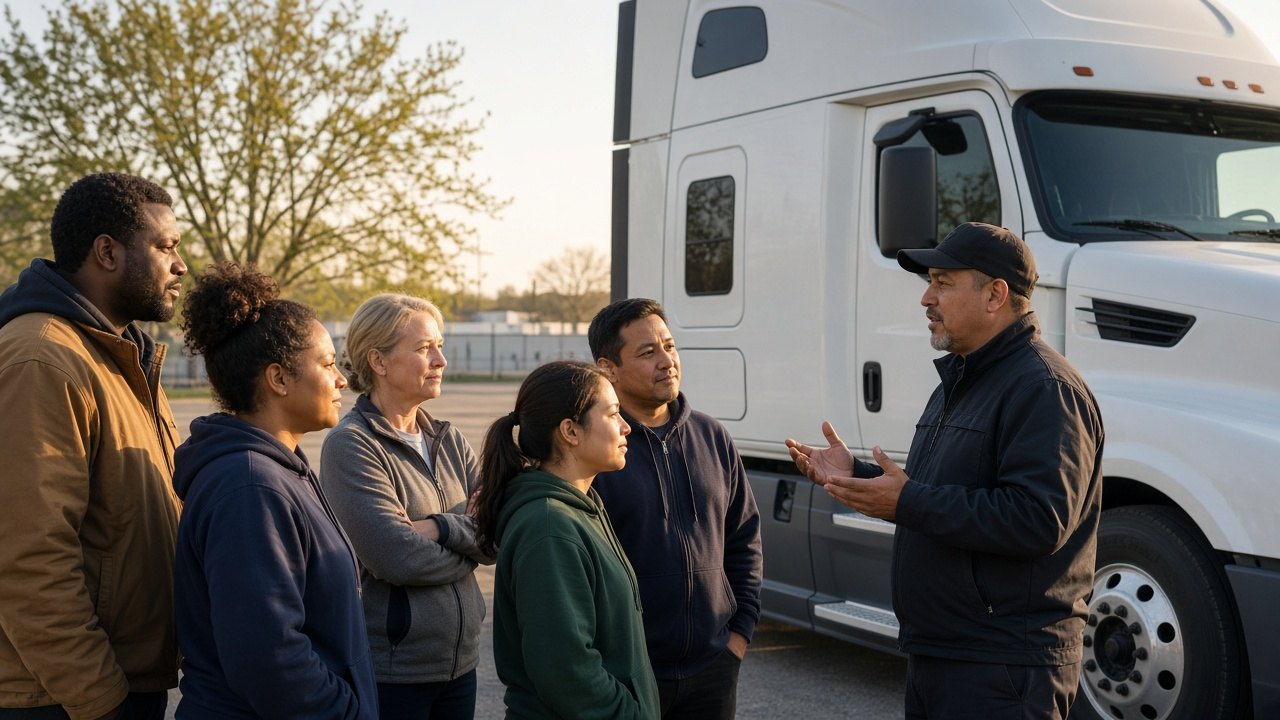
You may find funded CDL training through employers or workforce programs, but eligibility and repayment terms vary.
The phrase free CDL training can describe very different arrangements. One program may use public training funds. Another may pay tuition only if you finish training and remain employed. A third may reimburse an expense after you have already paid it.
Before applying, separate who pays at the beginning, who ultimately owes the money, and what happens if employment does not work out. This guide focuses on comparing those arrangements, not promising that every applicant can attend truck school without cost.
What does employer-paid CDL training mean?
An employer can provide training directly, work with a school, reimburse tuition, or offer a conditional payment arrangement. Those labels alone do not tell you whether there is a debt or a service commitment.
Ask for the actual agreement, not a recruiter's summary. Read when the obligation begins and whether it changes during training, after the license test, or after hiring. If you do not understand a clause, seek independent help before signing.
Write down the practical questions.
- Is tuition paid directly, reimbursed later, or financed in my name?
- Is classroom training paid work, unpaid time, or a separate allowance?
- Who pays for travel, lodging, medical examination, and testing?
- What happens if I fail a test or cannot complete training?
- What happens if the company does not offer employment?
- What would I owe if I leave or am dismissed?
Can WIOA pay for truck driving school?
CareerOneStop explains that Workforce Innovation and Opportunity Act training funds can support eligible people pursuing training in high-demand fields through local providers. The starting point is an American Job Center, which assesses your circumstances and available options.
CDL training is not automatically funded everywhere. Ask whether the exact school and program are currently eligible locally, whether funds are available, and whether you need approval before enrollment. An eligible provider listing and an individual funding award are different things.
Do not pay a deposit expecting reimbursement unless the job center has confirmed the process. Keep the name of the staff member you spoke with, the date, and what they told you, so you can follow up accurately if anything changes before class starts. Ask how tuition authorization works, which fees are included, and whether transportation or other support can be considered. Get your approved terms in writing.
Where should you search first?
Use CareerOneStop's American Job Center finder to locate an office serving your area. Its training finder can help identify colleges and programs, but you still need to check current course availability and the funding rules with staff.
For employer options, search real company career pages and ask how their driver-training pathway works. Transit or school transportation may involve a different vehicle class and endorsements from freight driving. Match the program to the job rather than treating all commercial driving courses as identical.
BLS notes that bus drivers sometimes earn a CDL during on-the-job training. That is a possible route to investigate, not proof that a nearby employer currently has a sponsored seat or that a bus program qualifies you for tractor-trailer work.
How do you check that training meets federal rules?
FMCSA's Training Provider Registry is the official place to verify a provider for required Entry-Level Driver Training. First-time Class A and B applicants generally need ELDT, as do Class B-to-A upgrades and certain first-time endorsements.
Confirm the exact training type offered. A provider may supply theory but not behind-the-wheel instruction. A paid theory course alone does not satisfy the full requirements for a first Class A or B license.
Ask who reports your completion and how you confirm the record before testing. Also verify state requirements, test scheduling, and access to the appropriate vehicle. Employer sponsorship does not waive licensing rules or remove restrictions created by the test vehicle.
Compare time as carefully as tuition
A program can be funded and still be hard to attend. Map the actual class schedule against your existing work, transportation, and household responsibilities. Ask when learners drive, how cancellations are handled, and whether a delayed test creates additional expenses.
Find out whether the advertised duration includes permit preparation, classroom instruction, driving practice, test waiting time, and employer orientation. Do not assume that finishing school means you immediately begin a regular solo route.
BLS describes additional on-the-job training for newly hired truck drivers, often with an experienced mentor. Ask the employer how that period is structured, how compensation works, and what must happen before you are assigned independent work.
What should you compare in job offers?
A company that funds training may still offer work that does not fit your needs. Ask about home time, route location, start times, physical duties, equipment, and the pay calculation. Get the answer specific to the role you are applying for.
BLS reported a May 2025 national median annual wage of $58,640 for heavy and tractor-trailer truck drivers. School bus drivers had a $47,920 median, while transit and intercity bus drivers had a $59,050 median. These are different occupations, not guaranteed graduate earnings.
A headline annual figure is not enough. Ask what new drivers actually do during orientation and mentoring, which duties are paid, and whether work is seasonal or year-round. Do not assume that a higher advertised maximum is a better first job.
Build a funding comparison folder
Keep the provider's written course outline, the complete cost estimate, funding approval, employer agreement, and current contact information together. Save your own copies before signing or paying anything.
Our guide to free job training resources at https://chambanow.com/chambamatters/where-can-day-laborers-get-free-job-training-and-safety-classes provides a broader starting point. This funding comparison is the next step once you are evaluating a particular CDL program.
Workers can find local trade and labor jobs free at https://chambanow.com while checking training options, and can keep earning through general labor jobs in cities such as Houston at https://chambanow.com/jobs/in/houston-tx/general_labor or Dallas at https://chambanow.com/jobs/in/dallas-tx/general_labor. Keep your profile limited to current experience; describe a CDL as in progress until the licensing agency actually issues it.
Frequently asked questions
Does free training mean I cannot owe money later?
No. A conditional employer agreement can include repayment obligations. Read the complete terms and ask for a written explanation of what happens in each exit situation.
Does a school on the FMCSA registry guarantee funding?
No. The registry concerns required driver training. Public funding approval, school eligibility, and your own eligibility are separate checks.
Can I use public funding at any school?
Do not assume that. Ask your American Job Center about the local eligible-program list and whether approval must occur before enrollment.
Should I quit my current job before applying?
Avoid making that decision based only on an advertisement. First confirm admission, funding, the class schedule, any written employment conditions, and the practical gap before income starts.
Sources
- CareerOneStop, Find money for training (https://www.careeronestop.org/FindTraining/Pay/find-money-for-training.aspx)
- CareerOneStop, American Job Center Finder (https://www.careeronestop.org/LocalHelp/AmericanJobCenters/find-american-job-centers.aspx)
- FMCSA, Entry-Level Driver Training (https://www.fmcsa.dot.gov/registration/commercial-drivers-license/entry-level-driver-training-eldt)
- FMCSA, Training Provider Registry (https://tpr.fmcsa.dot.gov/)
- BLS, Heavy and Tractor-Trailer Truck Drivers, May 2025 (https://www.bls.gov/ooh/transportation-and-material-moving/heavy-and-tractor-trailer-truck-drivers.htm)
- BLS, Bus Drivers, May 2025 (https://www.bls.gov/ooh/transportation-and-material-moving/bus-drivers.htm)
Written by Barry Graham, Founder, ChambaNOW
Construyendo conocimiento que funciona.