
How Can You Get Free Trade School Training Through WIOA, Job Corps, or Workforce Pell?
Free or low-cost trade training may come through WIOA, Job Corps, Workforce Pell, or employer programs if you qualify.
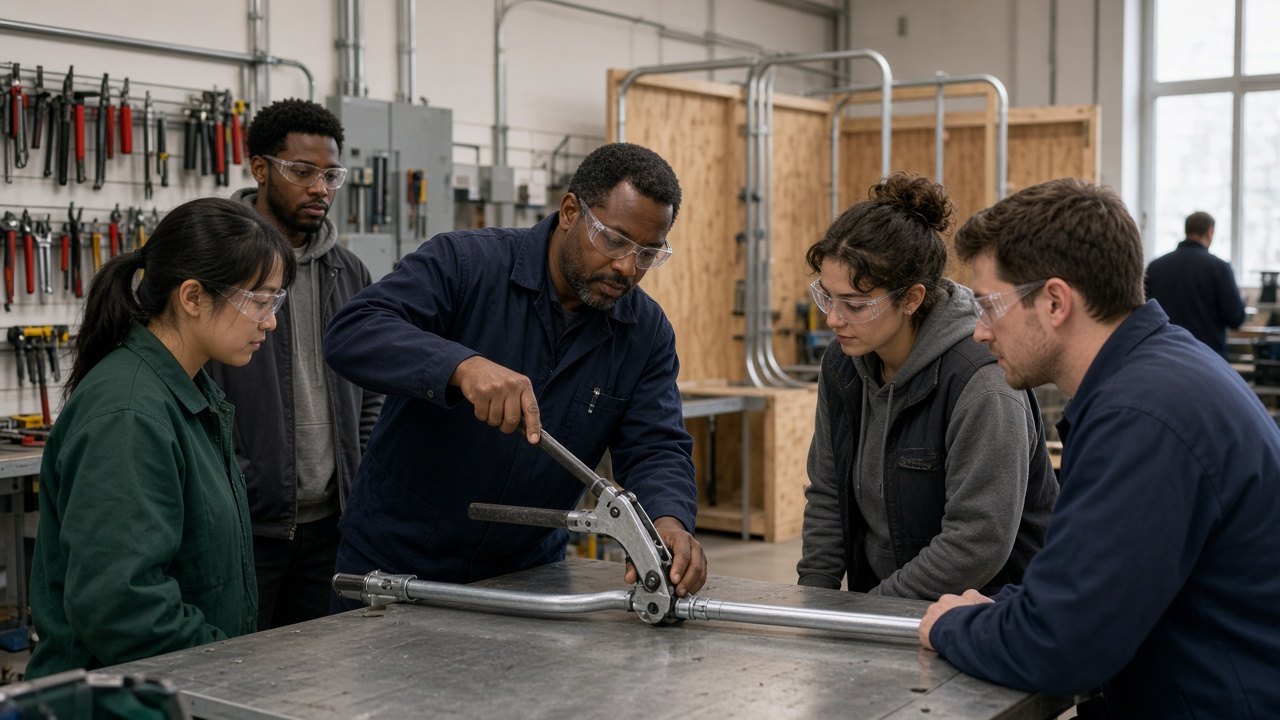
Free or low-cost trade training may come through WIOA, Job Corps, Workforce Pell, or employer programs if you qualify.
Trade school can feel out of reach when you need to keep working. Public programs can help, but each has its own rules. Some pay for training if you qualify, some offer free residential programs for young adults, and some help with short programs through federal student aid.
This guide focuses on how to pay for longer or more formal trade training. For free safety classes and first steps at an American Job Center, see our separate guide to free job training and safety classes for day laborers.
What is WIOA training funding?
CareerOneStop explains that the Workforce Innovation and Opportunity Act program helps people with barriers to employment learn new skills and get job-search help. Training programs are available in many high-demand fields through local colleges and other providers.
To find out whether you qualify, contact your local American Job Center. CareerOneStop lists situations that may be considered, including a layoff, low income, receipt of certain public assistance, being an English language learner, a disability, or having been self-employed and becoming unemployed because of economic conditions or a disaster.
If you are eligible, you can search for programs in CareerOneStop's training finder or your state's list of WIOA-eligible programs. Ask before enrolling whether approval must happen first.
What other funding should you ask about?
CareerOneStop lists other sources besides WIOA. Veterans may qualify for VA education benefits, and CareerOneStop suggests checking that a program is VA-approved and using the GI Bill Comparison Tool to compare schools.
If you receive SNAP food benefits, you may also qualify for a SNAP Employment and Training program that helps people gain career skills. CareerOneStop says to contact your SNAP office to learn more and find out whether you qualify.
What is Job Corps?
Job Corps says it provides career training and education for 16- through 24-year-olds at no cost to students. It is fully funded by the federal government and has more than 120 campuses across the United States and Puerto Rico.
Job Corps students can train for anywhere from eight months to three years, depending on the program and pace. Job Corps says it can also help students earn a high school diploma or equivalent and a driver's license.
Benefits listed by Job Corps include housing, food, health and dental care, a biweekly basic living allowance, and basic uniforms and equipment for training. Job Corps does not currently offer virtual training.
What is Workforce Pell?
Workforce Pell is a newer type of federal Pell Grant for short training programs. Under federal regulations published in May 2026, an eligible workforce program must require at least 8 but less than 15 weeks of instruction and at least 150 but fewer than 600 clock hours, or the credit-hour equivalent.
Programs must be approved by the state governor and the U.S. Department of Education. They must also meet outcome rules, including completion and job placement rates of at least 70 percent and an earnings test compared with tuition and fees.
That means not every short trade course qualifies. Ask the school whether the specific program is approved for Workforce Pell and how to apply for federal student aid.
Can community college help?
Community colleges often offer certificate programs in welding, HVAC, electrical, construction, and other trades. Some programs may qualify for regular federal student aid, Workforce Pell, WIOA, or employer support, depending on program rules.
Use CareerOneStop's training finder to search local programs. Ask each school for the program length, total cost, schedule, required tools, and job placement information. Compare at least two options before committing. Ask how many students finish, how many find work in the field, and which local employers hire graduates. A program that cannot answer those questions clearly deserves a closer look before you sign up.
Check whether the program leads to a recognized credential or counts toward an apprenticeship. BLS notes, for example, that some technical schools give electrical apprenticeship credit, and HVAC certificate programs often include the EPA refrigerant exam.
What about apprenticeships?
A registered apprenticeship can be one of the most practical ways to learn a trade without paying full tuition. Apprenticeship.gov says apprentices get paid work experience, classroom instruction, wage increases, and a nationally recognized credential.
Some workers start with a pre-apprenticeship program. Apprenticeship.gov says these programs may last from a few weeks to a few months and may or may not include wages or a stipend.
Search the Apprenticeship.gov job finder and apply directly with the employer or sponsor. An American Job Center can also help you find apprenticeship opportunities.
How do you compare funding options?
Write down every option before you choose.
- Who pays for tuition, books, tools, and testing?
- Do I need approval before enrolling?
- Will I keep working during training?
- Is there a living allowance or wage?
- What credential will I earn?
- What happens if I leave the program early?
Read every agreement carefully. Some employer-paid programs require repayment if you leave early. Public funding may require you to attend regularly and report progress.
What can trade careers pay?
BLS reported May 2025 national median annual wages of $63,190 for electricians, $63,800 for plumbers, pipefitters, and steamfitters, $61,010 for HVAC mechanics and installers, and $53,750 for welders, cutters, solderers, and brazers.
These are national medians across experience levels. They are not starting wages or guarantees after training. Ask local employers and training programs what new workers in your area usually earn.
How should you keep working while you train?
Many workers need income while they study. Keep your schedule realistic and tell employers which days you are in class. Short labor jobs can fill gaps without forcing you to drop training.
Workers can find local trade and labor jobs free at https://chambanow.com/for-workers, including general labor in San Antonio at https://chambanow.com/jobs/in/san-antonio-tx/general_labor and construction in Chicago at https://chambanow.com/jobs/in/chicago-il/construction.
For related next steps, read how to get into a trade apprenticeship from day labor at https://chambanow.com/chambamatters/how-to-get-into-a-trade-apprenticeship-from-day-labor and where day laborers can get free training and safety classes at https://chambanow.com/chambamatters/where-can-day-laborers-get-free-job-training-and-safety-classes.
Frequently asked questions
Is trade school really free?
Sometimes, if you qualify for a program that covers costs. Free usually depends on eligibility, program approval, and available funds.
Can I use WIOA and Pell together?
Ask your American Job Center and financial aid office. Funding rules and coordination vary.
Who can join Job Corps?
Job Corps serves people ages 16 through 24. It has its own application and eligibility process.
What should I do first?
Visit an American Job Center and contact the financial aid office at a local community college.
Sources
- CareerOneStop, Find money for training (https://www.careeronestop.org/FindTraining/Pay/find-money-for-training.aspx)
- CareerOneStop, Find Training (https://www.careeronestop.org/FindTraining/find-training.aspx)
- CareerOneStop, American Job Center Finder (https://www.careeronestop.org/LocalHelp/AmericanJobCenters/find-american-job-centers.aspx)
- Job Corps, Frequently Asked Questions (https://www.jobcorps.gov/faqs)
- eCFR, 34 CFR Part 690 Subpart H, Workforce Pell (https://www.ecfr.gov/current/title-34/subtitle-B/chapter-VI/part-690/subpart-H)
- Apprenticeship.gov, Career Seekers (https://www.apprenticeship.gov/career-seekers)
- Apprenticeship.gov, What Is Pre-Apprenticeship? (https://www.apprenticeship.gov/help/what-pre-apprenticeship)
- BLS, Occupational Outlook Handbook trade profiles, May 2025 pay (https://www.bls.gov/ooh/construction-and-extraction/electricians.htm)
Written by Barry Graham, Founder, ChambaNOW
Building knowledge that works.