
How Do You Become a Heavy Equipment Operator?
Most heavy equipment operators learn through on-the-job training, an apprenticeship, or a vocational school program.
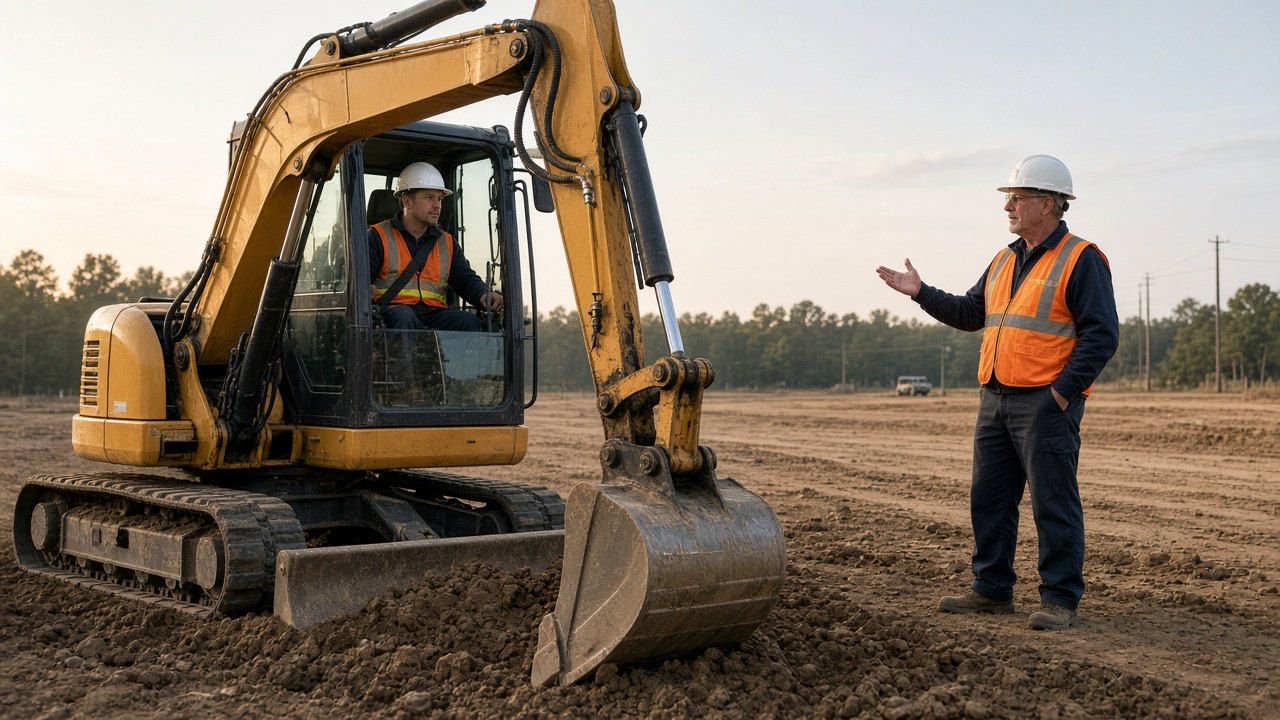
Most heavy equipment operators learn through on-the-job training, an apprenticeship, or a vocational school program.
Heavy equipment work can include excavators, loaders, bulldozers, graders, and other machines used to move earth and materials. It pays attention to precision, maintenance, and safety. It also requires patience, because most operators learn on lighter equipment before running heavier machines.
There is no single national heavy equipment license. Some states have licenses for specific machines, and many jobs require a CDL to move equipment between sites. Check what local employers ask for before spending money on a program.
What do heavy equipment operators do?
BLS describes construction equipment operators as workers who drive, maneuver, or control heavy machinery used to build roads, buildings, and other structures. Duties include operating controls, maintaining equipment, reporting problems, and coordinating with crews through hand or audio signals.
Operating engineers may run excavation and loading machines, bulldozers, trench excavators, road graders, and related equipment. Some also operate pumps, compressors, or industrial trucks with forks or booms.
The work happens in changing site conditions. Weather, soil, traffic, and nearby workers all affect safe operation. That is why employers often watch how new operators handle smaller tasks before trusting them with heavier equipment.
What are the main training paths?
BLS identifies three common routes.
- Learning on the job after a high school diploma or equivalent
- Completing a three- or four-year apprenticeship
- Attending a vocational school or other equipment program
On-the-job training often starts with light equipment, such as a trench roller, under an experienced operator. Workers may move to bulldozers or other heavier machines later. Machines with computerized controls may require more training and some understanding of electronics.
Apprenticeships include technical instruction and paid on-the-job training each year. BLS says apprentices learn operating procedures, safety practices, first aid, grading plans, maintenance, and technology such as GPS devices.
How do you find an apprenticeship?
Use Apprenticeship.gov to search for registered opportunities and apply directly with the employer or sponsor. The International Union of Operating Engineers also lists apprenticeship and training pathways through local unions and training programs.
The IUOE notes that pre-apprenticeship options such as Job Corps and Helmets to Hardhats can help some people build basic skills before applying. Ask any program how it connects to actual apprenticeship openings.
Contact sponsors directly for application dates, eligibility, testing, and selection rules. Keep copies of your diploma, driver's license, work history, and any training cards they request.
Is heavy equipment school worth it?
BLS says vocational training can help when finding a job, and some schools use simulators to help beginners learn before using real machines. Schools may focus on a particular type or brand of equipment.
Ask how much time students spend on actual machines and what equipment they use. Simulator time can be useful, but you should know how much hands-on practice you will get. Ask how the school helps graduates find entry-level work.
Request an itemized cost estimate. Costs vary widely by program length and equipment time. Ask your local American Job Center whether WIOA or other training funds can help if you qualify.
Do you need a CDL?
BLS says operators often need a commercial driver's license to haul equipment to jobsites. State CDL laws vary. Some employers hire operators without a CDL and use separate drivers, while others expect both skills.
Look at local postings. If many jobs mention hauling equipment, a CDL may be worth planning for. If the work stays on one site, an operator apprenticeship or a smaller training step may come first.
A few states have special licenses for operators of backhoes, loaders, and bulldozers. Some states and cities require pile driver operators to have a crane license. Check your state or local licensing board.
What safety training should you expect?
Employers should train you on the specific machine, site hazards, communication signals, inspection, and maintenance tasks you are expected to perform. Ask who will evaluate your skills before you work alone.
OSHA Outreach cards can show basic hazard awareness, but OSHA states they do not meet training requirements under specific standards. They are not machine operator licenses.
Our guide to construction site safety at https://chambanow.com/chambamatters/a-beginner-s-guide-to-construction-site-safety covers hazards new workers face around equipment. Our OSHA 10 guide at https://chambanow.com/chambamatters/is-an-osha-10-card-worth-it-for-day-laborers explains how that card fits in.
What does the job pay?
BLS reported a May 2025 national median annual wage of $59,600 for construction equipment operators. The lowest 10 percent earned less than $41,550, and the highest 10 percent earned more than $100,660.
The median for operating engineers and other construction equipment operators was $59,850, while pile driver operators had a median of $73,300. These are national figures, not starting wages. Pay varies by location, union status, equipment, and experience.
Ask employers how new operators advance, which machines they start on, whether seasonal slowdowns are common, and who trains new hires on each machine. Those details matter as much as the hourly rate.
What should you learn before applying?
Employers notice workers who already understand how a site runs around machines. You can build those habits before you ever sit in a cab.
- Stay out of the swing area and blind spots of operating equipment
- Make eye contact with an operator before approaching a machine
- Learn the hand signals your crew uses
- Watch how operators walk around and inspect equipment before starting
- Ask questions during breaks rather than while a machine is moving
BLS says apprentices learn to read grading plans as part of their technical instruction. Basic math and measurement practice can help you prepare for that part of the work.
How can laborers move toward equipment work?
Many people learn the site first through general construction, concrete, or demolition labor. That experience teaches grade, safety around moving machines, and how crews communicate.
Workers can find local trade and labor jobs free at https://chambanow.com, including demolition jobs in Houston at https://chambanow.com/jobs/in/houston-tx/demolition and concrete jobs in Phoenix at https://chambanow.com/jobs/in/phoenix-az/concrete. Tell crews you are interested in equipment work, but never run a machine without authorization.
Frequently asked questions
How long does it take to become an operator?
It depends on the route. Some workers learn on the job, while BLS says apprenticeships typically last three or four years.
Can I learn on a simulator only?
Simulators can help beginners, but they do not replace supervised practice on real equipment and employer evaluation.
Do I need a high school diploma?
BLS says a high school diploma or equivalent is typically required.
Should I get a CDL first?
Check local job postings. Many equipment jobs need a CDL for hauling, but not every operator role requires it.
Sources
- BLS, Construction Equipment Operators, May 2025 pay and training (https://www.bls.gov/ooh/construction-and-extraction/construction-equipment-operators.htm)
- Apprenticeship.gov, Career Seekers (https://www.apprenticeship.gov/career-seekers)
- IUOE, Training (https://www.iuoe.org/training)
- CareerOneStop, Find money for training (https://www.careeronestop.org/FindTraining/Pay/find-money-for-training.aspx)
- OSHA, Outreach Training Program (https://www.osha.gov/training/outreach)
Written by Barry Graham, Founder, ChambaNOW
Building knowledge that works.