
Is January a Good Time to Hire Movers?
January can be a good time to hire movers, because it is often slower than the summer moving season.
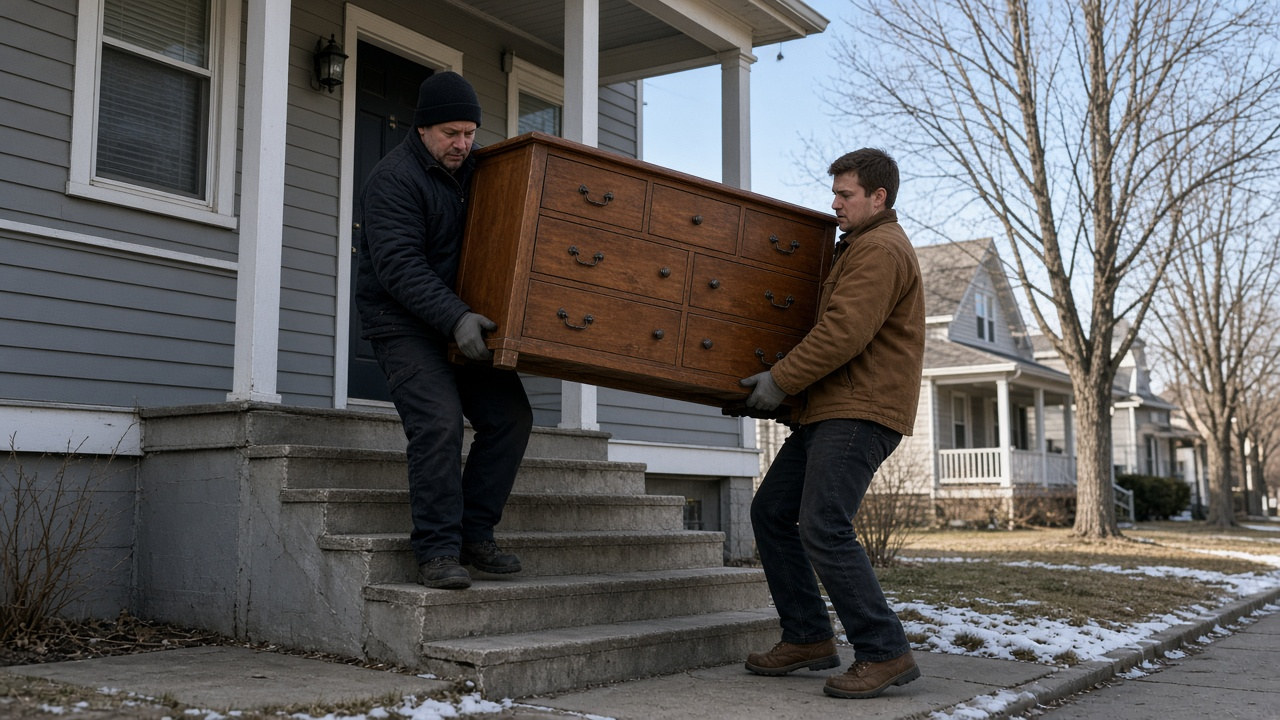
January can be a good time to hire movers, because it is often slower than the summer moving season.
Late spring and summer are the busy months for household moves in much of the United States. Families try to move when school is out, and that demand makes it harder to book crews and trucks. January sits on the other side of that rush. The weather can be worse in cold-weather cities, and some people would rather not move in the dark or on icy steps. If you can be flexible, though, January is often an easier month to find help and to set a date that holds.
This guide covers what is different about a January move, when day labor is enough, how to plan for weather, and how to hire without last-minute surprises.
Why January can work
A January move is not automatically cheaper in every city, and no federal agency publishes an official off-season moving rate. What you can usually count on is more calendar flexibility than you would have in June or July. Crews and helpers are often easier to book, and you may have more choice of days. That matters if you are trying to line up a truck, a building elevator, and the help on the same morning.
January also follows the holidays. Some people move after a lease ends, after a sale closes, or after they have already gotten through family visits. Property managers see a related wave of turnovers at the start of the year, which is why January lease turnovers (https://chambanow.com/chambamatters/january-lease-turnovers-staffing-end-of-year-move-outs-and-move-ins) is a staffing issue in rentals. A household move is a different job, but the same calendar pressure exists around keys and dates.
If you still have holiday boxes or decorations out, pack those before the crew arrives, or add that packing to the scope. Moving before the holidays (https://chambanow.com/chambamatters/moving-before-the-holidays-labor-timing-and-what-to-finish-first) covered the other side of this season.
Day labor or a moving company
Day laborers are a good fit when you have already packed, the path is clear, and the job is a local load or unload, including stairs and heavy items. A moving company is the better fit when you need a truck, a long-distance move, or a crew that will pack and take responsibility for the full shipment. Is it cheaper to hire day laborers than a moving company (https://chambanow.com/chambamatters/is-it-cheaper-to-hire-day-laborers-than-a-moving-company) and a homeowner's guide to hiring help for a one-day move (https://chambanow.com/chambamatters/a-homeowner-s-guide-to-hiring-help-for-a-one-day-move) walk through that choice.
If the move is interstate, household-goods movers are regulated, and you should check the company before you book. The Federal Motor Carrier Safety Administration's Protect Your Move pages (https://www.fmcsa.dot.gov/protect-your-move) are the official consumer starting point. Day laborers you hire for a local load or unload are not a substitute for a registered interstate mover.
Weather, safety, and access
Winter moves fail when no one plans for ice, short days, and building rules.
- Clear or salt the walk and the steps before the crew arrives, or hire that as a first short task
- Confirm elevator reservations, loading-zone hours, and whether the building allows weekend or evening moves
- Protect floors, and have extra blankets or pads if the crew is not bringing them
- Give the crew a place to warm up, and do not expect a full pace on an icy stoop
- Use the lifting habits in how to hire help to move heavy items (https://chambanow.com/chambamatters/how-to-hire-help-to-move-heavy-items-like-appliances-safes-and-hot-tubs) and our back-safety guide (https://chambanow.com/chambamatters/how-to-lift-heavy-objects-safely-a-back-safety-guide-for-laborers)
OSHA's winter weather page (https://www.osha.gov/winter-weather) and cold-stress guidance (https://www.osha.gov/winter-weather/cold-stress) and the National Weather Service's cold safety page (https://www.weather.gov/safety/cold) are useful if the forecast is harsh. If a storm is coming, it is better to move the date than to rush furniture down an ice-covered stair.
What to pay
In Bureau of Labor Statistics May 2025 data, hand laborers and material movers earned a national median of $19.35 an hour. Local moving help often sits at or above that figure, especially with stairs, long carries, or a same-day truck unload. You must at least meet the state and city minimum wage at https://www.dol.gov/agencies/whd/minimum-wage/state. See how much you should pay a day laborer in 2026 (https://chambanow.com/chambamatters/how-much-should-you-pay-a-day-laborer-in-2026-rates-by-job-type) and how much you should tip movers and day laborers (https://chambanow.com/chambamatters/how-much-should-you-tip-movers-and-day-laborers). Agree on the crew size, the hours, and how you will pay before the morning starts.
How to hire in January
- Step 1: Pick a date with a weather backup, and pack before the crew arrives.
- Step 2: Decide whether you need a truck, a company, or local helpers only.
- Step 3: Write the scope, including stairs, heavy items, and whether packing is included. How to write a clear scope of work (https://chambanow.com/chambamatters/how-to-write-a-clear-scope-of-work-before-a-day-labor-job-starts) and how soon you should book day laborers (https://chambanow.com/chambamatters/how-soon-should-you-book-day-laborers-before-a-job-starts) will help you time the post.
- Step 4: Post the job at https://chambanow.com/for-hirers, or from a city hire page such as Chicago at https://chambanow.com/hire/chicago-il, New York at https://chambanow.com/hire/new-york-ny, or Dallas at https://chambanow.com/hire/dallas-tx. Say that it is a January move and mention weather, stairs, and access.
- Step 5: Confirm the morning-of plan if the forecast turns. Weekend, evening, and holiday labor (https://chambanow.com/chambamatters/weekend-evening-and-holiday-labor-what-s-realistic-to-book) is a reminder that not every hour is equally easy to staff.
A realistic example
A local, already-packed two-bedroom move down a flight of stairs on a dry January morning is a strong day-labor job if you have a truck or have rented one. Two or three helpers, a clear path, and a building elevator reservation can finish that move in a day. A January move that still includes packing, an interstate shipment, or a long carry over ice is a different plan. In the second case, a moving company, or a later date, may be the better choice.
If you are moving out of a rental, coordinate the move with the turnover clean and the key time so you are not paying a crew to wait. January lease turnovers already put pressure on those dates, so write them down and share them with everyone involved.
Mistakes to avoid
Do not wait until the night before to mention a piano, a safe, or a mattress that will not fit in the stairwell. Do not leave walks un-salted and then wonder why the crew is slow. Do not hire fewer people than the stairs require in order to save a few hours of pay, because overtime and injuries are more expensive. And do not treat an unlicensed friend-of-a-friend truck as an interstate mover. Check the company if the move crosses state lines, and keep local labor in the local-labor role.
The short version
January is often a more flexible month to hire movers than the summer peak, if you can live with winter weather and shorter days. Decide whether you need a company or local labor, pack first, clear the path, and write a scope that includes stairs, heavy items, and a weather backup.
Sources
- U.S. Bureau of Labor Statistics, OEWS May 2025, Laborers and Freight, Stock, and Material Movers, Hand (53-7062) (https://www.bls.gov/oes/current/oes537062.htm)
- Federal Motor Carrier Safety Administration, Protect Your Move (https://www.fmcsa.dot.gov/protect-your-move)
- OSHA, Winter Weather (https://www.osha.gov/winter-weather)
- OSHA, Cold Stress (https://www.osha.gov/winter-weather/cold-stress)
- National Weather Service, Cold Weather Safety (https://www.weather.gov/safety/cold)
- U.S. Department of Labor, State Minimum Wage Laws (https://www.dol.gov/agencies/whd/minimum-wage/state)
Written by Barry Graham, Founder, ChambaNOW
Construyendo conocimiento que funciona.