
How Do You Get Aerial Lift and Scissor Lift Certified?
Aerial and scissor lift certification comes from employer training and a hands-on skills demonstration on the lift.
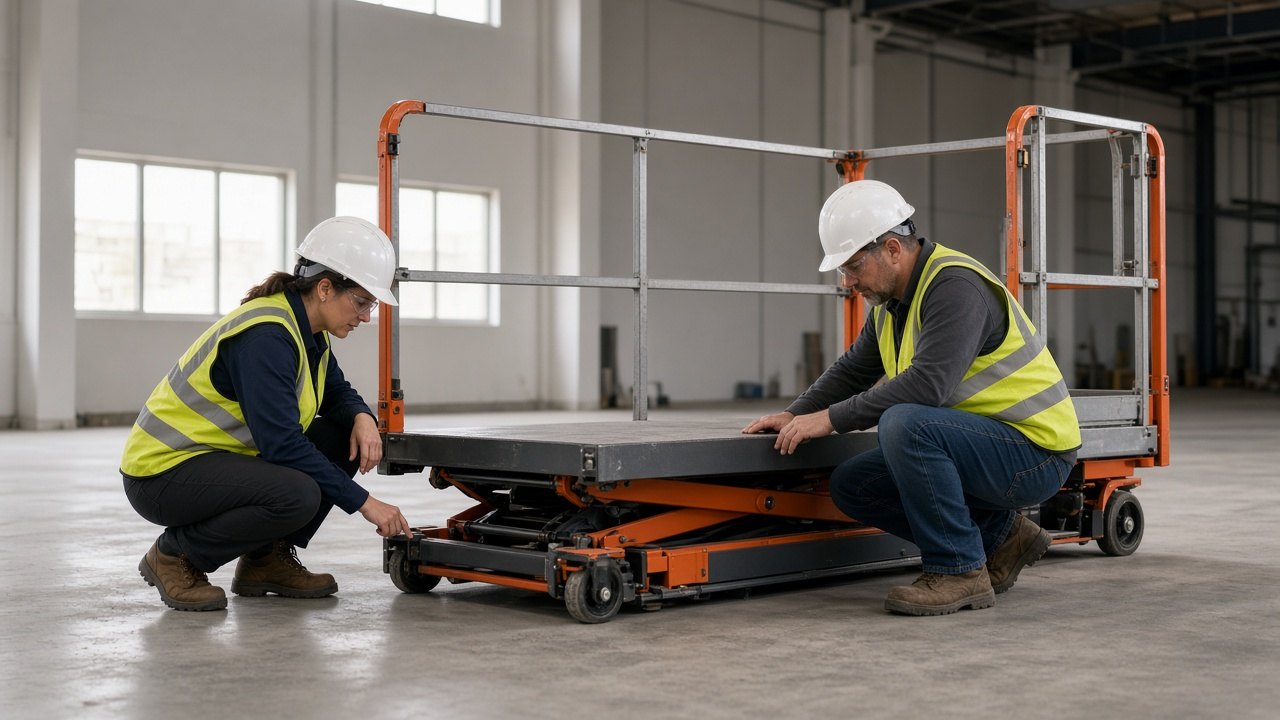
Aerial and scissor lift certification comes from employer training and a hands-on skills demonstration on the lift.
Lift work is common in construction, warehouses, retail, and facility maintenance. Many job ads ask for aerial lift or scissor lift experience. But like forklift training, lift training is tied to the employer, the equipment, and the work site. A card from a class is useful, but it is not the whole story.
This guide explains what OSHA expects, how scissor lifts differ from boom lifts, who pays for training, and what to ask before you climb onto a platform.
What does OSHA say about aerial lifts?
OSHA's aerial lift fact sheet says only trained and authorized persons are allowed to operate an aerial lift. In construction, 29 CFR 1926.453 says only authorized persons shall operate an aerial lift. In general industry, 29 CFR 1910.67 says only trained persons shall operate one.
OSHA describes aerial lifts as vehicle-mounted devices used to elevate personnel, including extendable boom platforms, aerial ladders, articulating boom platforms, vertical towers, or a combination. The fact sheet lists hazards including falls, falling objects, tip-overs, ejections from the platform, collapses, electrocutions, and entanglement.
What should aerial lift training cover?
OSHA's fact sheet lists training topics.
- Electrical, fall, and falling object hazards
- Procedures for dealing with hazards
- Recognizing and avoiding unsafe conditions in the work setting
- Correct operation of the lift, including maximum intended load and load capacity
- Demonstrating the skills and knowledge needed before operating on the job
- When and how to perform inspections
- The manufacturer's requirements
The demonstration matters. A class can explain controls and hazards, but OSHA expects you to show the skills before you operate on the job.
How are scissor lifts different?
OSHA's scissor lift hazard alert says scissor lifts move the work platform straight up and down using crossed beams that work like scissors. It says scissor lifts present hazards similar to scaffolding when extended and stationary.
Under OSHA construction rules, scaffold users must be trained by a person qualified in the subject matter. The scissor lift alert says employers must provide training on hazards, including how to work safely with or near scissor lifts, under 29 CFR 1926.454.
The alert also says only trained workers should be allowed to use scissor lifts, and employers should make sure those workers show they can use a scissor lift properly.
What do scissor lift users need to know?
OSHA's hazard alert focuses on fall protection, stabilization, and positioning. Scissor lifts must have guardrails to prevent falls. Workers should only stand on the work platform, never on the guardrails, and keep work within easy reach.
For stability, employers should follow the manufacturer's instructions, which usually rule out moving the lift in an elevated position. Select firm, level surfaces away from drop-offs, holes, slopes, bumps, and debris.
The alert says scissor lifts rated for outdoor use are generally limited to wind speeds below 28 miles per hour. Check the manufacturer's limits for the specific lift.
What should you check before using a lift?
OSHA's aerial lift fact sheet says to do a pre-start inspection before each work shift. The inspection follows the manufacturer's recommendations and can include fluid levels and leaks, wheels and tires, battery and charger, controls, horn and alarms, brakes, guardrails, and safety devices.
Employers must also inspect the work zone for hazards such as drop-offs, holes, unstable surfaces, overhead power lines, inadequate ceiling heights, and other workers nearby. OSHA says to treat overhead power lines and communication cables as energized and stay at least 10 feet away.
If something is defective, the lift should be removed from service until a qualified person repairs it.
What safe habits does OSHA list while operating?
The aerial lift fact sheet lists practices to follow on the platform.
- Close access gates or openings
- Stand firmly on the floor of the bucket or platform
- Do not climb on or lean over guardrails
- Do not use planks, ladders, or other devices as a working position
- Do not exceed load capacity, counting workers, tools, and materials
- Do not use the lift as a crane
- Do not drive with the platform raised unless the manufacturer allows it
- Do not override safety devices
For boom-type lifts, the fact sheet says to use a body harness or restraining belt with a lanyard attached to the boom or bucket, and not to belt off to adjacent structures or poles.
When is retraining required?
OSHA's aerial lift fact sheet says workers should be retrained if an accident occurs during aerial lift use, if workplace hazards involving the lift are discovered, or if a different type of aerial lift is used. Employers are also required to retrain workers they observe operating a lift improperly.
Scaffold rules add retraining when site changes create new hazards, when equipment types change, or when a worker shows a lack of skill or understanding.
That means a past card does not settle the question at a new job. A new lift model or work site can require more training.
Who pays for lift training?
OSHA's training requirements publication says that under the OSHA law, all required training must be provided by and paid for by employers. OSHA's worker rights guide says workers must receive their normal rate of pay to attend training required by OSHA standards, in a language and vocabulary they understand.
Some workers take an outside course to build confidence before applying. That can help, but ask employers whether they train new hires on their own equipment before you pay for a class.
How do you show lift experience?
On a profile or application, list the type of lift, such as scissor lift or boom lift, the tasks you did from the platform, and who trained you. Do not claim experience on lift types you have not used.
Workers can find local trade and labor jobs free at https://chambanow.com, including electrical jobs in Houston at https://chambanow.com/jobs/in/houston-tx/electrical and painting jobs in Los Angeles at https://chambanow.com/jobs/in/los-angeles-ca/painting where lift work may come up.
For more training ideas, read what certifications help construction laborers get hired faster at https://chambanow.com/chambamatters/what-certifications-help-construction-laborers-get-hired-faster and is an OSHA 10 card worth it at https://chambanow.com/chambamatters/is-an-osha-10-card-worth-it-for-day-laborers.
Frequently asked questions
Is there an OSHA aerial lift license?
No. OSHA requires training and authorization. Cards come from employers or trainers, not OSHA itself.
Can I get aerial lift certified online?
Online classes can cover hazards, but OSHA expects a demonstration of skills before you operate on the job.
Does a scissor lift card cover boom lifts?
Not automatically. OSHA calls for retraining when a different type of aerial lift is used.
Should I wear a harness in a scissor lift?
Scissor lifts rely on guardrails. Follow the manufacturer's instructions and your employer's fall protection rules.
Sources
- OSHA, Aerial Lifts Fact Sheet (https://www.osha.gov/sites/default/files/publications/aerial-lifts-factsheet.pdf)
- OSHA, Working Safely with Scissor Lifts Hazard Alert (https://www.osha.gov/sites/default/files/publications/OSHA3842.pdf)
- eCFR, 29 CFR 1926.453, Aerial lifts (https://www.ecfr.gov/current/title-29/subtitle-B/chapter-XVII/part-1926/subpart-L/section-1926.453)
- eCFR, 29 CFR 1926.454, Training requirements (https://www.ecfr.gov/current/title-29/subtitle-B/chapter-XVII/part-1926/subpart-L/section-1926.454)
- eCFR, 29 CFR 1910.67, Vehicle-mounted elevating and rotating work platforms (https://www.ecfr.gov/current/title-29/subtitle-B/chapter-XVII/part-1910/subpart-F/section-1910.67)
- OSHA, Training Requirements in OSHA Standards (https://www.osha.gov/sites/default/files/publications/OSHA2254.pdf)
- OSHA, Workers' Rights (https://www.osha.gov/sites/default/files/publications/OSHA3021.pdf)
Written by Barry Graham, Founder, ChambaNOW
Construyendo conocimiento que funciona.