
Do I Have to Provide Safety Gear When I Hire Day Laborers?
Employers generally must pay for most required safety gear, and homeowners should still keep the site safe.
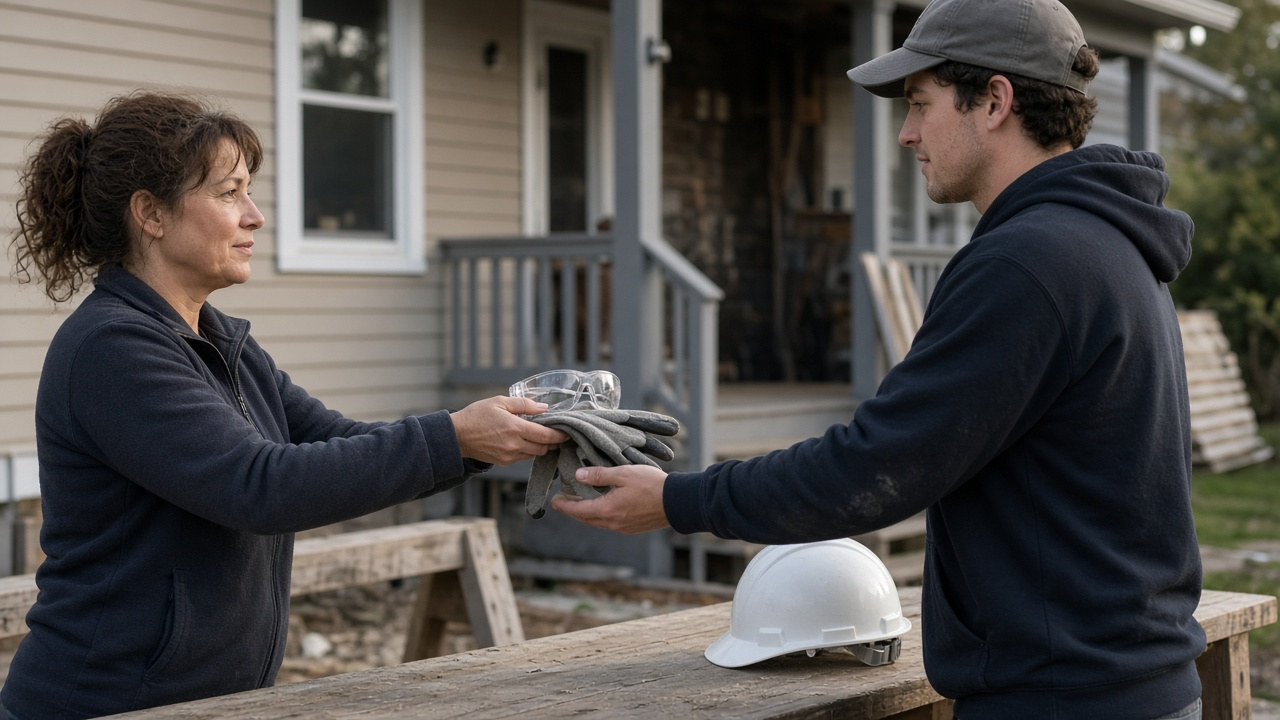
Employers generally must pay for most required safety gear, and homeowners should still keep the site safe.
Safety gear is easy to treat as the worker's problem until someone needs a hard hat, a respirator, or a harness and did not bring one. Under OSHA's construction rules, employers generally must provide and pay for most personal protective equipment that the job requires. A homeowner who hires a person for a day may or may not be an OSHA "employer" in the same way a contractor is, but the safer practice is the same. Do not send someone into a hazardous task without the right gear, and do not assume they will buy it themselves on the way to your house.
This guide covers what the federal rule says, what is often an exception, what homeowners and contractors should provide, and how to write that into the job. What a day laborer should bring, and what the hirer should provide (https://chambanow.com/chambamatters/what-a-day-laborer-should-bring-to-the-job-and-what-the-hirer-should-provide) and OSHA basics for temporary labor sites (https://chambanow.com/chambamatters/osha-basics-every-temporary-labor-site-should-cover-before-work-starts) are the closely related pieces.
What the federal rule says
OSHA's construction standard on personal protective equipment, 29 CFR 1926.95 (https://www.osha.gov/laws-regs/regulations/standardnumber/1926/1926.95), requires that protective equipment be provided, used, and maintained when the job calls for it. The same standard, in the payment section, generally requires the employer to pay for required PPE. OSHA's personal protective equipment page (https://www.osha.gov/personal-protective-equipment) summarizes the policy. The official text is also in the eCFR at https://www.ecfr.gov/current/title-29/subtitle-B/chapter-XVII/part-1926/subpart-E/section-1926.95.
Examples of gear the employer generally pays for, when it is required, include hard hats, safety glasses, gloves that are required for the hazard, hearing protection, respirators, fall-protection harnesses, and specialty boots or guards that are not everyday footwear.
OSHA also has a page on protecting temporary workers (https://www.osha.gov/temporaryworkers). If you are a contractor bringing short-term help onto a site, you should treat those helpers as workers who need the same protection and the same information as the rest of the crew.
What is often an exception
The payment rule has exceptions. OSHA does not generally require the employer to pay for everyday clothing, ordinary weather gear such as a winter coat, or certain non-specialty safety-toe shoes and non-specialty prescription eyewear that the worker can wear off the job. The details are in 1926.95, and they are not a reason to skip required protection. If a task needs a respirator, a harness, or chemical-resistant gloves, that is not ordinary street wear.
Workers can still bring their own boots, glasses, or gloves if they want to, and many do. That does not shift the duty to provide required gear when the employer must provide it, and it does not mean you should accept unsafe substitutions.
What homeowners should do
A homeowner hiring help for a yard, a move, or a room is in a different position than a construction contractor, and this article is general information, not legal advice. Even so, you should still make the site safe and be clear about gear.
- Tell the worker what the job involves before they accept, including dust, height, chemicals, or heavy lifting
- Provide or pay for required gear when the task needs it, such as dust masks or a respirator for a sanding day, gloves for wet concrete or chemicals, and eye protection for cutting or chipping
- Do not ask someone to get on a roof, a tall ladder, or a makeshift platform without a safe setup
- Provide water, a clear path, and a place to wash off wet concrete, paint, or cleaners
- Follow a homeowner's guide to jobsite safety (https://chambanow.com/chambamatters/a-homeowner-s-guide-to-jobsite-safety-when-hiring-temporary-labor)
If the work is really a contractor's job, hire the contractor and let that person staff and equip the helpers. Mixing a low-cost labor hire into a high-hazard task, then hoping the worker brought a harness, is how people get hurt.
How to write gear into the job
A short conversation before the day starts prevents an argument at the curb.
- Step 1: List the hazards, such as dust, height, wet concrete, chemical cleaners, or traffic.
- Step 2: Say which gear you will provide and which personal items, such as work boots and weather clothes, the worker should bring.
- Step 3: Post that information with the job at https://chambanow.com/for-hirers, or from a city hire page such as Los Angeles at https://chambanow.com/hire/los-angeles-ca, Houston at https://chambanow.com/hire/houston-tx, or Chicago at https://chambanow.com/hire/chicago-il. How to write a clear scope of work (https://chambanow.com/chambamatters/how-to-write-a-clear-scope-of-work-before-a-day-labor-job-starts) is the place to put it.
- Step 4: Have the gear on site before work starts, not in a locked truck after the cutting begins.
- Step 5: If the right gear is not there, change the task rather than improvising. How to speak up about safety on a job site (https://chambanow.com/chambamatters/how-to-speak-up-about-safety-on-a-job-site) is written for workers, and you should make it possible for them to do that.
Other related rules can apply to the same day, including silica controls (https://www.osha.gov/silica-crystalline), fall protection (https://www.osha.gov/fall-protection), and hazard communication for chemicals (https://www.osha.gov/hazcom). Gear is only one part of a safe job, but it is the part people often forget to plan for and to mention in the post.
A realistic example
If you hire two people to cut and hang drywall in a bedroom, the dust and the lifting are predictable hazards. You should have eye protection, the dust control the task needs, and a clear rule about who brings a respirator if one is required. If you hire a helper to assist a roofer, the contractor should have the fall system ready, not hanging in a garage at another job. If you hire a cleaner, you should say which products will be used and have gloves available. In each case, the gear is part of the job, not an afterthought at the curb.
Contractors who use short-term help should treat those helpers like the rest of the crew at the morning briefing. Show them the gear, the hazards, and the parts of the site they should not enter.
Mistakes to avoid
Do not tell a worker to "just wear a shirt over your face" for a sanding or cutting task that needs real respiratory protection. Do not send someone up a ladder with no discussion of the landing or the weather. Do not keep required gear in a locked box after the work has started. And do not treat a helper's own boots or glasses as if that settled every duty you may have. When the hazard is real, the gear should already be on site, and the person doing the work should know how to use it.
The short version
If you are the employer, you generally must provide and pay for most required safety gear. If you are a homeowner, you should still keep the site safe and not shift required equipment onto the worker. Write the gear into the job, have it on site, and do not start a hazardous task without it. This is general information, not legal advice.
Sources
- OSHA, 29 CFR 1926.95, Criteria for personal protective equipment (https://www.osha.gov/laws-regs/regulations/standardnumber/1926/1926.95)
- eCFR, 29 CFR 1926.95 (https://www.ecfr.gov/current/title-29/subtitle-B/chapter-XVII/part-1926/subpart-E/section-1926.95)
- OSHA, Personal Protective Equipment (https://www.osha.gov/personal-protective-equipment)
- OSHA, Protecting Temporary Workers (https://www.osha.gov/temporaryworkers)
- OSHA, Respirable Crystalline Silica (https://www.osha.gov/silica-crystalline)
- OSHA, Fall Protection (https://www.osha.gov/fall-protection)
- OSHA, Hazard Communication (https://www.osha.gov/hazcom)
Written by Barry Graham, Founder, ChambaNOW
Building knowledge that works.