
What Is OSHA 30, and Is It Worth It Over OSHA 10?
OSHA 30 is a voluntary safety-training card for supervisors or workers with safety responsibilities, not a license.
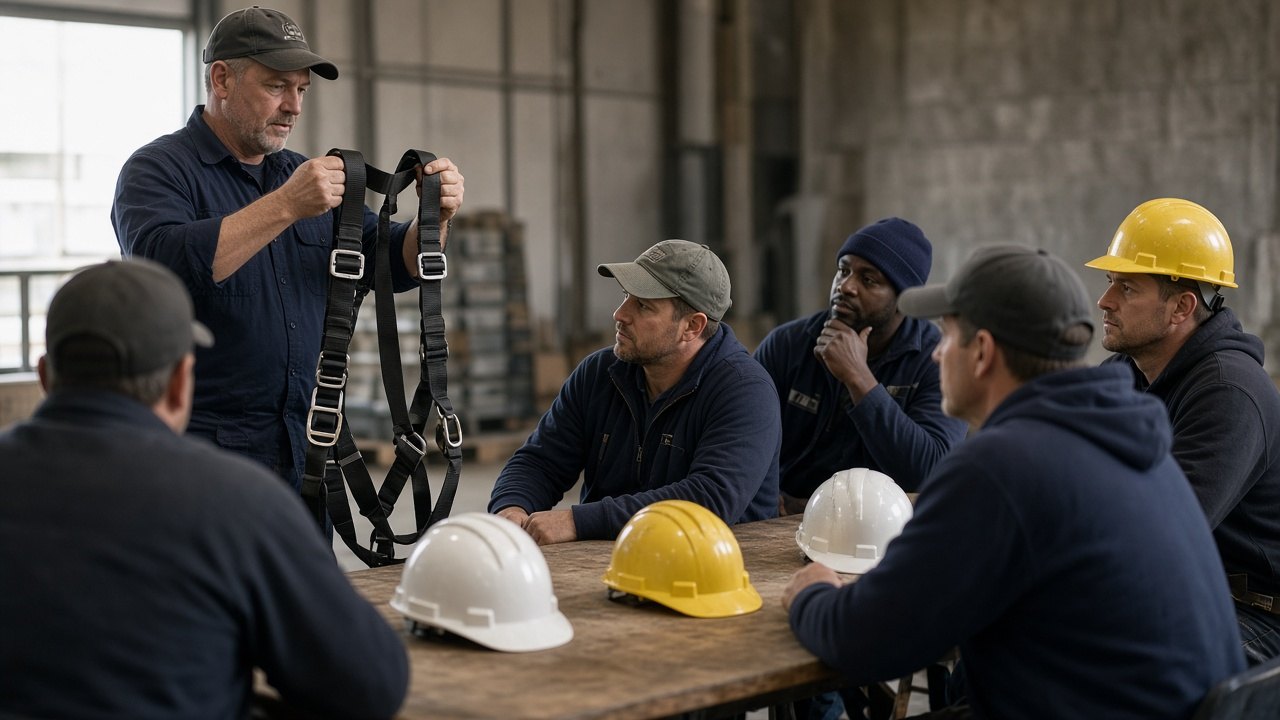
OSHA 30 is a voluntary safety-training card for supervisors or workers with safety responsibilities, not a license.
People often compare OSHA 10 and OSHA 30 as if one is a basic certification and the other is an advanced certification. OSHA does not describe either one that way. Both are course completion cards from the Outreach Training Program.
The better question is whether 30 hours of safety education fits the work you do now or the responsibility you are preparing to take on. This article focuses on OSHA 30, building on our separate guide about whether an OSHA 10 card is worth it.
What is OSHA 30?
OSHA offers 10-hour and 30-hour Outreach classes in construction, general industry, and maritime. According to OSHA, the 10-hour course provides awareness of common job hazards. The 30-hour course is more appropriate for supervisors or workers with some safety responsibility.
The 30-hour course covers a greater depth and variety of hazard topics than the 10-hour class. Authorized trainers deliver it, and students receive a course completion card after successfully completing the class.
OSHA states that an Outreach card is not considered a certification or license. The program is voluntary and does not meet training requirements under specific OSHA standards. Employers still have to provide job-specific training when the rules require it.
Is OSHA 30 required?
OSHA itself does not require Outreach training. OSHA notes that some states, local governments, employers, unions, and other organizations may require it. The organization making the requirement decides what it will accept.
Check the job posting, contract, local rule, or employer policy before enrolling. A project may require OSHA 10 for workers, OSHA 30 for supervisors, or other training entirely. Asking first can keep you from spending time on the wrong course.
Do not treat OSHA 30 as proof that you are authorized to operate forklifts, cranes, aerial lifts, scaffolds, or other equipment. OSHA's own wording is direct: the Outreach program provides basic safety and health information, and it does not fulfill an employer's requirement to provide training under specific standards. Those tasks can require separate employer training, evaluation, or certification.
When is OSHA 30 worth it?
OSHA 30 can make sense when your next step includes helping coordinate a crew, recognizing hazards before work starts, or communicating safety expectations. It can also help if an employer or project specifically requires it.
It may be less useful when you have no current pathway to that responsibility and a different credential would directly match the job you want. A forklift evaluation, CDL step, or trade apprenticeship application might be the stronger next move.
Ask these questions before paying.
- Does the employer or project require construction or general industry training?
- Is OSHA 10 enough for the position?
- Will the employer pay for the course or schedule time for it?
- Does the trainer teach in a language you can follow?
- Will the class address the hazards in your actual work?
How long does OSHA 30 take?
The course name refers to contact hours. OSHA limits Outreach training contact time to 7.5 hours per day, though breaks and lunch can extend the total day. That means a full 30-hour course requires at least four training days under that daily limit.
Online providers may allow you to study over a longer period, but they still must follow program rules. OSHA publishes a list of accepted online Outreach providers. Confirm the provider before enrolling.
Testing is not required by OSHA for Outreach classes, though trainers may choose to give one. Test time does not count toward the required contact hours.
Can you upgrade from OSHA 10 to OSHA 30?
OSHA describes a limited situation where training can combine into a 30-hour card. The same trainer must conduct all of it, the full sequence must finish within six months, and the student must return the 10-hour card.
That rule prevents a person from holding both cards in a way that suggests 40 hours of training. Ask the trainer how they handle your situation before assuming earlier OSHA 10 time will count. If you took OSHA 10 with a different trainer or more than six months ago, plan on a complete 30-hour class.
Do OSHA 30 cards expire?
OSHA states that construction, general industry, maritime, and disaster site student course completion cards do not have an expiration date. Some employers or jurisdictions may still ask for more recent training.
OSHA also reminds workers that Outreach training is an orientation. Workers need additional training on the specific hazards of their job. Keep learning even when the card remains valid. A card earned years ago will not tell a new crew what hazards you understand today, so be ready to describe recent site safety training and any job-specific instruction you received since then.
If you need a replacement, contact the trainer or online provider. OSHA says it does not keep Outreach class records, and replacement cards are not available for classes completed more than five years ago.
How do you avoid fake OSHA cards?
Use authorized trainers or OSHA-accepted online providers. Be cautious with offers that promise a card without real class time. OSHA lists a fraud hotline and an email address for reporting suspected Outreach fraud.
Plastic Outreach cards include a QR code connected to the processing organization. OSHA says it does not run or recognize national card-verification websites.
Course fees vary because authorized trainers and training centers operate independently. OSHA allows OTI Education Centers to charge fees for processing student cards.
How can OSHA 30 support career growth?
An OSHA 30 card can show that you have taken safety learning seriously. It does not make you a supervisor by itself. Pair it with reliable work, clear communication, and job-specific training.
Our guide on how to go from day laborer to crew lead at https://chambanow.com/chambamatters/how-to-go-from-day-laborer-to-crew-lead explains the habits that matter beyond a card. You can also read is an OSHA 10 card worth it for day laborers at https://chambanow.com/chambamatters/is-an-osha-10-card-worth-it-for-day-laborers.
Workers can find local trade and labor jobs free at https://chambanow.com, including construction jobs in Los Angeles at https://chambanow.com/jobs/in/los-angeles-ca/construction. List the card accurately as completed Outreach training.
Frequently asked questions
Is OSHA 30 better than OSHA 10?
It is longer and broader, but not automatically better for every worker. Choose the course that matches the job requirement and your responsibilities.
Can OSHA 30 replace forklift training?
No. Forklift operators need employer training and workplace evaluation under OSHA's powered industrial truck rule.
Can I take OSHA 30 if I am not working right now?
Yes. OSHA says participants do not have to be employed.
Is construction OSHA 30 accepted for general industry work?
Ask the organization requiring the training. Construction and general industry are separate Outreach programs.
Sources
- OSHA, Outreach Training Program (https://www.osha.gov/training/outreach)
- OSHA, Outreach Training Program FAQs (https://www.osha.gov/training/outreach/faq)
- OSHA, Accepted online Outreach providers (https://www.osha.gov/training/outreach/training-providers)
Written by Barry Graham, Founder, ChambaNOW
Building knowledge that works.