
How Do You Find Snow Removal Jobs This Winter?
Snow removal jobs show up every winter, and you can find them if you prepare early and stay ready.
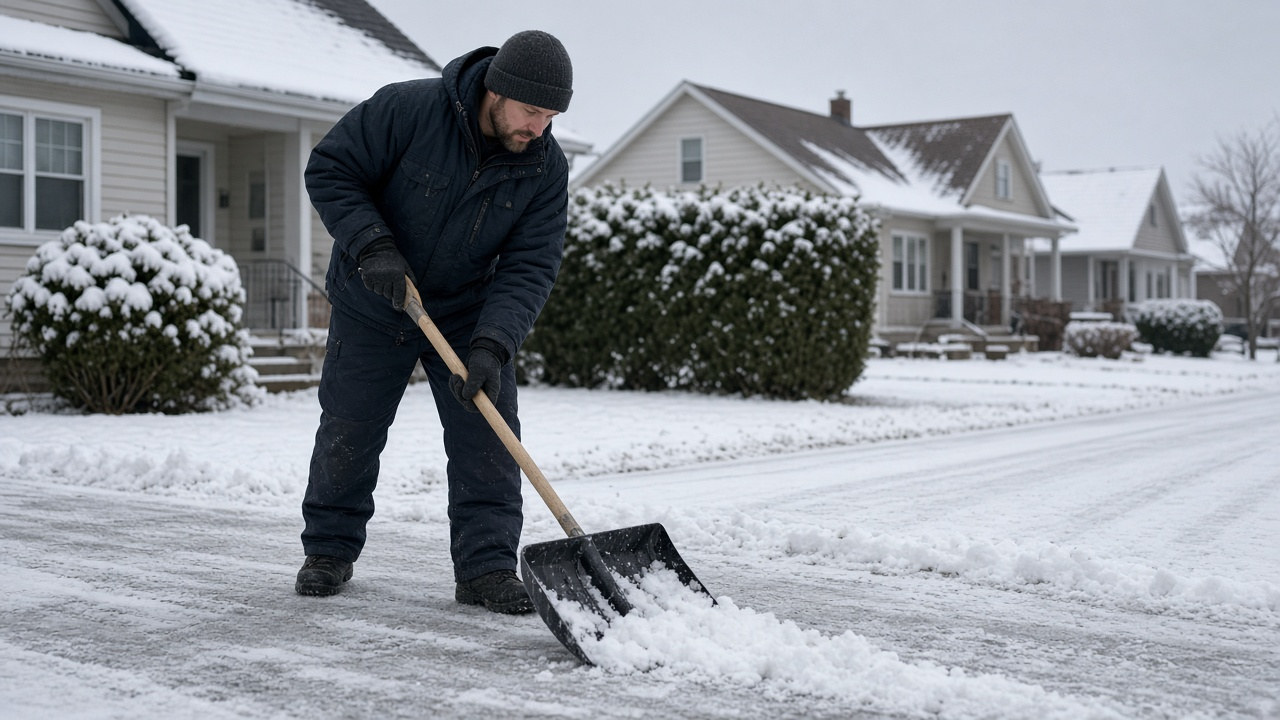
Snow removal jobs show up every winter, and you can find them if you prepare early and stay ready.
When snow or ice hits, property owners, managers, and small contractors need walks, driveways, and entries cleared fast. The work is seasonal, early, and physical, and it often goes to people who already have a shovel, boots, and a way to get there before the rest of the block is moving. You do not need a plow truck to get started, though having access to one can lead to bigger jobs.
This guide covers what snow removal jobs look like, what they tend to pay, how to work safely in the cold, and how to get hired.
What the work involves
Most day-labor snow jobs are on residential or small commercial sites. Typical tasks include these.
- Shoveling driveways, sidewalks, stoops, and ramps
- Clearing hydrants, storm drains, and the end of the driveway where the plow banked snow
- Spreading salt, sand, or ice melt the hirer provides, using the amount they specify
- Pushing a walk-behind snow blower if you have been shown how to start and aim it
- Clearing entries, dumpster pads, and handicap routes for a small building
- A second pass later in the day if more snow is expected
This is not the same job as running a highway plow or clearing a large parking lot with a truck and a contract. Do not claim you can operate a plow, a skid steer, or a tractor unless you actually can.
What this job is not
Do not get on a roof to rake or shovel snow unless you have been trained, the employer has a fall plan, and the conditions are safe. Roof snow work is a different, higher-risk job. OSHA's fall protection rules for construction (https://www.osha.gov/laws-regs/regulations/standardnumber/1926/1926.501) are a reminder that height work needs a system, not just a shovel.
Gas snow blowers and generators must stay outdoors and away from doors, windows, and vents. Carbon monoxide from an engine in a garage is a winter emergency. OSHA's winter weather page (https://www.osha.gov/winter-weather) and its cold-stress guidance (https://www.osha.gov/winter-weather/cold-stress) also cover the strain of working in freezing air. The National Weather Service explains cold-weather hazards at https://www.weather.gov/safety/cold.
If you feel numbness, confusion, or uncontrolled shivering, get inside and get help. Our cold-weather safety guide for outdoor workers (https://chambanow.com/chambamatters/cold-weather-safety-for-outdoor-workers-layers-breaks-and-warning-signs) and our lifting guide (https://chambanow.com/chambamatters/how-to-lift-heavy-objects-safely-a-back-safety-guide-for-laborers) are worth reading before the first storm. Wet, heavy snow is a back injury waiting to happen if you twist and throw.
What the work pays
There is no official "snow shoveling" wage. Closest Bureau of Labor Statistics May 2025 national medians are $18.82 an hour for landscaping and groundskeeping workers, $19.35 for hand laborers and material movers, and $22.66 for construction laborers when the work is heavier site clearing. Storm days, early call times, and ice often pay more than a regular yard day because the work is urgent and hard.
Local minimum wages are often higher than the federal $7.25. Check your state and city floor on the U.S. Department of Labor's state minimum wage page (https://www.dol.gov/agencies/whd/minimum-wage/state). Confirm whether you are being paid by the hour, by the driveway, or by the visit, and whether a second pass is included. If you bring a blower or a truck, say how that will be paid before you start.
How to get hired
The best time to line up snow work is before the first forecast, not at 5 a.m. on the morning of the storm. Property managers and homeowners look for people they can text when the sky turns.
- Step 1: Get your kit ready now. Waterproof boots, layered clothes, gloves you can spare, a hat, and a shovel you can use if the hirer does not provide one. See what you should wear (https://chambanow.com/chambamatters/what-should-you-wear-to-a-construction-or-labor-job).
- Step 2: Decide your range. A job two blocks away is more realistic at dawn than a long drive on unplowed roads. Be honest about whether you have a car and where you can start.
- Step 3: Put your name where hirers already look. On ChambaNOW, which is free for workers at https://chambanow.com/for-workers, list snow removal or winter yard work in your skills and keep your availability on during storm weeks. Landscaping and general labor boards are also where these jobs appear, such as Chicago general labor at https://chambanow.com/jobs/in/chicago-il/general_labor, New York landscaping at https://chambanow.com/jobs/in/new-york-ny/landscaping, or Dallas general labor at https://chambanow.com/jobs/in/dallas-tx/general_labor.
- Step 4: Answer fast when the forecast lands. Same-day work goes to the people who respond. How can I find same-day work near me (https://chambanow.com/chambamatters/find-same-day-work-near-me) has a method you can reuse on storm days.
- Step 5: Ask to be on the list for the next snowfall. A clean first job is how you get the rest of the winter. See how to get rehired after a one-day labor job (https://chambanow.com/chambamatters/how-to-get-rehired-after-a-one-day-labor-job).
If your city rarely gets snow, this work will be occasional. You can still combine it with winter landscaping, indoor painting, drywall, and cleaning so the season is not a gap.
A typical storm morning
A typical storm morning starts before most people want to be outside. You confirm the addresses, check that your boots and gloves are dry, and start with the walks, the steps, and the end of the driveway where a plow has left a bank. You clear hydrants and drains if they are in the scope, spread the ice melt the hirer provided, and leave a path that is actually usable, not a narrow slot that will ice over again. If more snow is coming, ask whether a second pass is part of the same job.
Do not leave piles where they will block a sidewalk, a neighbor's driveway, or a drain. That is one of the fastest ways not to be called back. If you use a blower, keep it pointed away from people, cars, and windows, and never run it in a garage.
Building a winter list
The money in snow work is often the list, not a single driveway. After a clean first job, ask the hirer if they want you for the rest of the winter, and whether they know a neighbor who needs the same help. Property managers with more than one building are especially worth staying in touch with. Keep your hours and addresses written down so you can invoice or confirm the work if a long storm week gets confusing.
The short version
Snow removal jobs are seasonal, early, and local. Prepare your gear before the first storm, be clear about what you can clear, and work in a way that protects your back and your lungs. The people who hire you once will hire you for the next freeze if you show up and finish the walks.
Sources
- U.S. Bureau of Labor Statistics, OEWS May 2025, Landscaping and Groundskeeping Workers (37-3011) (https://www.bls.gov/oes/current/oes373011.htm)
- U.S. Bureau of Labor Statistics, OEWS May 2025, Laborers and Freight, Stock, and Material Movers, Hand (53-7062) (https://www.bls.gov/oes/current/oes537062.htm)
- U.S. Bureau of Labor Statistics, OEWS May 2025, Construction Laborers (47-2061) (https://www.bls.gov/oes/current/oes472061.htm)
- National Weather Service, Cold Weather Safety (https://www.weather.gov/safety/cold)
- OSHA, Cold Stress (https://www.osha.gov/winter-weather/cold-stress)
- OSHA, Winter Weather (https://www.osha.gov/winter-weather)
- OSHA, 29 CFR 1926.501, Duty to have fall protection (https://www.osha.gov/laws-regs/regulations/standardnumber/1926/1926.501)
- U.S. Department of Labor, State Minimum Wage Laws (https://www.dol.gov/agencies/whd/minimum-wage/state)
Written by Barry Graham, Founder, ChambaNOW
Construyendo conocimiento que funciona.