
How Do You Get Landscaping Work in the Winter?
Winter landscaping work is real, from pruning and cleanup to snow help, if you know where to look.
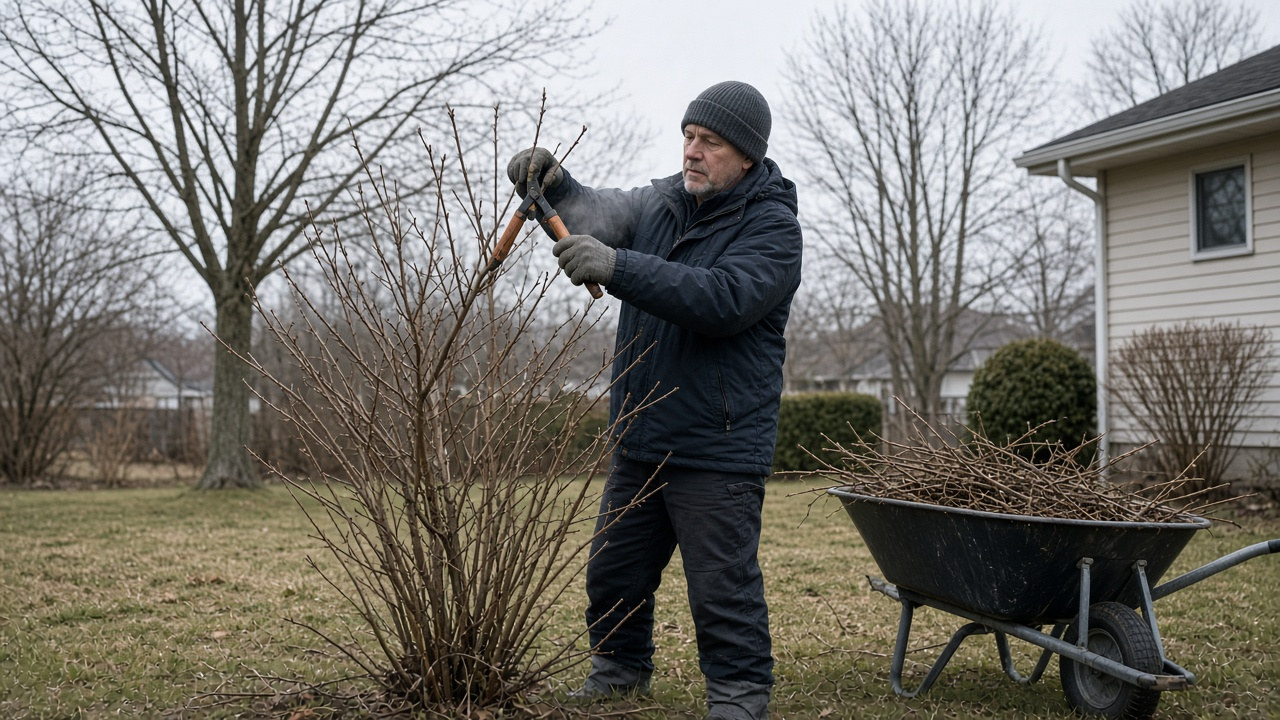
Winter landscaping work is real, from pruning and cleanup to snow help, if you know where to look.
Yard work does not stop when the growing season ends. In cold climates, properties still need leaves cleared, trees pruned while they are dormant, storm debris hauled, and driveways kept passable. In milder climates, winter is often a planting and prune season. The mix changes by city, but the work is there if you look in the right places.
This guide covers what winter landscaping jobs look like, what they tend to pay, how to work safely in the cold, and how to get hired.
What winter landscaping work looks like
The tasks shift with the climate, but they are still landscaping and grounds work.
- Late-fall and winter leaf and bed cleanup, including getting leaves out of drains and away from foundations
- Dormant pruning of shrubs and small trees, only if you have been shown what to cut
- Spreading mulch, cutting back perennials, and wrapping or covering plants the hirer wants protected
- Hauling storm-fallen limbs and yard debris to the curb or a dump run
- Installing or taking down simple seasonal lighting at ground level or from a stable setup, not from an unsafe ladder
- Snow shoveling, de-icing walks, and clearing storm drains when the weather turns
- In mild-winter cities, planting, irrigation checks, and regular mowing that never fully stops
Snow work can be its own job. If that is the main work you want, treat it that way and look at winter safety before you take a long day with a shovel. Our hirer-facing guide on how to hire snow shoveling and snow removal help (https://chambanow.com/chambamatters/how-to-hire-snow-shoveling-and-snow-removal-help) shows what property owners are usually trying to get done.
What this job is not
Winter landscaping is not a license to run a chainsaw, climb a tree, or treat irrigation as a guessing job. Tree work above a short reach, pesticide applications, and licensed irrigation repairs belong to people trained for them. Do not cut a large limb over a roof or a power line.
Cold, ice, and wet leaves also change the risk. The National Weather Service's cold safety page (https://www.weather.gov/safety/cold) and OSHA's cold-stress guidance (https://www.osha.gov/winter-weather/cold-stress) explain frostbite and hypothermia warning signs. Dress in layers, keep gloves and socks dry, and take warm breaks. Our cold-weather safety guide for outdoor workers (https://chambanow.com/chambamatters/cold-weather-safety-for-outdoor-workers-layers-breaks-and-warning-signs) covers that in more detail.
If you use a gas snow blower or a generator, keep it outdoors and away from doors and vents. Carbon monoxide from engines in closed spaces is a regular winter hazard.
What the work pays
In Bureau of Labor Statistics May 2025 data, landscaping and groundskeeping workers earned a national median of $18.82 an hour, and the broader grounds maintenance group earned $19.27. Construction laborers, a closer match when the day is storm debris or heavy haul-off, earned $22.66. Local rates vary, especially when the work includes snow, and your pay must at least meet the state and city minimum on the U.S. Department of Labor's state minimum wage page (https://www.dol.gov/agencies/whd/minimum-wage/state).
Short, cold, early-morning snow jobs often justify a higher day rate than a mild-season mowing day, because the hours can start before dawn and the work is hard. Confirm the rate, the expected end time, and whether the hirer supplies salt, shovels, or a truck.
How to get hired in the off season
The crews that need winter help are often the same landscapers, property managers, and homeowners you would work for in April, plus building staff who need walks cleared after a storm.
- Step 1: Say what winter work you can do. Pruning, cleanup, mulch, hauling, and snow are different pitches. Do not claim chainsaw or climber skills you do not have.
- Step 2: Get your cold-weather kit ready. Waterproof boots, layered clothes, gloves, a hat, and a way to stay dry will get you through a day. See what you should wear to a construction or labor job (https://chambanow.com/chambamatters/what-should-you-wear-to-a-construction-or-labor-job).
- Step 3: List landscaping, and snow help if you offer it, where hirers already look. On ChambaNOW, which is free for workers at https://chambanow.com/for-workers, keep your availability on. Browse landscaping jobs by city, such as Chicago at https://chambanow.com/jobs/in/chicago-il/landscaping, New York at https://chambanow.com/jobs/in/new-york-ny/landscaping, Dallas at https://chambanow.com/jobs/in/dallas-tx/landscaping, or Phoenix at https://chambanow.com/jobs/in/phoenix-az/landscaping.
- Step 4: Watch the weather and answer fast. A freeze or a windstorm creates work for a day or two. Same-day jobs go to people who can start in the morning. How can I find same-day work near me (https://chambanow.com/chambamatters/find-same-day-work-near-me) has a broader search method you can use in any season.
- Step 5: Ask to be on the callback list for the next storm or the spring cleanup. How to get rehired after a one-day labor job (https://chambanow.com/chambamatters/how-to-get-rehired-after-a-one-day-labor-job) and how to get more hours as a day laborer (https://chambanow.com/chambamatters/how-to-get-more-hours-as-a-day-laborer) apply here.
If outdoor work in your city really does pause, look at indoor jobs in painting, drywall, cleaning, and remodel help until the ground thaws. Odd jobs near you (https://chambanow.com/chambamatters/odd-jobs-near-me-15-ways-to-earn-extra-money-this-week) can also fill a slow week.
A typical winter week
In a cold-weather city, a winter week might include a Monday cleanup of leaves that have come out from under the snow, a midweek prune at a property you already know, and a Friday morning snow visit after a storm. In a mild-winter city such as Phoenix, the same week might be planting, irrigation walk-throughs, and regular mowing that never fully stopped. The common thread is that the properties still need care, and the people who already know the yard get the call first.
Keep a simple log of the addresses you have worked, what you did, and who hired you. When the next cold snap or windstorm hits, you can text the same people instead of starting from zero. That habit is as useful in landscaping as it is in any other day-labor trade.
Questions worth asking
Ask whether the job includes snow, pruning, or only cleanup, and who provides the tools. Ask where debris should go, and whether a truck is part of the hire. If pruning is included, ask what can be cut and what must be left. If the forecast is a hard freeze, ask whether the start time will move, and how that changes the pay. Clear answers will also tell you whether the hirer has done this work before.
The short version
Winter landscaping is cleanup, dormant pruning, storm work, and, in some cities, snow. It pays in the same range as other grounds work, and sometimes more when the weather is rough. Get your gear ready, be honest about your skills, and stay lined up with the properties that will need you again in March.
Sources
- U.S. Bureau of Labor Statistics, OEWS May 2025, Landscaping and Groundskeeping Workers (37-3011) (https://www.bls.gov/oes/current/oes373011.htm)
- U.S. Bureau of Labor Statistics, Occupational Outlook Handbook, Grounds Maintenance Workers (May 2025 data) (https://www.bls.gov/ooh/building-and-grounds-cleaning/grounds-maintenance-workers.htm)
- U.S. Bureau of Labor Statistics, OEWS May 2025, Construction Laborers (47-2061) (https://www.bls.gov/oes/current/oes472061.htm)
- National Weather Service, Cold Weather Safety (https://www.weather.gov/safety/cold)
- OSHA, Cold Stress (https://www.osha.gov/winter-weather/cold-stress)
- OSHA, Winter Weather (https://www.osha.gov/winter-weather)
- U.S. Department of Labor, State Minimum Wage Laws (https://www.dol.gov/agencies/whd/minimum-wage/state)
Written by Barry Graham, Founder, ChambaNOW
Construyendo conocimiento que funciona.