
What Is an HGV Licence, and How Is It Different From a CDL?
An HGV licence is the UK route for driving lorries, while a CDL is the US commercial license system.
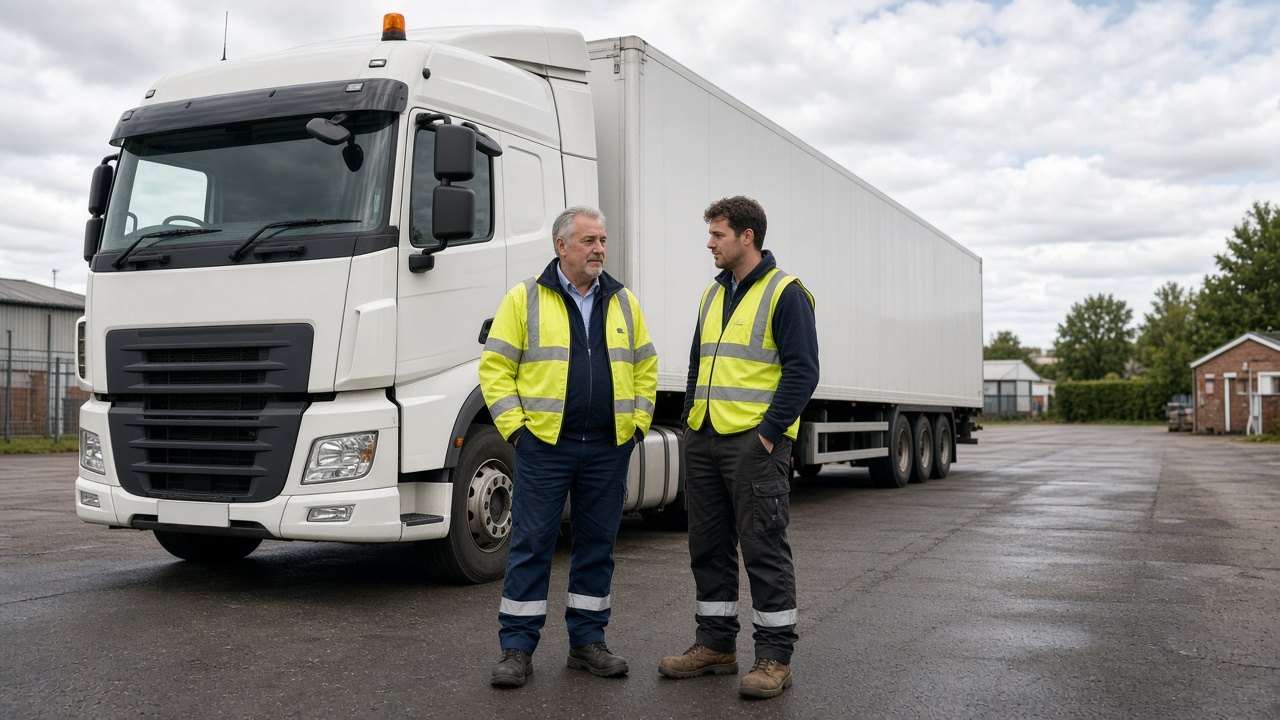
An HGV licence is the UK route for driving lorries, while a CDL is the US commercial license system.
People searching for HGV and CDL information often find advice that mixes the two countries. That causes confusion because the vehicle categories, tests, and ongoing training rules are different. A useful comparison starts with the government source for each system.
In Great Britain, GOV.UK uses the term heavy goods vehicle for lorries and sets out the Driver Certificate of Professional Competence. In the United States, FMCSA sets federal CDL standards, and each state issues licenses and manages testing. Neither summary replaces the official rules for your own application. Use this comparison to understand the vocabulary, then read the current guidance from the agency that will actually issue your licence.
What does an HGV licence cover?
GOV.UK describes category C1 as vehicles between 3,500 and 7,500 kilograms maximum authorised mass with a trailer up to 750 kilograms. Category C covers vehicles over 3,500 kilograms with a trailer up to 750 kilograms. Category CE covers a category C vehicle with a heavier trailer.
The government also notes that older names may still appear in conversation. Category C was often called HGV 2, while towing heavier trailers was often called HGV 1. Use current category names when checking job requirements so you know exactly what an employer means.
GOV.UK lists the basic starting requirements: a full car licence, being over 18 with some exceptions, and the professional Driver CPC qualification when driving is the main part of the job. Some exemptions exist, so check the official criteria rather than assuming your role qualifies.
What are the HGV tests?
A first-time professional driver applies for the provisional entitlement and then passes the five tests that make up the full Driver CPC. GOV.UK explains that the application uses a D2 application form and a D4 medical examination report completed by a doctor. Doctors, opticians, or private firms can charge for that examination.
The Driver CPC tests are these.
- Part 1 theory, with separate multiple-choice and hazard perception sections
- Part 2 case studies based on realistic driving situations
- Part 3a off-road exercises
- Part 3b on-road driving
- Part 4 practical demonstration
The official multiple-choice section has 100 questions in 1 hour and 55 minutes, with a pass mark of 85. Hazard perception uses 19 clips and has a pass mark of 67 out of 100. The case-study test lasts 1 hour and 15 minutes, with a pass mark of 40 out of 50.
The practical demonstration covers tasks such as securing loads, assessing emergencies, reducing physical risks, and walkaround vehicle checks. Candidates must score at least 15 out of 20 in each topic and 80 overall.
What does it cost in the UK?
GOV.UK states there is no fee for the provisional HGV or bus licence application. Official DVSA test prices are listed separately. As checked in November 2026, those include £26 for the multiple-choice theory, £11 for hazard perception, £23 for case studies, £40 for off-road exercises, and £115 for weekday on-road driving.
The practical demonstration is listed at £55 on weekdays. Evening, weekend, and bank-holiday prices can be higher. GOV.UK warns that unofficial booking websites may charge more, so use the official service.
These are test charges, not the total cost of becoming a professional lorry driver. Training, medical examination, travel, and any retests are separate. Ask providers for a complete written estimate. GOV.UK also notes that some employers offer help with the cost of training for returning drivers, so ask a prospective employer what support exists before you pay for a course yourself.
How is a US CDL different?
FMCSA uses license classes rather than the UK category labels. Class A generally covers combinations of at least 26,001 pounds with a towed unit over 10,000 pounds. Class B generally covers a single vehicle of at least 26,001 pounds, with limits on what it tows.
US applicants obtain a commercial learner's permit before the CDL skills test. Federal rules require them to wait at least 14 days after initial permit issuance before that skills test. Many first-time applicants must also complete Entry-Level Driver Training through FMCSA's Training Provider Registry.
The US also has age and interstate driving qualifications. Under 49 CFR 391.11, a qualified interstate commercial driver generally must be at least 21. Intrastate rules can differ, so confirm requirements with the state licensing agency.
How does ongoing training compare?
In the UK, a qualified professional driver must complete 35 hours of periodic Driver CPC training every five years. GOV.UK also says HGV and bus licences must be renewed every five years and every year from age 65.
In the US, federal rules emphasize medical qualification, license standards, and employer-specific safety requirements. BLS says federal regulations require CDL drivers to maintain a clean driving record and pass a physical exam every two years. Employers may have stricter standards.
Do not assume a license from one country lets you drive professionally in the other. Check the official licensing authority and any employer requirements before planning a move or accepting an offer.
Which one should US readers pursue?
If you plan to work in the United States, focus on the CDL process in your state. Learning about HGV rules is useful when comparing international job information, but it does not replace US training, knowledge testing, skills testing, or medical requirements.
BLS reported a May 2025 national median annual wage of $58,640 for heavy and tractor-trailer truck drivers in the United States. That figure is not a UK wage estimate and is not a promised salary for a newly licensed driver.
For US preparation, read our guide on how to get a construction job with no experience at https://chambanow.com/chambamatters/how-to-get-a-construction-job-with-no-experience, because equipment-yard and construction-support jobs can help you learn site safety. Workers can find local trade and labor jobs free at https://chambanow.com, including construction work in Houston at https://chambanow.com/jobs/in/houston-tx/construction.
Frequently asked questions
Is HGV just the British word for CDL?
Not exactly. Both relate to commercial driving, but they are different licensing systems with different categories, tests, qualifications, and renewal requirements.
Do I need a car licence before an HGV licence?
GOV.UK lists a full car licence as a basic requirement for becoming an HGV, bus, or coach driver.
Is the UK theory test the same as a US permit test?
No. Each system uses its own official test structure, content, and passing standard. Study the current material from the authority responsible for your licence.
What should I do first?
Decide which country you will work in, identify the vehicle category or class, and read the official requirements before paying for training.
Sources
- GOV.UK, Become a qualified HGV or bus driver (https://www.gov.uk/become-lorry-bus-driver)
- GOV.UK, Driving licence categories (https://www.gov.uk/driving-licence-categories)
- GOV.UK, Driver CPC training for qualified drivers (https://www.gov.uk/driver-cpc-training)
- FMCSA, Drivers and license classifications (https://www.fmcsa.dot.gov/registration/commercial-drivers-license/drivers)
- eCFR, 49 CFR 383.25 (https://www.ecfr.gov/current/title-49/subtitle-B/chapter-III/subchapter-B/part-383/subpart-B/section-383.25)
- eCFR, 49 CFR 391.11 (https://www.ecfr.gov/current/title-49/subtitle-B/chapter-III/subchapter-B/part-391/subpart-B/section-391.11)
- BLS, Heavy and Tractor-Trailer Truck Drivers, May 2025 (https://www.bls.gov/ooh/transportation-and-material-moving/heavy-and-tractor-trailer-truck-drivers.htm)
Written by Barry Graham, Founder, ChambaNOW
Building knowledge that works.