
Can I Hire a Laborer to Paint a Room, or Do I Need a Painter?
A laborer can help paint a simple room, but a painter is better when the finish really has to last.
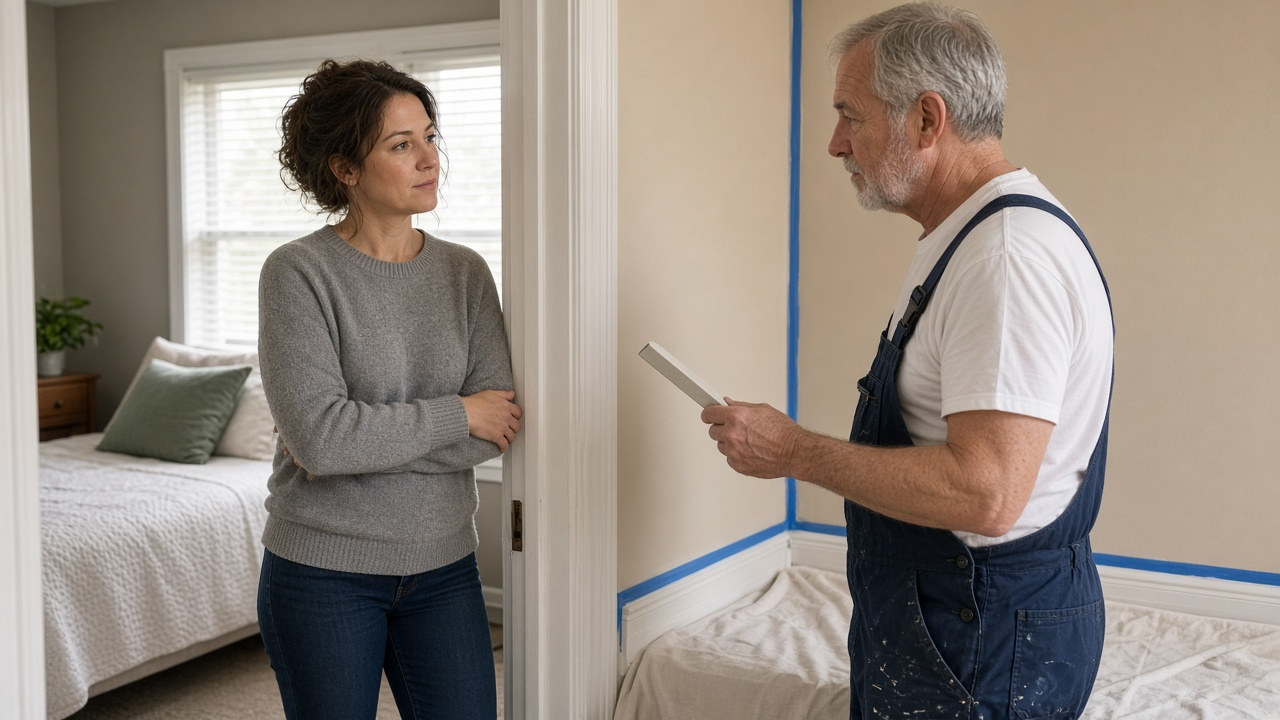
A laborer can help paint a simple room, but a painter is better when the finish really has to last.
A fresh coat of paint looks simple until the edges, the prep, and the finish start to show. Homeowners often ask whether they can hire a general laborer for a bedroom or whether they need a painter. The honest answer depends on the room, the condition of the walls, and how picky the finish has to be. A careful laborer can help with a straightforward room. A painter is the better hire when the work is visible, detailed, or on an older surface.
This guide covers when general labor is enough, when you should hire a painter, what to pay in labor terms, and how to write the job so you get the result you want.
When a laborer is enough
A laborer is a reasonable fit when the job is mostly prep and a simple coat on walls that are already in good shape.
- One or two rooms with sound walls and simple baseboards
- Moving furniture, covering floors, washing walls, and filling small nail holes
- Rolling large wall fields after you, or a painter, have set the edges
- A helper working next to you if you are painting your own house and want an extra set of hands
- Cleanup at the end of the day
If you are painting and only need help, say that clearly. The laborer is there to prep, roll, and clean, not to diagnose peeling paint or match a difficult color on trim. Our guide to hiring painters and painting helpers for a home (https://chambanow.com/chambamatters/a-guide-to-hiring-painters-and-painting-helpers-for-a-home) walks through that split in more detail, and when a weekend DIY project needs a hired helper (https://chambanow.com/chambamatters/when-a-weekend-diy-project-needs-a-hired-helper) covers the homeowner-plus-helper model.
When you need a painter
Hire a painter, or a painter plus a helper, when the finish will be judged up close or the surface is not simple.
- Trim, doors, cabinets, or stair work that needs a clean line
- Ceilings, tight cut-ins, or rooms with a lot of windows and angles
- Walls with stains, heavy patching, texture, or peeling paint
- Color changes from dark to light, or a finish you will see every day in a living room or kitchen
- Spray work, or any job where a bad coat would mean doing the room twice
- Homes built before 1978, where sanding or scraping painted surfaces can require lead-safe practices under the EPA's Renovation, Repair and Painting Program (https://www.epa.gov/lead/lead-renovation-repair-and-painting-program)
A painter will also know when a wall needs priming, when gloss will show every flaw, and when a room is not ready to paint. That judgment is a large part of what you are hiring.
Older paint, fumes, and safety
If the house may date to before 1978, ask about lead-safe work before anyone sands. OSHA also has a lead in construction standard (https://www.osha.gov/laws-regs/regulations/standardnumber/1926/1926.62). The EPA notes that paints and solvents can release volatile organic compounds into indoor air (https://www.epa.gov/indoor-air-quality-iaq/volatile-organic-compounds-impact-indoor-air-quality), so plan on ventilation. A homeowner's guide to jobsite safety when hiring temporary labor (https://chambanow.com/chambamatters/a-homeowner-s-guide-to-jobsite-safety-when-hiring-temporary-labor) is a good checklist for ladders, pets, and a clear path through the house.
What to pay
In Bureau of Labor Statistics May 2025 data, construction and maintenance painters earned a national median of $23.75 an hour. Painter and plasterer helpers had a median of about $19.46 an hour on a full-time year. General labor on a simple prep-and-roll day may sit closer to other helper or laborer figures, but a careful paint day is still skilled work. Local rates vary, and you must at least meet the state and city minimum wage at https://www.dol.gov/agencies/whd/minimum-wage/state.
These figures are references, not quotes. See how much you should pay a day laborer in 2026 (https://chambanow.com/chambamatters/how-much-should-you-pay-a-day-laborer-in-2026-rates-by-job-type) for ranges by job type, and agree on the rate, the rooms, and the expected hours before anyone arrives.
How to write the job
A short, clear scope prevents a laborer from being asked to do painter work, or a painter from arriving to a room that is not ready.
- Step 1: List the rooms, the surfaces, and the finish you want, including walls, ceilings, and trim.
- Step 2: Say whether you want prep only, paint only, or both, and who is providing paint, tape, and ladders.
- Step 3: Tell the worker the age of the house if you know it, and whether anyone will be home, including children or pets.
- Step 4: Post the job with that scope at https://chambanow.com/for-hirers, or from a city hire page such as Los Angeles at https://chambanow.com/hire/los-angeles-ca, Dallas at https://chambanow.com/hire/dallas-tx, or Chicago at https://chambanow.com/hire/chicago-il. How to write a clear scope of work (https://chambanow.com/chambamatters/how-to-write-a-clear-scope-of-work-before-a-day-labor-job-starts) will help you keep the day on track.
- Step 5: Walk the room together before work starts and again before you pay, so missed spots are fixed while the help is still there.
If you are unsure, hire a painter for the finish and a laborer for the heavy prep. That combination is often cleaner than asking a general laborer to cut a perfect ceiling line.
A realistic example
A child's bedroom with sound walls, simple baseboards, and a light color change is often a good laborer-plus-careful-prep job, especially if you are willing to cut the edges yourself or to hire a painter only for the trim. A living room with heavy sun, a lot of trim, and a dark-to-light change is a painter's job, with a helper if the furniture and the masking will eat half the day. The second room will show every miss, and a cheap first coat that has to be done again is not a savings.
If you are staging a house for photos or a listing, lean toward a painter. The finish will be judged in close photographs. Getting a home photo-ready (https://chambanow.com/chambamatters/getting-a-home-photo-ready-for-a-listing-or-showing) is a different article, but the same standard applies to the walls.
Mistakes to avoid
Do not buy the cheapest paint and then expect a helper to make it look like a premium coat. Do not skip primer when the painter says you need it. Do not leave the room furnished and then blame the worker for a slow day. Do not ignore the age of the house. And do not hire two general laborers for cabinet work you would not trust a beginner to do in your own kitchen. Scope, surface, and standard matter more than the job title in the post.
The short version
A laborer can help with a simple room, especially on prep and rolling. A painter is the better hire when the finish, the trim, or the wall condition has to come out right. Write the scope clearly, ask about old paint, and do not expect a helper to do a painter's job.
Sources
- U.S. Bureau of Labor Statistics, Occupational Outlook Handbook, Painters, Construction and Maintenance (May 2025 data) (https://www.bls.gov/ooh/construction-and-extraction/painters-construction-and-maintenance.htm)
- U.S. Bureau of Labor Statistics, Occupational Outlook Handbook, Construction Laborers and Helpers (May 2025 data) (https://www.bls.gov/ooh/construction-and-extraction/construction-laborers-and-helpers.htm)
- U.S. Environmental Protection Agency, Lead Renovation, Repair and Painting Program (https://www.epa.gov/lead/lead-renovation-repair-and-painting-program)
- U.S. Environmental Protection Agency, Volatile Organic Compounds' Impact on Indoor Air Quality (https://www.epa.gov/indoor-air-quality-iaq/volatile-organic-compounds-impact-indoor-air-quality)
- OSHA, 29 CFR 1926.62, Lead (https://www.osha.gov/laws-regs/regulations/standardnumber/1926/1926.62)
- U.S. Department of Labor, State Minimum Wage Laws (https://www.dol.gov/agencies/whd/minimum-wage/state)
Written by Barry Graham, Founder, ChambaNOW
Building knowledge that works.