
How Do You Get House Cleaning Jobs With Little Experience?
You can get house cleaning jobs with little experience if you are thorough, reliable, and ready to work.
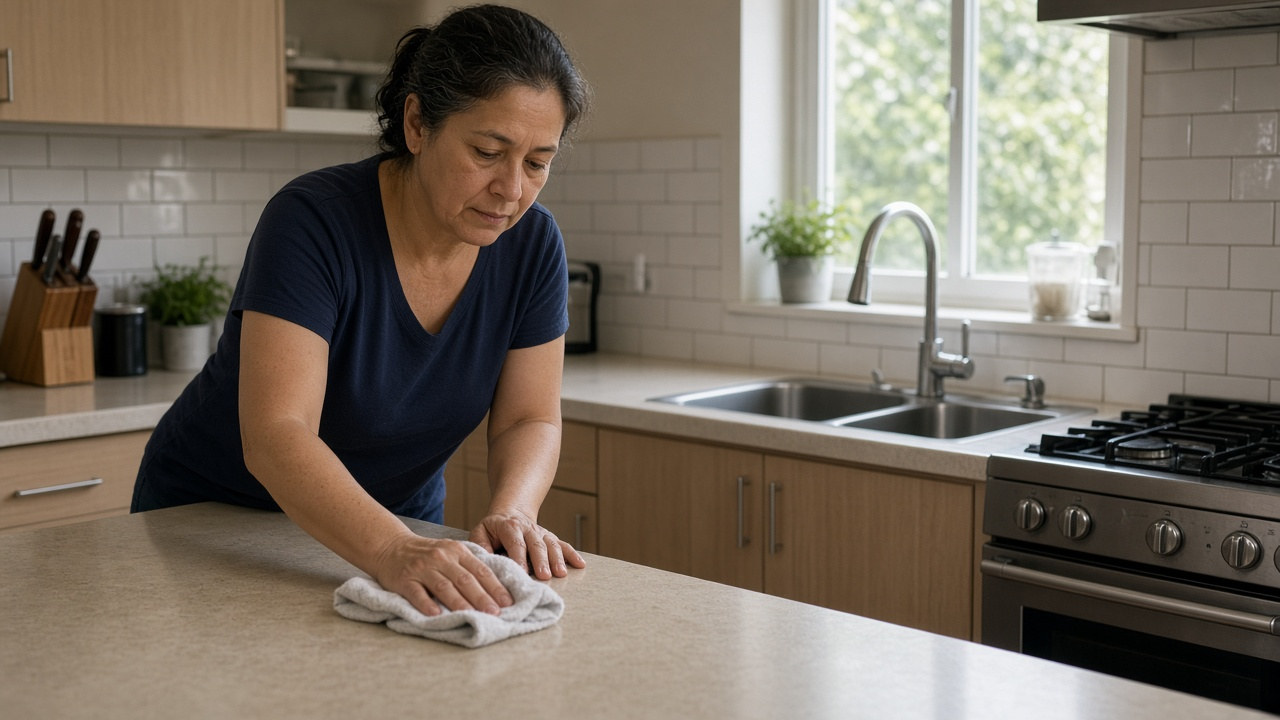
You can get house cleaning jobs with little experience if you are thorough, reliable, and ready to work.
House cleaning is one of the easier labor jobs to start because many homeowners and property managers need a one-time deep clean, a turnover clean, or a regular visit. You do not need a formal certificate to wipe, vacuum, mop, and organize a home. You do need a careful eye, respect for other people's things, and a clear agreement about the rooms, the supplies, and the pay.
This guide covers what these jobs involve, what they tend to pay, how to work safely with cleaners, and how to get hired when you are new.
What the work involves
Residential cleaning jobs range from a few hours in one apartment to a full-day deep clean after a move or the holidays. Typical tasks include these.
- Kitchens and bathrooms, including sinks, counters, appliances, showers, and toilets
- Floors, including vacuuming, mopping, and shaking out entry rugs
- Dusting furniture, baseboards, blinds, and reachable ceiling fans
- Changing linens and making beds if the hirer asks
- Taking out trash and wiping interior trash cans
- Wiping fingerprints on doors, switches, and glass
- A light organize of counters and floors, not a full attic or garage cleanout unless that was in the scope
A deep clean is slower and more detailed than a regular maintenance clean. Ask which one the hirer wants so you do not finish a surface clean when they expected the oven, the baseboards, and the inside of the windows.
What this job is not
Cleaning is not the same as a post-renovation debris haul, a hoarding cleanout, or mold or sewage work. Those jobs need different gear and, in some cases, a specialist. If the home has a large junk pile, see whether the job is really a cleanout. Hirers often post those separately, and our pieces on house or garage cleanout labor (https://chambanow.com/chambamatters/how-much-does-a-house-or-garage-cleanout-cost-in-labor) show how different that work is.
Do not use a strong chemical you were not given instructions for, and do not mix products. OSHA's Hazard Communication standard page (https://www.osha.gov/hazcom) is the federal rule that requires employers to share chemical hazard information. Even in a private home, read the label, ventilate the room, and never mix bleach with ammonia or with acids. If a product bothers your lungs or skin, stop and tell the hirer.
You should also not move a safe, a loaded refrigerator, or a piano by yourself. If heavy moving is part of the day, treat it as moving work and use the lifting habits in our back-safety guide (https://chambanow.com/chambamatters/how-to-lift-heavy-objects-safely-a-back-safety-guide-for-laborers).
What the work pays
There is no official "house deep clean" wage. The closest Bureau of Labor Statistics May 2025 national median is $17.71 an hour for janitors and building cleaners. House cleaning in private homes can pay more or less than that depending on the city, the size of the home, and whether supplies are included. Local minimum wages are often higher than the federal $7.25. Check your state and city floor on the U.S. Department of Labor's state minimum wage page (https://www.dol.gov/agencies/whd/minimum-wage/state).
A first-time, one-visit deep clean is often priced as a half day or a full day rather than a very short visit, because travel has to be worth your time. Confirm the rate, the rooms, and whether you will be paid the same day. See a guide to your pay rights as a day laborer (https://chambanow.com/chambamatters/a-guide-to-your-pay-rights-as-a-day-laborer) if you want that background.
What to bring
Ask who provides supplies. Many homeowners want you to use their products so the finishes in the house are not damaged. If you bring your own, keep them in labeled bottles and do not leave them behind.
- Closed-toe shoes that will not mark floors, plus socks you can wear if the hirer asks you to remove shoes
- Clothes you can work in, and gloves
- A simple kit if you were asked to bring one, such as microfiber cloths, a sponge, and an all-purpose cleaner you know how to use
- Your own lunch and water
Leave jewelry at home if you will be putting your hands in water all day, and do not wear anything you would be upset to lose in a sofa or a drain.
How to get hired with little experience
Reliability matters as much as technique. People are letting you into their home.
- Step 1: Be clear and specific. Offer kitchens, bathrooms, floors, and a deep-clean list. Do not promise carpet extraction, window-company work, or post-construction dust removal unless you have done it.
- Step 2: Ask about entry, pets, parking, supplies, and which rooms are off limits. Write the list down so the job does not grow after you arrive.
- Step 3: List cleaning as a skill where hirers search. On ChambaNOW, which is free for workers at https://chambanow.com/for-workers, add cleaning separately from general labor. Browse cleaning jobs by city, such as Chicago at https://chambanow.com/jobs/in/chicago-il/cleaning, Los Angeles at https://chambanow.com/jobs/in/los-angeles-ca/cleaning, Houston at https://chambanow.com/jobs/in/houston-tx/cleaning, or New York at https://chambanow.com/jobs/in/new-york-ny/cleaning.
- Step 4: Treat the first job like a tryout for the next one. Arrive on time, start with the kitchen and baths if the hirer agrees, and do a last walk-through before you leave. How to get rehired after a one-day labor job (https://chambanow.com/chambamatters/how-to-get-rehired-after-a-one-day-labor-job) applies here.
- Step 5: Build a short list of regulars. Recurring apartment or office cleans, plus turnover work for property managers, are how a few one-off jobs become steady hours. See how to get more hours as a day laborer (https://chambanow.com/chambamatters/how-to-get-more-hours-as-a-day-laborer).
If a job posting looks wrong, such as a request to send money for supplies or a job that is not really at a real address, step back. How do I know if a job posting is real or a scam (https://chambanow.com/chambamatters/how-to-spot-fake-job-postings) is worth a read before you share personal details.
A typical first job
A common first job is a one-bedroom apartment or a small house that needs a real deep clean, not a 30-minute tidy. You start in the kitchen and bathrooms if the hirer agrees, then move to floors and dusting, and you leave time for a walk-through. Take a photo of anything already damaged, such as a stained carpet or a cracked tile, so it is not blamed on your visit. Put jewelry and small valuables out of your own way by asking the hirer to secure them before you start.
If the home is larger than you expected, say so early, and agree on which rooms will wait for a second visit rather than rushing everything. Hirers remember a clean kitchen and two finished baths more fondly than a rushed whole house with streaks on the glass.
Questions worth asking
Ask which products to use, whether pets will be home, how you will get in, where to park, and which rooms are off limits. Ask whether the oven, the refrigerator, interior windows, or linens are included. Ask how you will be paid, and whether you should take trash off the property or only to the bins. Those details keep a first job from turning into a dispute at the door.
The short version
You can start house cleaning with little experience if you are careful, honest, and easy to have in someone's home. Confirm the rooms and the pay, use products safely, and leave the place ready for a walk-through. That is what gets you called again.
Sources
- U.S. Bureau of Labor Statistics, OEWS May 2025, Janitors and Cleaners, Except Maids and Housekeeping Cleaners (37-2011) (https://www.bls.gov/oes/current/oes372011.htm)
- U.S. Bureau of Labor Statistics, Occupational Outlook Handbook, Janitors and Building Cleaners (May 2025 data) (https://www.bls.gov/ooh/building-and-grounds-cleaning/janitors-and-building-cleaners.htm)
- O*NET OnLine, Maids and Housekeeping Cleaners (37-2012.00) (https://www.onetonline.org/link/summary/37-2012.00)
- OSHA, Hazard Communication (https://www.osha.gov/hazcom)
- U.S. Department of Labor, State Minimum Wage Laws (https://www.dol.gov/agencies/whd/minimum-wage/state)
Written by Barry Graham, Founder, ChambaNOW
Building knowledge that works.