
Closing Out a Job: Punch-List and Site-Cleanup Labor for Contractors
Closing out a job goes faster when punch-list work and site cleanup have their own labor plan.
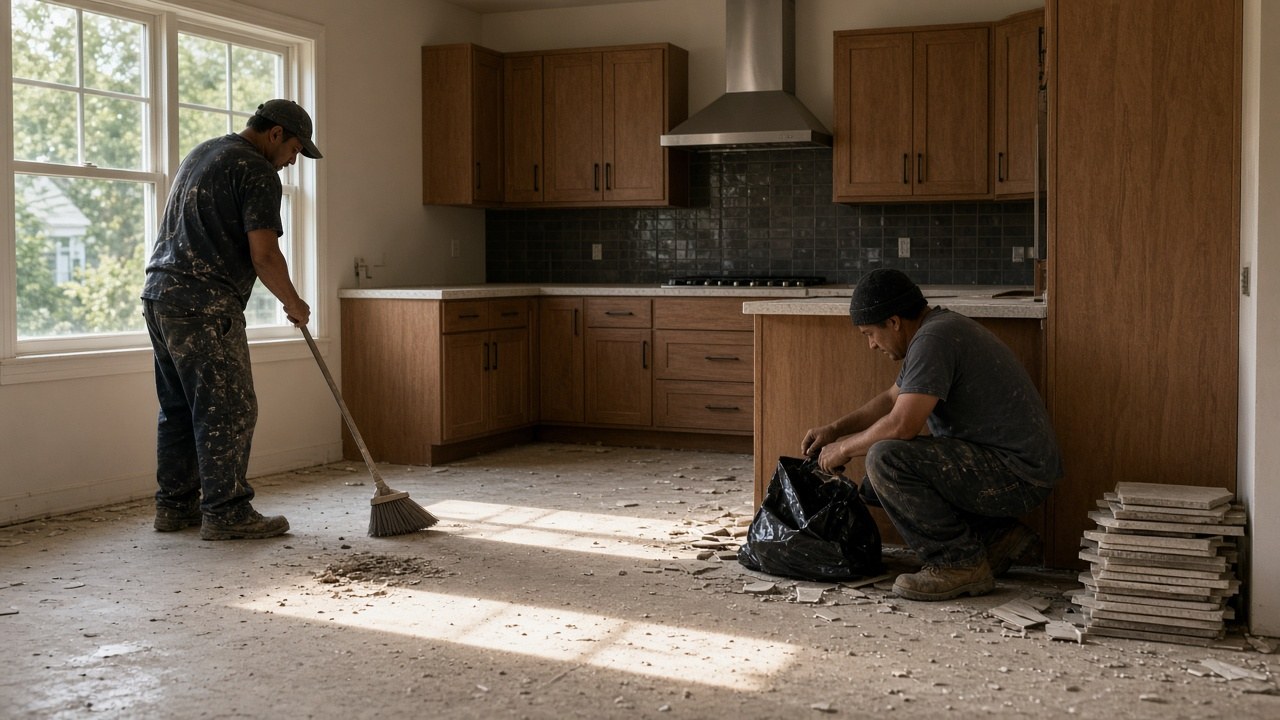
Closing out a job goes faster when punch-list work and site cleanup have their own labor plan.
The last week on a job is where small items, leftover material, and a messy site can hold up a final payment or a client walk-through. A contractor who treats close-out as leftover time often spends a skilled tradesperson on broom work. Temporary labor can handle much of the punch-list support and the site cleanup if you write a real list. This is the contractor's close-out, not a homeowner's post-renovation cleaning guide. For that, see a guide to hiring a cleanup crew after a renovation (https://chambanow.com/chambamatters/a-guide-to-hiring-a-cleanup-crew-after-a-renovation).
What close-out labor can do
- Walk your punch list and handle the items that are labor, not licensed trade work
- Return leftover material to a trailer, shop, or supplier, as you direct
- Break down staging, scrap piles, and temporary protection
- Load a dumpster or a truck for a transfer-station run you arrange
- Sweep, scrape, and leave floors broom-clean
- Remove labels, fasteners, and packaging from finished areas
- Pull outdoor signs, cones, and portable toilets when the vendor or your staff is ready
- Note items that still need a tradesperson, rather than guessing at a repair
Write the list room by room. A vague "make it look done" job will miss the items your client will see first.
What should stay with the trade or a specialist
- Punch-list items that need a license, a test, or a manufacturer-required installer
- Electrical, plumbing, gas, or HVAC close-out
- Paint or other work that disturbs paint in pre-1978 housing, which may fall under the EPA Lead Renovation, Repair and Painting Program (https://www.epa.gov/lead/lead-renovation-repair-and-painting-program)
- Hazardous waste, including paints, solvents, and anything that might contain asbestos. The EPA explains household hazardous waste and why it should not go in ordinary trash (https://www.epa.gov/hw/household-hazardous-waste-hhw), and it also has guidance on asbestos in older materials (https://www.epa.gov/asbestos/protect-your-family-exposures-asbestos)
- Final inspections, permit sign-off, and client walk-throughs, which should be led by you
How to run the last week
- Step 1: Make the punch list in person, with photos, before you hire the labor.
- Step 2: Split items into labor, trade, and vendor piles so no one is asked to do the wrong work.
- Step 3: Schedule cleanup after the dusty trade work, not during it.
- Step 4: Brief helpers on what is finished and must be protected, and on where debris goes.
- Step 5: Leave paid time for a second pass after you walk the site.
- Step 6: Do the client walk-through yourself, with the list in hand.
OSHA's housekeeping rule, 29 CFR 1926.25, still applies at the end of the job (https://www.osha.gov/laws-regs/regulations/standardnumber/1926/1926.25). A clean site is a safety requirement, not only a courtesy. Material that remains on site should be stacked and stored so it cannot fall or block access, following 29 CFR 1926.250 (https://www.osha.gov/laws-regs/regulations/standardnumber/1926/1926.250).
What to pay and how to staff it
Close-out is often one or two laborers for a day, plus your lead for the walk-through. A large site may need a second day for haul-off. Bureau of Labor Statistics May 2025 national medians were $22.66 an hour for construction laborers and $20.51 for helpers of construction trades, all other. Local rates vary. See how much should you pay a day laborer in 2026 (https://chambanow.com/chambamatters/how-much-should-you-pay-a-day-laborer-in-2026-rates-by-job-type).
Example labor estimates
These are hypothetical illustrations, not quotes.
- Small residential job, punch-list support and broom-clean, 1 laborer for 8 hours at about $23: about $184
- Larger site, haul-off plus cleanup, 2 laborers for 8 hours at about $23: about $368, plus dump fees
- A second short visit after the client walk-through, 1 laborer for 3 to 4 hours, priced as its own minimum
Do not fold unpaid extra hours into "just finishing up." If the list grows, extend the paid day or book a return visit. See what to do when a day labor job runs long or finishes early (https://chambanow.com/chambamatters/what-to-do-when-a-day-labor-job-runs-long-or-finishes-early).
A close-out checklist for the job post
- Address, access, and where to park or load
- Punch-list items assigned to labor, written out
- Items the helper must not touch
- Dumpster, truck, or shop destination for leftover material
- PPE and tools you will provide
- Hours, rate, and same-day pay
- Who will walk the site at the end
How to write a clear scope of work (https://chambanow.com/chambamatters/how-to-write-a-clear-scope-of-work-before-a-day-labor-job-starts) is the right template for that post.
The client walk-through
Walk the site yourself, with the punch list and photos, before the client does. Room by room is slower and much better than a fast loop. Mark what is truly complete, what is labor, and what still needs a trade. Then book or extend labor for the labor pile only. A client should not be the first person to find a missed room.
If the client adds items, write them down in front of everyone and say when they will be done. That habit protects your crew and your schedule.
Material returns and leftover product
Leftover tile, paint, or fixtures can be money if they go back to the shop, and waste if they go in a dumpster. Give the helper a labeled "return" pile and a "scrap" pile. Do not mix them. If a supplier pickup is scheduled, leave that stack accessible and dry. Hazardous leftovers, including paints and solvents, stay out of ordinary trash and follow the EPA household hazardous waste guidance cited below.
Tools and protection for a close-out day
Supply gloves, eye protection, bags, a scraper, and floor protection for finished rooms. If the helper will load a truck, say who is driving and where the truck will park. Do not leave a loaded dumpster blocking a neighbor's driveway overnight. A tidy close-out includes the street, the sidewalk, and the path the client will walk first.
Hiring close-out labor on ChambaNOW
ChambaNOW is a bilingual marketplace for contractors who need short-term laborers at the end of a job. Posting a job is free. Attach or describe the punch list in the post, then message workers about that posted job. Start on the hirer page (https://chambanow.com/for-hirers), or browse workers in cities such as Houston (https://chambanow.com/hire/houston-tx) and Phoenix (https://chambanow.com/hire/phoenix-az).
Quick answers
Is close-out labor the same as a final cleaning service?
Not always. Close-out labor can include haul-off, material returns, and punch-list support. A cleaning service may still be needed for a finished interior.
Can a laborer finish electrical or plumbing punch-list items?
No. Keep licensed work with the trade who did it or with another licensed contractor.
When should I hire the cleanup crew?
After the dusty work is done, and with enough time for a second pass before the client walk-through.
What if the client adds items during the walk-through?
Write them down, decide which are labor, and book a short return visit rather than surprising the original crew after hours.
Sources
- Occupational Safety and Health Administration, 29 CFR 1926.25, Housekeeping (https://www.osha.gov/laws-regs/regulations/standardnumber/1926/1926.25)
- Occupational Safety and Health Administration, 29 CFR 1926.250, General Requirements for Storage (https://www.osha.gov/laws-regs/regulations/standardnumber/1926/1926.250)
- U.S. Environmental Protection Agency, Lead Renovation, Repair and Painting Program (https://www.epa.gov/lead/lead-renovation-repair-and-painting-program)
- U.S. Environmental Protection Agency, Household Hazardous Waste (https://www.epa.gov/hw/household-hazardous-waste-hhw)
- U.S. Environmental Protection Agency, Protect Your Family from Exposures to Asbestos (https://www.epa.gov/asbestos/protect-your-family-exposures-asbestos)
- U.S. Bureau of Labor Statistics, OEWS May 2025, Construction Laborers (47-2061) (https://www.bls.gov/oes/current/oes472061.htm)
- U.S. Bureau of Labor Statistics, OEWS May 2025, Helpers, Construction Trades, All Other (47-3019) (https://www.bls.gov/oes/current/oes473019.htm)
Written by Barry Graham, Founder, ChambaNOW
Building knowledge that works.