


















































A crew is short one experienced drywall installer. A turnover job starts tomorrow. A property needs an emergency repair before tenants arrive. In these moments, a free job posting for contractors is not just a way to save on recruiting costs. It is a way to keep work moving without waiting days for callbacks, agency approvals, or a stack of unqualified applications.
For contractors, the best free posting option is one that puts the job in front of available workers quickly and makes it easy to identify who can actually do the work. The goal is not to collect the most applicants. It is to connect with the right trade or labor professional, confirm the basics, and get the position filled.
Why Free Job Posting for Contractors Matters
Labor gaps are expensive. When a crew is incomplete, supervisors spend time covering tasks, schedules slip, overtime rises, and customers notice. Small contractors feel this especially hard because one missing worker can affect an entire day of production.
Paying to advertise every opening does not always make sense, either. Some needs are short-term. Others are urgent, seasonal, or tied to one project phase. A free job posting gives contractors a practical first move: publish the role, reach active workers, and assess response before adding recruiting costs.
Free does not mean the posting should be casual. A vague listing such as "Need laborers ASAP" may generate replies, but it also creates more screening work. Workers need enough detail to decide whether the opportunity fits their skills, schedule, transportation, and pay expectations. Better details bring better conversations.
Start With the Job You Need Today
Before posting, define the work in plain language. Contractors often hire faster when they separate the immediate need from the broad job title. Instead of posting for a "construction worker," say whether you need a concrete finisher for a commercial pour, two reliable laborers for demolition cleanup, or an HVAC helper with commercial site experience.
Include the job location or service area, the start date, expected shift, estimated duration, and whether the role is full-time, part-time, project-based, or on-call. State the core tasks and the experience that is truly required. If a worker must bring tools, have a valid driver's license, hold a specific certification, or pass a site requirement, say so upfront.
Pay transparency also helps. You do not have to publish every detail of your budget, but a clear hourly rate, pay range, day rate, or statement that pay depends on verified experience helps workers self-select. This reduces wasted calls and creates a more direct conversation with qualified candidates.
A strong post can be short. For example: "Need two experienced commercial painters in Phoenix for a three-week interior project. Start Monday, 7 a.m. to 3:30 p.m. Must have spray experience, PPE, and reliable transportation. Pay starts at $24 per hour based on experience." That tells a worker what the work is, when it starts, and whether it is worth pursuing.
Make the Post Easy to Act On
Urgent hiring fails when the response process is slow. If someone sees a job during a break, after leaving another site, or while looking for work from a phone, they need a simple path to respond. Long forms and delayed follow-ups can cost you a qualified worker.
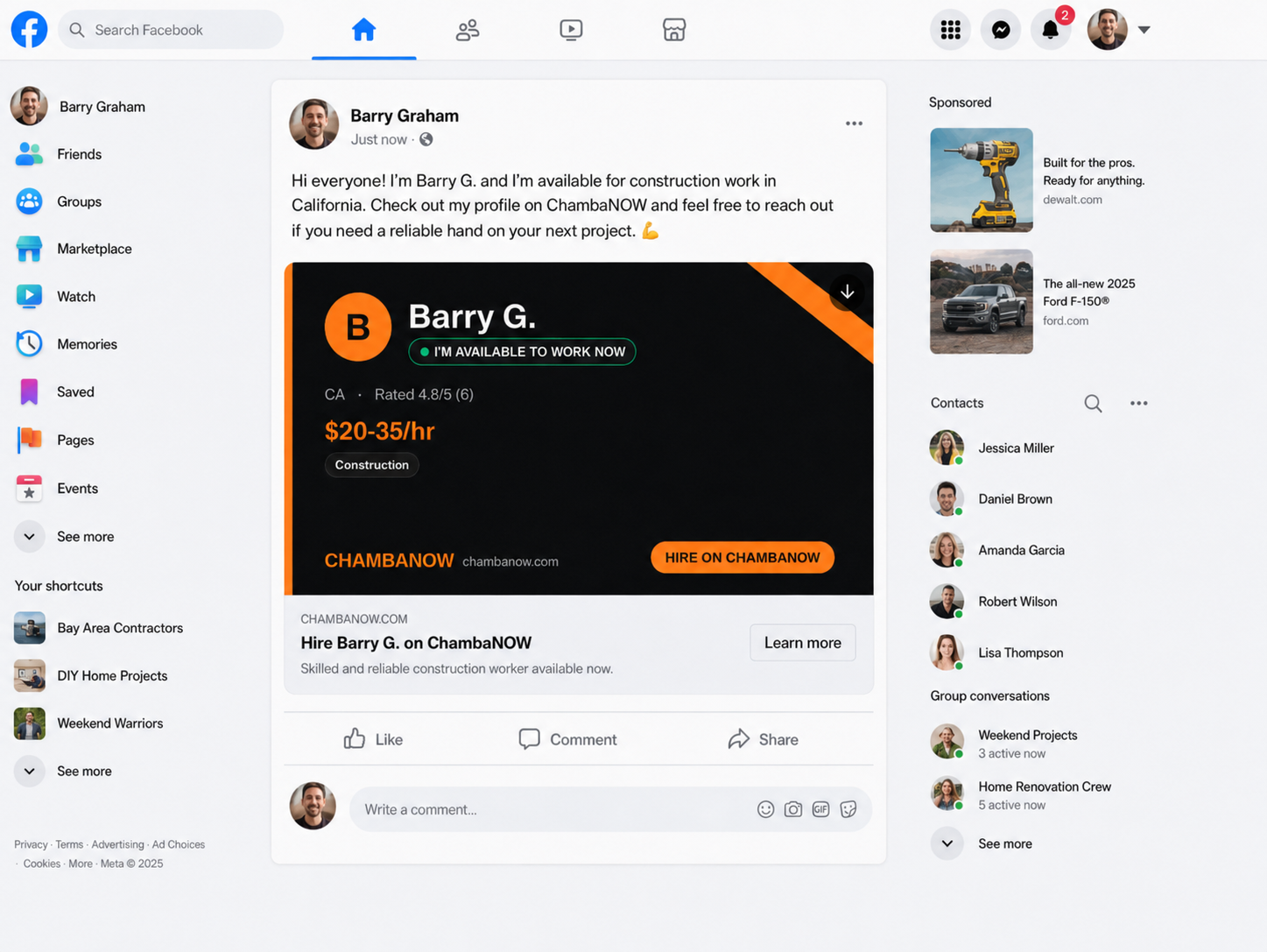
Use a posting channel built for trade and labor hiring, not only a general job board designed for office roles. A marketplace such as ChambaNow gives employers a place to post jobs free and connect with verified workers who are looking for relevant opportunities. That focus matters when you need a carpenter, maintenance technician, mover, electrician helper, landscaper, or general laborer instead of a large volume of broad resumes.
Speed should not remove basic screening. Ask a few questions that reveal whether a worker fits the assignment: What similar work have you completed? When can you start? Do you have transportation to the jobsite? Are you authorized or certified for the required task? Keep questions tied to the work. A fast process is useful only when it leads to a worker who can show up prepared.
For bilingual crews, make the job details easy to understand in English and Spanish. Clear bilingual communication can widen your available talent pool and reduce misunderstandings about start times, tools, safety requirements, or job duties. This is not about adding extra paperwork. It is about making the information usable for the people doing the work.
Write Job Posts That Attract Dependable Workers
A job post is also a first impression of your company. Skilled workers can often tell the difference between an organized contractor and a disorganized one before they ever arrive onsite. Specific information signals that the job is real, the supervisor is prepared, and payment expectations are clear.
Lead with the trade, location, and urgency. Then explain the work. Avoid inflated requirements that do not affect performance. Requiring five years of experience for basic cleanup or demanding every possible certification for an entry-level helper can shrink your response pool without improving the hire.
Be equally clear about conditions that may turn into a problem later. If the job involves outdoor work, heavy lifting, heights, overnight shifts, weekend work, travel between sites, or a long project duration, include it. The right worker may still want the role. The wrong match can opt out before either side loses time.
Use the same standard when describing pay and treatment. Workers who are asked to arrive early, bring specialized equipment, or work under unusual conditions need to know how those expectations are handled. Straight answers build trust. That trust can improve show-up rates and make workers more likely to consider future jobs with your business.
Respond Like the Job Is Urgent
Posting is only the first step. If the role needs to start quickly, set aside time to review responses and contact promising workers as they come in. A qualified worker may accept another assignment within hours, especially during busy construction seasons.
Keep the first conversation focused. Confirm the worker's experience, availability, transportation, pay expectations, and ability to meet site requirements. Then give a direct next step: a call time, an onsite meeting, a document request, or a confirmed start date. Avoid ending with "we'll let you know" when you can make a decision quickly.
Contractors should also prepare the jobsite before the worker arrives. Share the address, parking details, site contact, required personal protective equipment, check-in procedure, and start time. A new hire who cannot find the entrance or does not know who to report to may leave before the shift begins. Fast hiring works best when the first day is organized.
Free Posting Has Trade-Offs, So Use It Well
Free job posting for contractors can lower costs and increase reach, but it is not a substitute for judgment. A free channel may bring a wider range of applicants, including people whose experience does not match the role. That is why clear job details and a focused screening process matter.
The best option depends on the role. For a specialized, licensed position with a long lead time, you may need a deeper recruiting process and more detailed credential checks. For an immediate labor need, a free marketplace with active workers may be the faster route. Many contractors use both approaches based on urgency, skill level, and project risk.
Verification adds another useful layer, but employers should still confirm job-specific qualifications. A verified profile can make it easier to begin the conversation. It does not replace checking that a worker has the exact license, training, tools, or insurance required for your site and local rules.
Turn One Hire Into a Better Hiring System
Every post can help improve the next one. Track which job titles get the strongest response, what pay ranges attract experienced workers, how quickly you follow up, and where candidates drop out. You do not need a complicated recruiting dashboard to learn from this. A simple record of job type, response time, hires, and no-shows can reveal patterns.
Build a dependable bench as you hire. When a worker performs well, keep accurate notes on their trade, availability, preferred locations, and project fit. A contractor who maintains good working relationships has a faster starting point when the next schedule change happens.
Post the job clearly, answer quickly, and respect workers' time from the first message. That is how a free listing becomes more than an ad - it becomes a practical way to keep good people working and keep your projects on track.