
When to Hire a Handyman vs Day Labor for Property Repairs
A handyman sells finished small repairs while day labor sells hours, and choosing well saves time and money.
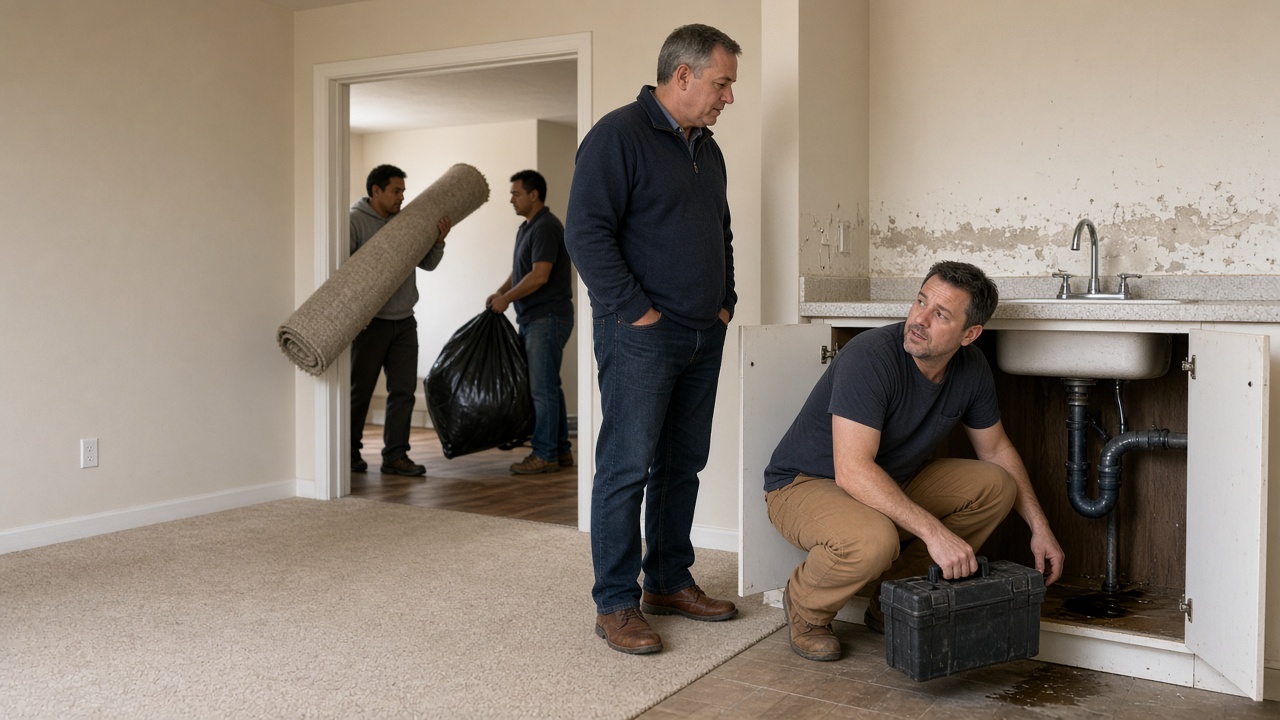
A handyman sells finished small repairs while day labor sells hours, and choosing well saves time and money.
Property owners and managers face this choice constantly. A tenant reports a sticking door, a loose handrail, a dripping faucet, and a hole in the drywall. A storm leaves branches everywhere and a fence section down. A unit turnover needs touch-ups and hauling. The question is whether to call a handyman, hire day laborers, bring in a licensed contractor, or mix all three.
This guide is for property managers, landlords, HOA boards, and homeowners with multiple repair needs. It explains how handymen and day laborers differ, which repairs fit each, where licensing draws hard lines, and how to budget using national wage benchmarks. For handyman pricing specifically, our earlier article on handyman hourly rates (https://chambanow.com/chambamatters/handyman-hourly-rates) covers that topic in more depth.
The core difference
A handyman is usually hired to deliver a finished result across a range of small repairs. They bring tools, judgment, and often materials. You are paying for problem-solving as well as time, and many work as small businesses.
Day laborers are usually hired for time and effort on tasks you define and direct. They are strong at physical work such as hauling, moving, digging, cleaning, demolition, and helping a skilled person. You provide the plan, the direction, and often the tools or materials.
Neither is better. They solve different problems.
When a handyman is the better fit
- Many small, different repairs in one visit, such as patching drywall, adjusting doors, replacing hardware, and caulking
- Repairs that require diagnosis, such as figuring out why a door will not latch
- Finish-quality work tenants will see, such as trim touch-ups and patches before paint
- Situations where you cannot be on site to direct someone
- Repairs that need a variety of tools you do not own
When day labor is the better fit
- Large physical tasks with a clear outcome, such as clearing storm debris, hauling junk from a vacated unit, or moving furniture between units
- Prep work before a skilled trade arrives, such as emptying a garage or clearing an attic
- Helping your own maintenance tech on a big day, such as a unit turnover sprint
- Cleanup after a contractor finishes
- Repetitive tasks across many units, such as replacing blinds or carrying appliances
When you need a licensed contractor instead
Neither a handyman nor a day laborer is the right hire for work that requires a trade license or a permit. That commonly includes electrical circuits and panel work, plumbing changes, gas lines, HVAC refrigerant and system work, structural repairs, and roofing in many places.
Handyman exemptions vary widely by state. California offers a clear example. Starting January 1, 2025, the Contractors State License Board raised the minor-work exemption from $500 to $1,000, but only for work that does not require a permit and where the unlicensed person does not employ anyone to perform or assist with the work. The total includes labor, materials, and all other costs, and a larger project cannot be split into smaller contracts to stay under the limit. CSLB also notes that unlicensed persons advertising work under $1,000 must state that they are not licensed.
Other states set different thresholds, and some have no handyman exemption at all. Check your state's licensing agency, and see our guides on whether a homeowner can hire labor without a contractor's license (https://chambanow.com/chambamatters/can-a-homeowner-hire-labor-without-a-contractor-s-license) and on how to verify contractor licenses (https://chambanow.com/chambamatters/verify-contractor-licenses).
What wage data shows
The Bureau of Labor Statistics does not track handymen as a separate occupation. The closest May 2025 national benchmarks are these.
- General maintenance and repair workers: median $23.84 per hour, middle half $19.64 to $30.10
- Construction laborers: median $22.66 per hour, middle half $18.57 to $28.72
- Hand laborers and freight, stock, and material movers: median $19.35 per hour, middle half $17.35 to $22.56
These are employee wages. Independent handymen running a business often charge more per hour than these figures, because their price covers tools, travel, insurance, and unpaid time between jobs. Day laborers hired directly are often closer to the wage benchmarks, but you take on more direction and responsibility. For day-rate context, see how much you should pay a day laborer in 2026 (https://chambanow.com/chambamatters/how-much-should-you-pay-a-day-laborer-in-2026-rates-by-job-type).
A side-by-side decision checklist
Ask these questions about each repair.
- Does it need diagnosis or just effort: diagnosis points to a handyman, effort points to day labor
- Will tenants or buyers see the finished result: finish quality points to a handyman
- Can you or your staff be on site to direct the work: if not, a handyman is safer
- Is it mostly lifting, hauling, digging, or cleaning: day labor is usually more cost-effective
- Does it involve electrical, plumbing, gas, HVAC, roofing, or structure: call a licensed contractor
- Does it need a permit: in many states, that alone takes it out of handyman territory
Mixing both on one property
Many property managers get the best result by combining them. A hypothetical turnover might look like this: two day laborers spend the morning hauling out abandoned furniture and cleaning the garage, then a handyman spends the afternoon patching walls, adjusting doors, and replacing hardware, and a licensed plumber handles the leaking supply line. Each person does the work they are best suited for, and nobody is paid skilled rates to carry a couch.
Setting up day labor for success
- Write a task list with photos so workers know exactly what "done" means
- Provide or confirm tools and disposal plans before they arrive
- Assign someone to direct the work and answer questions
- Agree on pay, hours, and breaks in advance
See how to write a clear scope of work before a day labor job starts (https://chambanow.com/chambamatters/how-to-write-a-clear-scope-of-work-before-a-day-labor-job-starts) and our guide for property managers hiring temporary labor (https://chambanow.com/chambamatters/a-guide-for-property-managers-hiring-temporary-labor).
Insurance and responsibility
The hiring model also changes who carries the risk. An established handyman business should carry its own liability insurance and, if it has employees, workers' compensation where required, so ask for a certificate before work starts. When you hire day laborers directly and direct their work, more of the responsibility for safety, classification, and injuries may shift to you. Talk to your insurance agent about how your policy treats both situations. Our guides on subcontractor certificates of insurance (https://chambanow.com/chambamatters/subcontractor-certificate-of-insurance) and workers' compensation (https://chambanow.com/chambamatters/workers-comp-for-contractors) explain the basics.
Questions to ask a handyman
- What repairs do you do regularly, and which do you refer out
- Are you licensed or registered where required, and do you carry insurance
- How do you price: hourly, per task, or per visit
- Do you supply materials, and how are they billed
A good handyman tells you clearly when a repair needs a licensed trade. That honesty is a sign you can trust them on the rest.
Finding help on ChambaNOW
ChambaNOW lists general laborers and other workers by city, for example general labor in Atlanta (https://chambanow.com/hire/atlanta-ga/general_labor). Property managers can post a repair or labor job free, review workers who respond, and message them about that job. Start at the hirer overview (https://chambanow.com/for-hirers).
How to decide quickly
Use a handyman for many small repairs that need judgment and finish quality. Use day labor for clear, physical tasks you can direct. Use licensed contractors for anything that needs a license or permit, and check your state's handyman limits before you assume an exemption applies.
Sources - California Contractors State License Board, Handyperson Exemption to Increase to $1,000 in 2025 (https://www.cslb.ca.gov/Resources/PressReleases/2024/AB2622.FINAL.pdf) - California Contractors State License Board, License Requirement for Minor Work Increases from $500 to $1,000, Industry Bulletin 24-07 (https://www.cslb.ca.gov/Resources/IndustryBulletins/2024/AB%202622%20Implementation.FINAL.pdf) - U.S. Bureau of Labor Statistics, OEWS May 2025, Maintenance and Repair Workers, General (49-9071) (https://www.bls.gov/oes/current/oes499071.htm) - U.S. Bureau of Labor Statistics, OEWS May 2025, Construction Laborers (47-2061) (https://www.bls.gov/oes/current/oes472061.htm) - U.S. Bureau of Labor Statistics, OEWS May 2025, Laborers and Freight, Stock, and Material Movers, Hand (53-7062) (https://www.bls.gov/oes/current/oes537062.htm)
Written by Barry Graham, Founder, ChambaNOW
Building knowledge that works.