
How Much Should You Pay a Day Laborer in 2026? Rates by Job Type
The short answer: in 2026 most US hirers should plan on paying a day laborer at least the local minimum wage and, in practice, close to or above the federal median wage for the mat
The short answer: in 2026 most US hirers should plan on paying a day laborer at least the local minimum wage and, in practice, close to or above the federal median wage for the matching occupation. The latest Bureau of Labor Statistics data (May 2025) puts median pay at $22.44 an hour for construction laborers and helpers, $19.27 for grounds maintenance workers, $18.38 for hand laborers and material movers, $17.71 for janitors and building cleaners, and $23.75 for construction and maintenance painters. Short, physical, one-day jobs usually justify paying at or above those medians, because the worker carries travel time, gaps between jobs, and often their own tools.
There is no official "day labor rate" published by any government agency. What follows is built from verified wage data plus clearly labeled adjustments, so you can set a number you can defend to the worker and to yourself.
What is a day laborer?
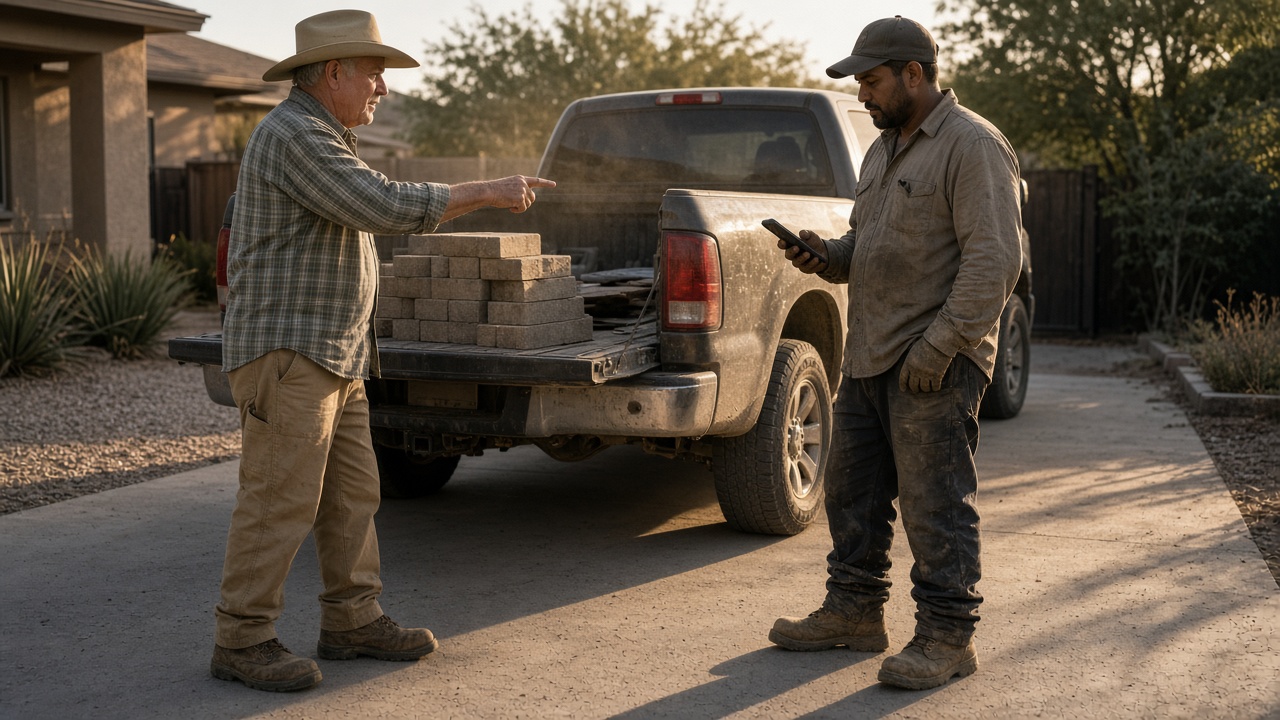
A day laborer is a worker hired for a single day or a short, defined job, usually paid by the hour, by the day, or by the job. Common day-labor work includes moving, yard work, landscaping, demolition and cleanup, painting prep, and general construction support.
The most detailed national study of the day-labor market, the 2006 "On the Corner" survey by researchers at UCLA and the University of Illinois at Chicago, found that homeowners and renters made up 49 percent of day laborers' employers and construction contractors 43 percent. That same study reported a median hourly wage of $10 in its 2004 survey, which is useful history but far too old to use for pricing today. You can read it at https://www.coshnetwork.org/sites/default/files/Day%20Labor%20study%202006.pdf for background.
What does federal wage data say about 2026 pay?
The BLS Occupational Outlook Handbook, updated in August and September 2026 with May 2025 data, is the most current official benchmark. The figures below are national. Where BLS reports only annual pay, the hourly figure is the annual figure divided by 2,080 hours, the same full-time year BLS uses.
- Construction laborers and helpers (site cleanup, demolition support, material handling): median $22.44 per hour; lowest 10 percent under about $16.74; highest 10 percent over about $36.73
- Hand laborers and freight, stock, and material movers (moving and loading): median about $19.35 per hour for the detailed movers category; the broader hand-laborer group has a median of $18.38
- Landscaping and groundskeeping workers (yard work, mulch, planting): median $18.82 per hour; all grounds maintenance workers $19.27, with the lowest 10 percent under $15.01 and the highest 10 percent over $28.10
- Janitors and building cleaners (cleanouts, post-construction cleaning): median $17.71 per hour; lowest 10 percent under $13.77; highest 10 percent over $24.17
- Construction and maintenance painters: median $23.75 per hour; lowest 10 percent under about $18.00; highest 10 percent over about $37.89
- Painters' helpers: median about $19.46 per hour (from a $40,470 annual median)
Sources: BLS pages for construction laborers and helpers at https://www.bls.gov/ooh/construction-and-extraction/construction-laborers-and-helpers.htm, hand laborers at https://www.bls.gov/ooh/transportation-and-material-moving/hand-laborers-and-material-movers.htm, grounds maintenance at https://www.bls.gov/ooh/building-and-grounds-cleaning/grounds-maintenance-workers.htm, janitors at https://www.bls.gov/ooh/building-and-grounds-cleaning/janitors-and-building-cleaners.htm, and painters at https://www.bls.gov/ooh/construction-and-extraction/painters-construction-and-maintenance.htm.
One important caveat: BLS wage figures cover payroll employees. BLS states that its pay data does not include self-employed workers or workers in private households, and many day laborers fall into those groups. Treat the medians as a floor for comparison, not as the full market rate for informal, one-day work.
A private benchmark points the same way. PayScale's laborer page, updated October 14, 2026 and based on 1,727 salary profiles, lists an average base rate of $19.39 per hour, with the 10th percentile at $13.84 and the 90th at $29.58 (https://www.payscale.com/research/US/Job=Laborer/Hourly_Rate).
What is the legal minimum you can pay?
If the worker is your employee, you must pay at least the applicable minimum wage. The federal minimum is still $7.25, but many states are much higher. According to the Department of Labor's state table, updated November 5, 2026 (https://www.dol.gov/agencies/whd/minimum-wage/state), examples include:
- Washington: $17.13
- New York: $17.00 in New York City, Long Island, and Westchester; $16.00 elsewhere
- California: $16.90
- New Jersey: $15.92
- Arizona: $15.15
- Colorado: $15.16
- Florida, Illinois, Maryland, Massachusetts, and Missouri: $15.00
- Texas, Georgia, Pennsylvania, and North Carolina: $7.25 (federal rate)
Many cities set higher local minimums than their state, so check your city too. Whether a minimum wage applies at all depends on whether the worker is your employee or an independent business, which ChambaMatters covers in a separate guide on one-day job classification.
How should rates change by job type?
The list below pairs each common job with the closest BLS benchmark and the factors that usually push pay up. The adjustments are practical judgment, not measured data, so treat them as approximate.
- Moving help and loading: start near the movers median (about $19 to $20 per hour nationally) and go higher for stairs, heavy items like pianos or safes, or long carries
- Junk removal and cleanouts: start near the construction laborer median ($22.44) when the job includes demolition debris, attics, or crawl spaces; closer to the hand-laborer median for simple curbside hauling
- Yard work and landscaping: start near $18.82 to $19.27 and adjust upward for chainsaw work, steep slopes, or heavy stone and paver work; BLS lists tree trimmers at a $24.50 median
- Cleaning: start near $17.71 for basic cleaning and higher for post-construction dust, mold-adjacent cleanup, or rental turnovers on a deadline
- Painting: a skilled painter benchmarks near $23.75; a prep helper who masks, sands, and moves furniture benchmarks closer to the helper median of about $19.46
- Demolition and construction cleanup: start near $22.44, more if the worker brings a truck, a trailer, or specialty tools
Why should a one-day job pay more than a full-time wage?
A full-time employee earning the median gets steady hours. A day laborer does not. Each short job may involve unpaid travel, waiting, and days with no work. If the worker drives a personal truck to haul your materials, that vehicle cost is real; the IRS business standard mileage rate is 76 cents per mile for July through December 2026 (https://www.irs.gov/tax-professionals/standard-mileage-rates), which gives a reasonable way to price mileage separately from labor.
Common reasons to pay above the median include:
- The job is shorter than four hours, so the worker cannot easily book a second job that day
- The worker brings tools, a truck, or a trailer
- The work is in heat, at height, in confined spaces, or involves heavy lifting
- You need someone the same day or on a weekend
- The worker has proven skills, such as tile setting or finish carpentry, beyond general labor
How do you turn this into a number?
Use a simple, transparent method and write it down before work starts.
- Step 1: Find your local wage. BLS publishes state and metro wage data through its OEWS program, linked from each Occupational Outlook Handbook page under State and Area Data
- Step 2: Make sure the rate is at or above your state and city minimum wage
- Step 3: Add a short-job adjustment if the job is under a full day
- Step 4: Price tools, truck use, and mileage as separate line items
- Step 5: Agree on what happens if the job runs long or finishes early, and put it in writing
A worked example: a homeowner in a state with a $15 minimum wage needs two workers for a five-hour garage cleanout with a dump run. Starting from the construction laborer median of $22.44 and rounding up for a short job, the homeowner offers $25 per hour per worker, plus mileage for the worker's truck at the IRS rate. That is a reasoned, documented offer rather than a guess.
Should you pay by the hour, the day, or the job?
Hourly pay is easiest to keep fair when the scope is uncertain. A day rate works when the work clearly fills a day. A job price works when the scope is tightly defined, such as hauling one load. Each has tradeoffs; ChambaMatters has a dedicated comparison of day rate versus hourly pay.
Checklist before you agree on pay
- Name the job type and match it to a BLS benchmark
- Confirm your state and local minimum wage
- Agree on the rate basis: hourly, daily, or per job
- List tools, vehicle, and disposal fees separately
- Agree on breaks, lunch, and what happens if the job runs long
- Agree on how and when payment happens, and give a written receipt
Where can you find workers and post a rate?
Posting a clear rate helps you attract the right worker. On ChambaNOW, posting a job is free, and the job page lets you state the rate up front in English or Spanish. Hirers can browse the steps at https://chambanow.com/for-hirers, and workers, who always use ChambaNOW free, can see what to expect at https://chambanow.com/for-workers. Local pages, such as general labor in Houston at https://chambanow.com/hire/houston-tx/general_labor or moving help in Phoenix at https://chambanow.com/hire/phoenix-az/moving, show what is active in a given city.
For handyman-level skilled work rather than general labor, see the ChambaMatters guide to handyman hourly rates at https://chambanow.com/chambamatters/handyman-hourly-rates.
Key takeaways
- No government agency publishes an official day-labor rate; BLS occupation medians are the best verified benchmark
- May 2025 national medians range from $17.71 for cleaners to $23.75 for painters
- Always meet your state and local minimum wage when the worker is your employee
- One-day jobs often justify pay at or above the median because of travel, gaps, and tools
- Write the rate, the basis, and the extras down before work starts
Sources
- U.S. Bureau of Labor Statistics, Occupational Outlook Handbook (May 2025 wage data, pages updated 2026)
- U.S. Department of Labor, State Minimum Wage Laws, updated November 5, 2026
- PayScale, Laborer Hourly Pay, updated October 14, 2026
- Valenzuela, Theodore, Meléndez, and Gonzalez, "On the Corner: Day Labor in the United States," 2006
- IRS, Standard Mileage Rates, 2026
Written by Barry Graham, Founder, ChambaNOW
Building knowledge that works.