
Handyman Hourly Rates: What Hirers Need to Know
Discover handyman hourly rates in the US, from self-employed to specialists. Learn how location and expertise affect costs. Get informed!

What do handyman hourly rates actually look like in the US?
Handyman hourly rates in the United States typically range from $50 to $125 per hour. Self-employed handymen usually charge $50–$80 per hour, franchise or corporate handymen $75–$125 per hour, and specialists in plumbing, electrical, or HVAC may charge $75–$150 per hour.
Regional variation is real and significant, with higher rates in states like California and New York and lower rates in more rural areas. Beyond the hourly rate, many handymen also charge a minimum service fee to cover travel and setup, with notably higher fees in expensive metropolitan areas.
- Self-employed handymen generally charge moderate hourly rates
- Corporate or franchise handymen often charge higher hourly rates
- Specialized handymen in trades like electrical and plumbing command premium hourly rates
- Minimum service fees apply, typically higher in costly urban areas
Table of Contents
- What drives handyman rates up or down?
- Hourly vs. flat rate: which model actually works?
- Safety, insurance, and trust: what to verify before you hire
- How Chambanow connects you with trusted local handymen
- What common handyman jobs actually cost in total
- How to estimate how long a job will actually take
- How to negotiate handyman rates without burning the relationship
- Key Takeaways
- Chambanow puts trusted local handymen within reach
What drives handyman rates up or down?
Location and cost of living set the floor. A handyman working in New York carries higher overhead than one working in a mid-sized Midwestern city, and that difference shows up directly in their rate.
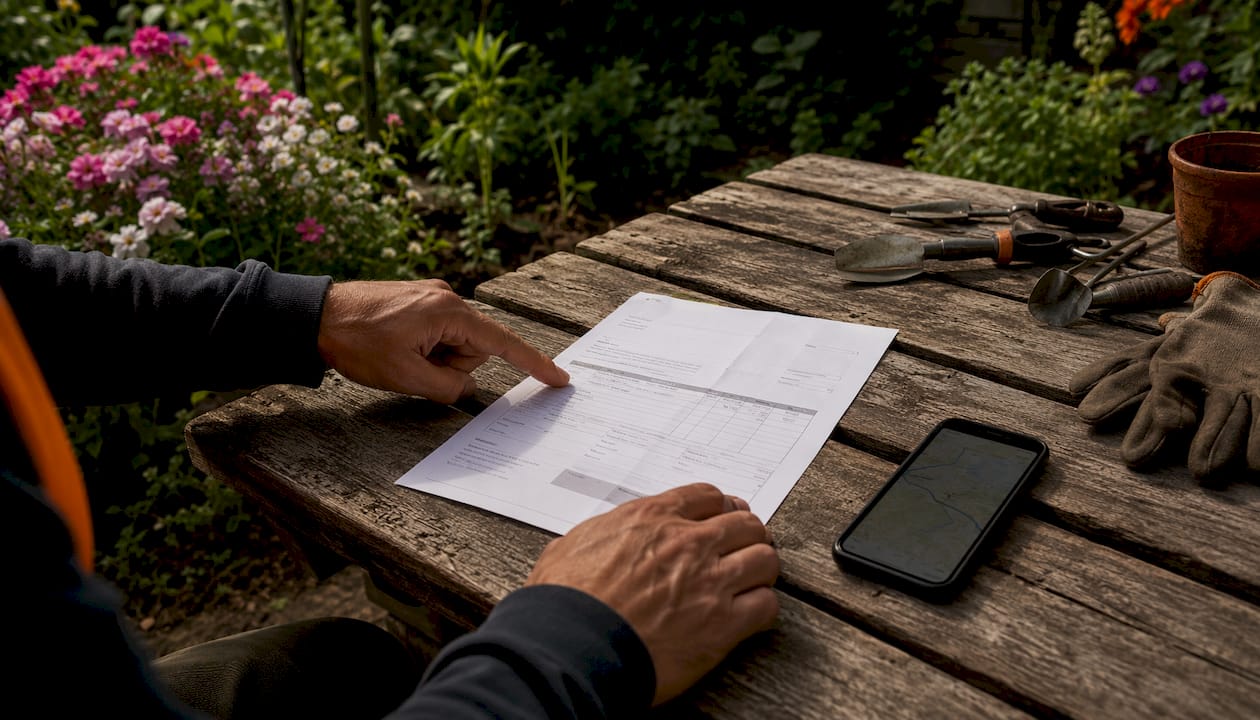
Experience and specialization push rates higher for good reason. A handyman who can handle both drywall repair and basic electrical troubleshooting in one visit is worth more per hour than someone limited to a single trade. Corporate and franchise services charge more partly because their overhead includes insurance, dispatch systems, and administrative staff.
Job complexity matters too. An unpredictable repair that might uncover hidden damage warrants an hourly rate. A straightforward task with a defined scope is better priced flat. Independent local handymen often offer more flexible, competitive rates than franchises, but that flexibility requires you to do your own due diligence on their credentials.
- Geographic cost of living
- Years of experience and skill range
- Job complexity and predictability
- Business type: independent vs. franchise
- Verified insurance and licensing status
Pro Tip: Ask any handyman for proof of general liability insurance before work begins. A lower hourly rate from an uninsured worker can cost far more if something goes wrong on your property.
Hourly vs. flat rate: which model actually works?
Hourly pricing makes sense when the scope of a job is genuinely uncertain. Diagnosing a leak, troubleshooting an electrical issue, or repairing damage behind a wall all fall into this category. The hirer pays for actual time spent, and the worker is fairly compensated even when the job gets complicated.
Flat-rate pricing works best for repeatable, predictable tasks. Common flat-rate jobs typically cover services like TV mounting, faucet replacement, door hinge repair, and caulking. Both sides know the price upfront, which removes friction and builds trust.
The hybrid model combines both approaches and is what most experienced professionals prefer. Standard tasks get a flat rate. Anything that deviates from the original scope shifts to hourly. This protects the worker from scope creep and gives the hirer a clear baseline.
- Hourly: best for complex, unpredictable, or diagnostic work
- Flat rate: best for defined, repeatable tasks ($75–$600 range)
- Hybrid: flat rate as the default, hourly for scope changes
- Minimum fees apply regardless of model to cover travel and setup
Safety, insurance, and trust: what to verify before you hire
Hiring a handyman without verifying their credentials is a risk that rarely pays off. The baseline check is simple: confirm they carry active general liability insurance. Without it, any damage to your property during the job becomes your problem.
Reliable handymen maintain accurate service records, communicate clearly about timelines and costs, and follow standard safety practices on the job. These aren’t extras. They’re the minimum standard for anyone working in your home or on your property.
Franchise services typically carry corporate-level insurance and standardized training, which reduces liability risk. Independent workers can be equally qualified, but you need to verify that yourself. Background checks and verified customer reviews close that gap considerably.
- Confirm active general liability insurance before any work starts
- Ask for references or check verified reviews on a trusted platform
- Clarify scope, timeline, and payment terms in writing
- Prefer workers with a documented history of completed jobs
- Use a vetted hiring platform to simplify the verification process
How Chambanow connects you with trusted local handymen
Chambanow is a bilingual job marketplace built specifically for this kind of hiring. Workers create verified profiles listing their skills, availability, and service areas. Hirers browse those profiles, filter by location, and communicate through real-time language translation, which removes one of the most common barriers in local labor markets.
The platform serves cities across the US, including Houston, Los Angeles, Boston, Portland, and Philadelphia. Whether you need someone today or want to build a longer-term working relationship, Chambanow makes it faster to find the right person without starting from scratch every time.
- Worker profiles include skills, availability, and location
- Real-time translation supports bilingual communication
- Hirers can post jobs or browse workers directly
- Same-day and long-term hiring both supported
- Geographic reach across major US cities
What common handyman jobs actually cost in total
Hourly rates only tell part of the story. Total job cost depends on how long the work takes plus any minimum service fee. Here are realistic estimates for common tasks:
| Job | Estimated Time |
|---|---|
| TV mounting | — |
| Faucet replacement | — |
| Drywall patch (small) | — |
| Door installation | — |
| Fence repair | — |
| Gutter cleaning | — |
Typical total costs depend on hourly rates and minimum service fees, which vary by handyman and location.
How to estimate how long a job will actually take
The most reliable approach is to ask the handyman directly for a time estimate before agreeing to hourly billing. An experienced worker can usually give you a range based on what they see during an initial walkthrough or photo review.
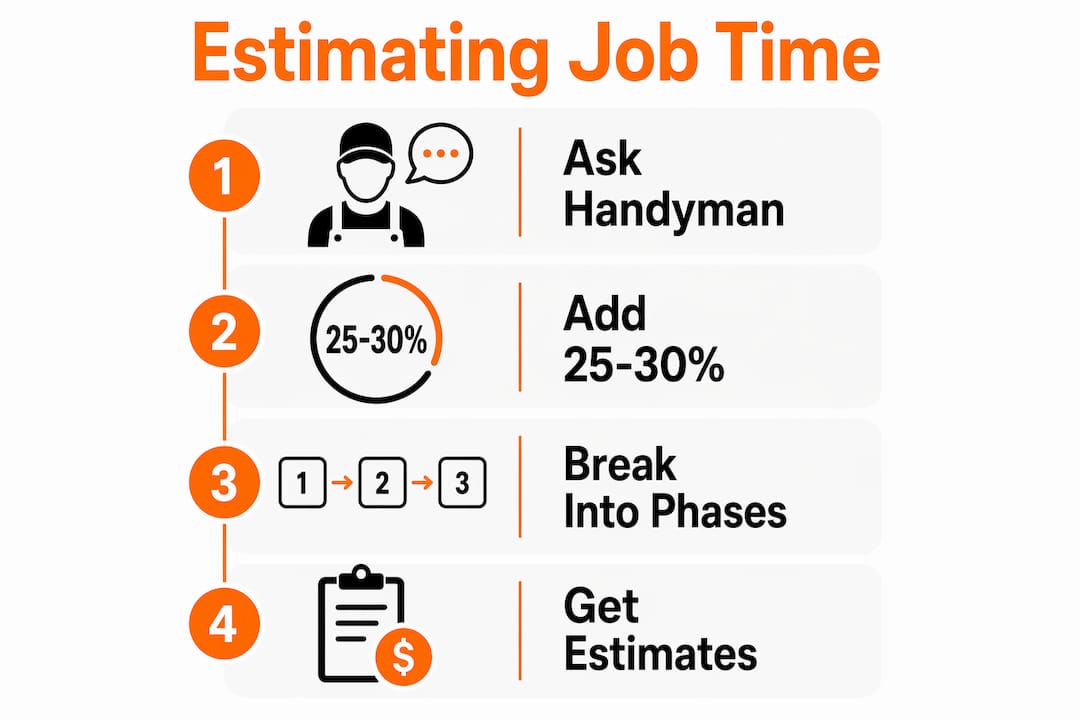
For jobs you can scope yourself, a useful rule of thumb: add 25–30% to whatever time you initially expect. Hidden complications, material runs, and cleanup consistently extend job duration beyond the first estimate. If a handyman quotes two hours and the job runs three, that buffer protects your budget.
Breaking larger projects into defined phases also helps. Each phase gets its own time estimate, which makes it easier to track progress and catch scope creep before it compounds.
How to negotiate handyman rates without burning the relationship
Fair negotiation starts with information. Knowing that self-employed handymen typically charge $50–$80 per hour gives you a real anchor for the conversation, not just a gut feeling.
Bundling jobs is one of the most effective ways to get a better rate. A handyman who drives out for one small task has to cover travel time in their rate. Offer three tasks in the same visit, and the math changes for both of you. Many workers will adjust their hourly rate or waive the minimum fee when the total job is worth their time.
Be direct about your budget. Most experienced handymen would rather negotiate upfront than deal with a payment dispute after the work is done. Transparency on both sides leads to better outcomes and repeat business.
Key Takeaways
Handyman hourly rates in the US typically range from $50 to $125 depending on experience, location, and job type, with hybrid pricing models offering the most transparent path for both hirers and workers.
| Point | Details |
|---|---|
| National rate range | Self-employed handymen charge $50–$80/hr; franchise services run $75–$125/hr. |
| Regional variation | California averages $85/hr; New York reaches $125/hr; rural Mississippi runs $45–$70/hr. |
| Minimum service fees | Most handymen charge $125–$150 minimum; high-cost metros charge $200–$300. |
| Hybrid pricing | Flat rates ($75–$600) for predictable jobs; hourly for complex or unpredictable work. |
| Chambanow | Connects hirers with verified local handymen across the US via a bilingual marketplace with real-time translation. |
Chambanow puts trusted local handymen within reach
Finding a skilled, insured handyman at a fair rate shouldn’t take half a day of phone calls and crossed fingers. Chambanow gives hirers direct access to local workers with verified profiles, clear skill listings, and real-time bilingual communication built in. No guesswork about who shows up, no language barriers slowing down the conversation.
Workers benefit too. Creating a free profile on Chambanow means hirers can find you based on your actual skills and availability, not just whoever answers the phone first. The platform supports same-day jobs and longer engagements, so whether you need a handyman this afternoon or want to build a reliable working relationship over time, the match happens faster.
Post your first job or browse available workers on Chambanow today and see how straightforward local hiring can be.
Recommended
Building knowledge that works.