
Can a Homeowner Hire Labor Without a Contractor’s License?
Usually, yes, for general labor. A homeowner generally does not need a contractor's license to pay someone to move furniture, haul debris, clean, or do yard work at their own home.
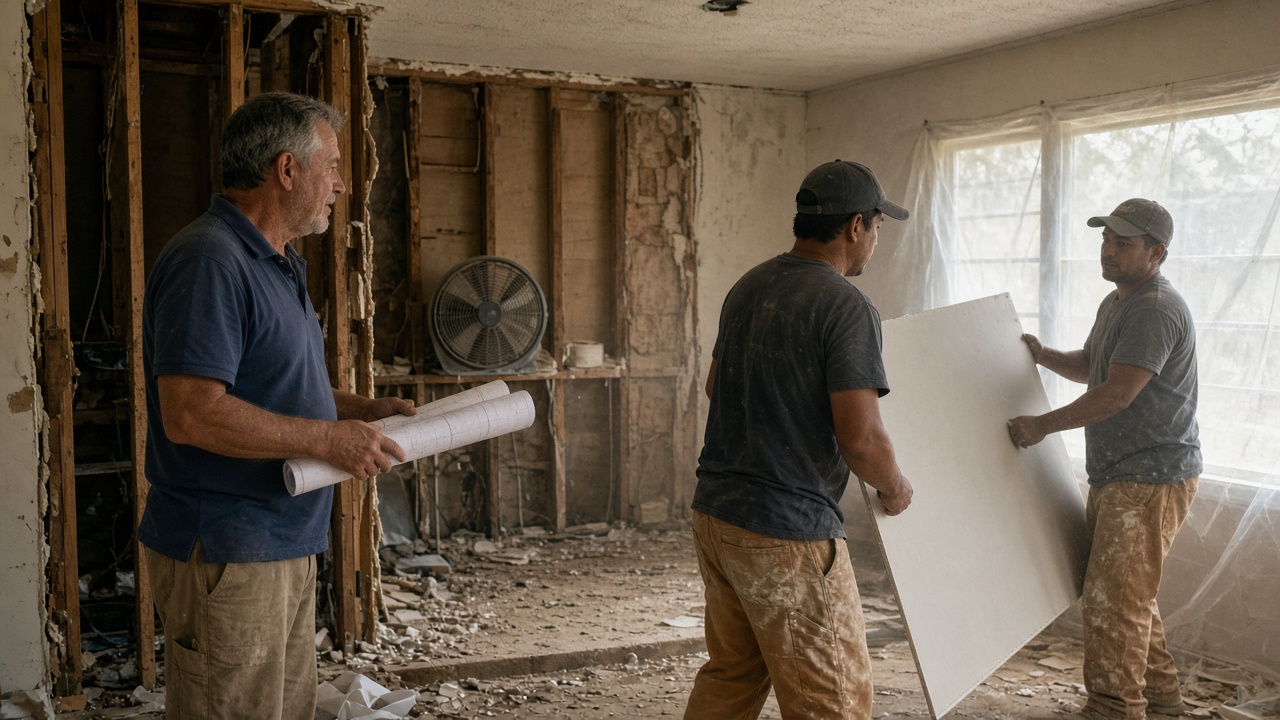
Usually, yes, for general labor. A homeowner generally does not need a contractor's license to pay someone to move furniture, haul debris, clean, or do yard work at their own home. The questions get harder when the work requires a building permit, when you act as your own general contractor (an "owner-builder"), or when the task falls in a licensed trade like electrical or plumbing. In those cases, state and local rules decide who may do the work, who must supervise it, and whether you become the workers' employer.
This article is general information, not legal advice. Licensing is set by states and often by cities and counties. Check with your state contractor licensing board and your local building department before starting permitted work.
What is an owner-builder?
An owner-builder is a property owner who takes on the role of general contractor for work on their own property, usually by pulling the building permit in their own name instead of hiring a licensed contractor. Many states allow this under a licensing exemption, with conditions about occupancy, resale, and supervision.
Who needs the license: you or the worker?
Licensing laws mostly regulate the person doing or contracting for the work, not the homeowner who pays for it. A homeowner hiring help for non-permitted, unlicensed-trade tasks is generally just a customer. The license question for the homeowner comes up when you take on contractor responsibilities, such as pulling permits and directing workers on structural, electrical, or plumbing work.
What tasks usually do not involve licensing?
These jobs typically involve no permit and no licensed trade, though local rules can differ:
- Moving furniture and boxes, loading and unloading trucks
- Junk removal and hauling yard debris
- Raking, mowing, weeding, mulching, and general yard cleanup
- Interior and exterior cleaning, including post-renovation cleanup
- Carrying materials and site cleanup for a licensed contractor's job
- Simple demolition of non-structural items, where no permit is required
What tasks usually do require a licensed professional?
- Electrical wiring, panels, and new circuits
- Plumbing and gas lines
- Heating, ventilation, and air conditioning
- Structural changes, additions, and most roofing replacements
- Any work that requires a building permit under your local code
For example, the City of Austin, Texas says a State of Texas license is not required to be a general contractor for a building permit, but trades that do need a license include electricians, plumbers, mechanical contractors, irrigators, right-of-way contractors, and fire line contractors (https://www.austintexas.gov/development-services/how-select-contractor).
How does California handle it?
California is strict. The Contractors State License Board's Industry Bulletin 24-07 explains that starting January 1, 2025, the "minor work" exemption lets an unlicensed person do jobs under $1,000, counting labor and materials, only if the work does not require a building permit and the unlicensed person does not employ anyone. Unlicensed persons who advertise must state that they are not licensed (https://www.cslb.ca.gov/Resources/IndustryBulletins/2024/AB%202622%20Implementation.FINAL.pdf).
The CSLB's "Owner-Builders Beware" guide warns that if you take out a permit as an owner-builder and hire unlicensed workers, you may be considered their employer, which can mean registering as an employer, withholding payroll taxes, and providing workers' compensation insurance. The guide also describes owner-builder limits tied to the home being your principal residence, occupied for the 12 months before the work is completed, with restrictions on selling soon after (https://www.cslb.ca.gov/Resources/GuidesAndPublications/OwnerBuildersPamphlet.pdf).
How does Florida handle it?
Florida Statutes section 489.103(7) allows owners to act as their own contractor on a one-family or two-family residence for their own use, not for sale or lease, and says a sale or lease within one year of completion creates a presumption the owner built it for sale. The owner must personally provide direct onsite supervision of all work not performed by licensed contractors. The required disclosure statement warns that the owner may not hire an unlicensed person to act as their contractor or to supervise people working on the building, and the statute defines an employee for this purpose as someone under the employer's supervision and control for whom the employer deducts FICA and withholding tax and provides workers' compensation (https://www.flsenate.gov/Laws/Statutes/2025/489.103).
How does Texas handle it?
Texas does not license general contractors at the state level, according to the City of Austin, but it does license the trades listed above, and cities still require permits for many projects. Austin also advises homeowners to get at least three bids, use a written contract, and avoid paying in full in advance.
What happens when you hire workers directly for a permitted project?
If you pull the permit and hire people directly instead of using a licensed contractor, you take on more than the build. Consider:
- Employer status: as the CSLB and Florida law both warn, directly hired workers may legally be your employees
- Payroll taxes: IRS Publication 926 covers household employers, including Social Security and Medicare once you pay one household employee $3,000 or more in cash wages in 2026 (https://www.irs.gov/publications/p926)
- Workers' compensation: required in some states for household or owner-builder employees; see the ChambaMatters article on workers' comp when hiring a day laborer
- Form I-9: USCIS says you do not complete Form I-9 for casual domestic work in a private home on a sporadic, irregular, or intermittent basis, but regular employees and others may require one (https://www.uscis.gov/i-9-central/form-i-9-resources/handbook-for-employers-m-274/20-who-must-complete-form-i-9)
- Inspections: permitted work must pass inspection, and you are responsible for it
Homeowner checklist before hiring labor
- Ask your local building department whether the project needs a permit
- If it does, decide whether to hire a licensed contractor or act as an owner-builder, and read your state's owner-builder rules
- Hire licensed professionals for electrical, plumbing, HVAC, and other licensed trades
- Keep general laborers on general labor tasks: carrying, cleaning, hauling, digging where no license applies
- Write down the scope of work, the pay, and who supplies tools
- Call your insurer about coverage for people working on your property
- Keep receipts and records of who worked, when, and what you paid
How can you check a contractor's license?
Most state licensing boards offer a free online lookup. ChambaMatters explains how at https://chambanow.com/chambamatters/verify-contractor-licenses in a separate guide.
Where does day labor fit in?
Most day-labor work is the kind of help that does not need a license: hauling, moving, yard work, and cleanup. On ChambaNOW, posting a job is free and the post lets you list the exact tasks, so workers can see whether the job is general labor or something that calls for a licensed trade. Browse local helpers by task, for example yard work at https://chambanow.com/hire/los-angeles-ca/yard_work or junk removal at https://chambanow.com/hire/dallas-tx/junk_removal, and read the hiring overview at https://chambanow.com/for-hirers. For more project ideas suited to day labor, see https://chambanow.com/chambamatters/25-home-projects-perfect-for-hiring-day-laborers.
Key takeaways
- Homeowners generally do not need a license to hire general labor for non-permitted work at their own home
- Permitted work and licensed trades change the rules; check your local building department
- In California, unlicensed workers may only do minor jobs under $1,000 with no permit and no employees
- Owner-builders who hire workers directly may become their employer, with tax and workers' compensation duties
- Florida requires owner-builders to personally supervise work and bars hiring an unlicensed person to act as contractor
Sources
- California Contractors State License Board, Industry Bulletin 24-07 and Owner-Builders Beware
- Florida Statutes section 489.103 (2025)
- City of Austin, How to Select a Contractor
- IRS, Publication 926 (2026)
- USCIS, Handbook for Employers M-274, section 2.0
Written by Barry Graham, Founder, ChambaNOW
Building knowledge that works.