
How to Start a Handyman Business: Licenses, Pricing, and First Customers
To start a handyman business, check license limits, set prices, register the business, and find customers.
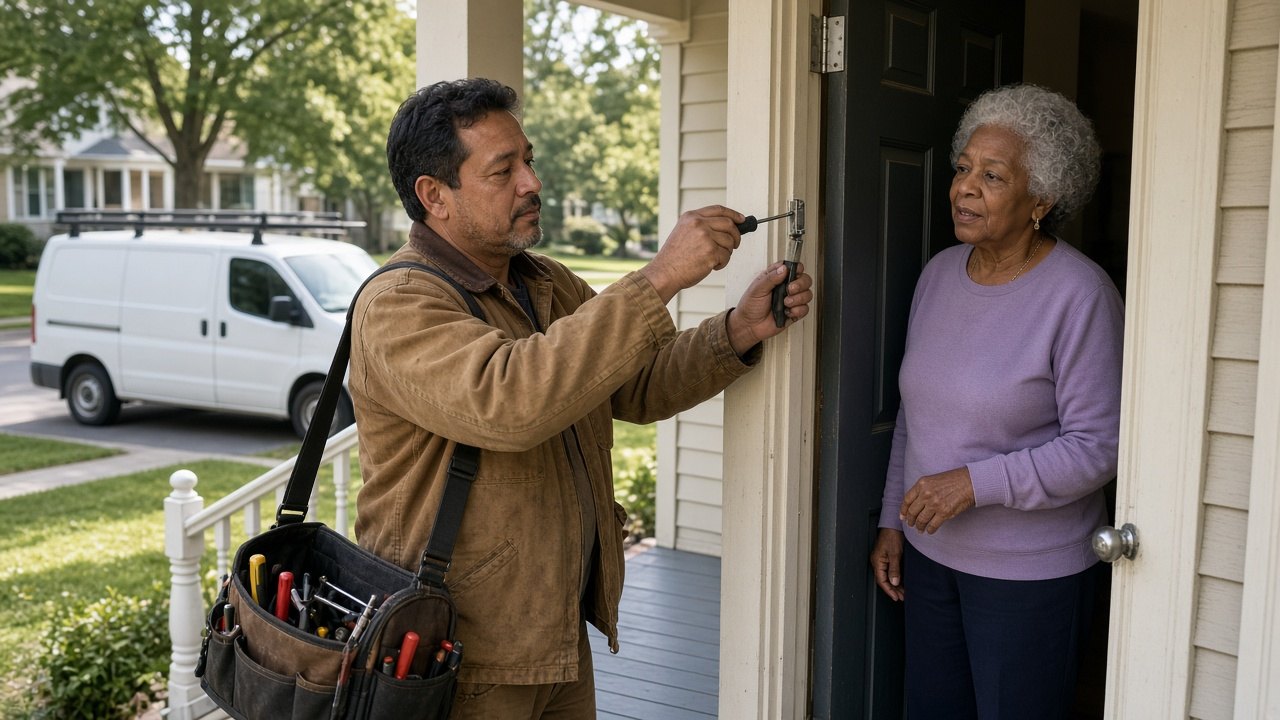
To start a handyman business, check license limits, set prices, register the business, and find customers.
Many day laborers and trade helpers already have the skills to run a small handyman business. Fixing doors, patching drywall, hanging shelves, and small repairs are in steady demand. The difference between doing odd jobs and running a business is planning: knowing the legal limits, pricing your work, keeping records, and getting repeat customers. This guide walks through each step. This is general information, not legal or tax advice.
How do you start a handyman business?
Start by checking what your state allows without a contractor's license, then choose a business name and structure, register it as required, set your prices, get insurance, and start marketing locally. The U.S. Small Business Administration lists similar basic steps for any new small business, such as writing a plan, registering the business, getting tax IDs, and applying for licenses and permits.
The short answer: know your license limits, price your time based on local wages and costs, register and insure the business, keep records, and build a list of repeat customers.
Do you need a license to be a handyman?
It depends on your state and the size of the job. Many states allow small jobs without a contractor's license but require a license above a dollar limit or for certain trades.
- California: the Contractors State License Board says work under $1,000 in total labor and materials, without a required permit, can be done without a license under the handyperson exemption
- Arizona: the Registrar of Contractors allows a handyman exemption for minor work under $1,000 in labor and materials that does not require a permit
- Texas: Texas has no general state license for handyman work, but plumbing, electrical, and air conditioning work require state licenses through the trade boards
Electrical, plumbing, gas, and HVAC work almost always require a licensed trade professional, no matter the price. Cities and counties may also require a business license. Check your state contractor board and your city before you take a job. See can a homeowner hire labor without a contractor's license (https://chambanow.com/chambamatters/can-a-homeowner-hire-labor-without-a-contractor-s-license) for the hirer's side of these rules, and how to verify contractor licenses (https://chambanow.com/chambamatters/verify-contractor-licenses).
What jobs can a handyman do?
These typical handyman jobs usually fall within small-job exemptions.
- Patching and painting small drywall areas
- Fixing doors, hinges, locks, and cabinet hardware
- Hanging shelves, mirrors, pictures, and curtain rods
- Assembling furniture and installing closet organizers
- Replacing caulk and weatherstripping
- Minor fence and gate repairs
- Gutter cleaning on one-story homes
- Pressure washing and small exterior repairs
How should you price handyman work?
Start with local wage data, then add your costs. In Bureau of Labor Statistics May 2025 data, general maintenance and repair workers earned a national median of $23.84 per hour as employees. As a business owner, you also pay for your own tools, vehicle, insurance, self-employment tax, and unpaid time spent quoting and driving. That is why business rates are higher than employee wages.
- Step 1: Choose your target pay per hour, using local wage data as a guide.
- Step 2: Add your business costs per hour: insurance, tools, vehicle, phone, and supplies.
- Step 3: Add a cushion for unpaid time and taxes.
- Step 4: Set a minimum charge for small jobs so travel time is covered.
- Step 5: Charge materials separately, with receipts.
See how to set contractor rates for profit in 2026 (https://chambanow.com/chambamatters/set-contractor-rates) and handyman hourly rates (https://chambanow.com/chambamatters/handyman-hourly-rates).
How do you register a handyman business?
- Business name: choose one and check it is not in use in your state
- Structure: sole proprietor, LLC, or another form. A sole proprietorship is simplest, while an LLC can separate business and personal assets
- Registration: register with your state or county as required, including a "doing business as" name if you use one
- Tax ID: the IRS offers a free Employer Identification Number online, useful for opening a business bank account
- Local license: check your city or county for a general business license
Do you need insurance as a handyman?
Insurance is not always legally required for small jobs, but it protects you and builds trust with customers. General liability insurance covers damage to a customer's property. If you hire helpers as employees, most states require workers' compensation. Some customers, especially property managers, will ask for a certificate of insurance before hiring you. See gig worker insurance (https://chambanow.com/chambamatters/gig-worker-insurance) and subcontractor certificate of insurance (https://chambanow.com/chambamatters/subcontractor-certificate-of-insurance).
What about taxes?
As a self-employed handyman, you generally report income and expenses on Schedule C and pay self-employment tax if your net earnings are $400 or more. If no taxes are withheld, you may need to make quarterly estimated payments. Keep receipts for tools, materials, and mileage. The IRS Gig Economy Tax Center and Self-Employed Individuals Tax Center explain the basics.
How do you find your first handyman customers?
- Step 1: Start with people who already know your work: past hirers, neighbors, and family.
- Step 2: Make a simple profile with photos of your work, your service area, and the jobs you do.
- Step 3: Ask every happy customer for a review and a referral.
- Step 4: Reach out to property managers and landlords, who need repairs year-round.
- Step 5: Respond fast and give clear written quotes.
- Step 6: Show up on time and clean up after every job.
See how to build a reputation that turns day jobs into steady work (https://chambanow.com/chambamatters/how-to-build-a-reputation-that-turns-day-jobs-into-steady-work) and turn your ChambaNOW worker profile into your own hire-me card (https://chambanow.com/chambamatters/turn-your-chambanow-worker-profile-into-your-own-hire-me-card).
A handyman startup checklist
- License: state and local limits checked
- Registration: business name, structure, and local license
- Tax ID: EIN and a separate bank account
- Insurance: general liability, and workers' comp if you hire
- Pricing: hourly rate, minimum charge, and materials policy
- Records: income, expenses, mileage, and receipts
- Marketing: profile, photos, reviews, and repeat customers
Grow your handyman work on ChambaNOW
ChambaNOW connects local workers with hirers in English and Spanish, and workers always use it free. Build a profile that shows your skills, find handyman-type jobs, and stay in touch with repeat hirers. Start on the worker page (https://chambanow.com/for-workers), or browse carpentry and general labor jobs in cities like Houston (https://chambanow.com/jobs/in/houston-tx/carpentry) and San Francisco (https://chambanow.com/jobs/in/san-francisco-ca/carpentry).
Quick answers
Do I need a license to be a handyman?
It depends on your state. California and Arizona allow small jobs under $1,000 without a license if no permit is required.
What can a handyman legally do without a license?
Generally minor repairs under the state limit that do not need a permit. Electrical, plumbing, and gas work usually need a licensed pro.
How much should a handyman charge?
Start with local wage data, add your business costs and taxes, and set a minimum charge for small jobs.
Do I need an LLC to start a handyman business?
No. Many start as sole proprietors. An LLC can help separate business and personal assets.
Sources - U.S. Small Business Administration, 10 steps to start your business (https://www.sba.gov/business-guide/10-steps-start-your-business) - California Contractors State License Board, Handyperson Exemption to Increase to $1,000 in 2025 (https://www.cslb.ca.gov/Resources/PressReleases/2024/AB2622.FINAL.pdf) - Arizona Registrar of Contractors, Contracting in Arizona (https://roc.az.gov/news/contracting-arizona-heres-what-you-need-know) - Arizona Revised Statutes 32-1121, Persons not required to be licensed (https://azleg.gov/ars/32/01121.htm) - Texas Department of Licensing and Regulation, Electricians (https://www.tdlr.texas.gov/electricians/elec.htm) - Texas State Board of Plumbing Examiners (https://tsbpe.texas.gov/) - IRS, Get an Employer Identification Number (https://www.irs.gov/businesses/small-businesses-self-employed/get-an-employer-identification-number) - IRS, Self-Employed Individuals Tax Center (https://www.irs.gov/businesses/small-businesses-self-employed/self-employed-individuals-tax-center) - U.S. Bureau of Labor Statistics, OEWS May 2025, Maintenance and Repair Workers, General (49-9071) (https://www.bls.gov/oes/current/oes499071.htm)
Written by Barry Graham, Founder, ChambaNOW
Building knowledge that works.