
Gig Worker Insurance: What Every Independent Contractor Needs
Discover essential gig worker insurance options for independent contractors. Protect yourself from coverage gaps and secure your financial safety.

Most gig workers discover their coverage gaps only after something goes wrong. A delivery driver gets into an accident between pickups. A handyman injures his back on a job site. A freelance designer gets sued over a disputed deliverable. In each case, the platform’s policy didn’t help, and there was no employer plan to fall back on. That’s the reality of gig worker insurance: it’s not a single product you buy once, but a personalized set of protections you build yourself, because no one else will build it for you.
As an independent contractor, you are responsible for your own financial safety net. The essential coverage types to understand include:
- Health insurance: Individual plans through the ACA marketplace or private associations
- Commercial or rideshare auto: Required if you drive for work, since personal auto policies exclude business use
- General liability: Protects against third-party bodily injury and property damage claims
- Professional liability (Errors & Omissions): Covers disputes over work quality or service errors
- Occupational accident insurance: Provides limited injury benefits when platform coverage applies
- Disability insurance: Replaces income if illness or injury keeps you from working
Table of Contents
- How worker classification shapes your insurance access
- Why platform coverage often leaves you exposed
- How to build a modular insurance portfolio that fits your work
- How Chambanow helps gig workers manage risk while finding work
- What gig worker insurance actually costs and how to budget for it
- Steps to apply for and maintain coverage as an independent contractor
- Key Takeaways
How worker classification shapes your insurance access
The single biggest factor determining what coverage you can access is whether you are classified as a W-2 employee or a 1099 independent contractor. As an independent contractor, you are excluded from employer-subsidized health insurance, workers’ compensation, paid leave, and most other benefits that employees take for granted. Every risk shifts to you personally.
The legal consequences of this classification go further than most workers realize. State Departments of Labor regularly audit gig platforms for misclassification errors, and when a worker is reclassified, the result can include retroactive workers’ compensation premiums, penalties, and denied claims. That’s a financial hit that can follow a worker or a hirer for years.
Understanding your classification isn’t just a paperwork exercise. It determines which protections you are legally entitled to, which ones you must purchase yourself, and what happens if a claim is filed and your status is disputed.
Why platform coverage often leaves you exposed

Platform-provided insurance is designed primarily to limit the platform’s liability, not to protect you. That distinction matters in practice. A rideshare or delivery platform may carry a commercial auto policy that activates only while you are actively on a trip or delivery. The window when you are logged in but waiting for a request? Often uncovered.
The gaps extend well beyond auto coverage:
- Occupational accident programs offered by platforms cover some medical costs and limited wage loss, but they lack the statutory protections and long-term benefits of state-mandated workers’ compensation
- Life and disability insurance are almost never included in platform arrangements, leaving workers without income protection if they cannot work
- Health insurance is not provided, meaning a serious illness or hospitalization becomes an out-of-pocket crisis
- General and professional liability coverage for your own work errors or third-party claims typically falls outside what any platform policy addresses
The bottom line: platform coverage is a floor, not a ceiling. Relying on it as your sole protection is a significant financial risk.
How to build a modular insurance portfolio that fits your work
The most practical way to think about self-employed insurance options is as a toolbox, not a single policy. You select the coverage types that match your actual risks and skip what doesn’t apply to your work.
- General liability: The foundation for most physical laborers, tradespeople, and anyone working on client property
- Professional liability (E&O): The priority for service-based freelancers; roughly 90% of freelancer claims relate to work-product errors, not physical injury
- Commercial auto or rideshare endorsement: Required for any driving done for work purposes
- Health insurance: ACA marketplace plans with income-based subsidies are often more affordable than gig workers expect
- Disability insurance: Short-term and long-term options replace income during recovery from illness or injury
- Tools and equipment coverage: Protects specialized gear from theft or damage, even in transit
Pro Tip: Focus your insurance budget on catastrophic risks first. A general liability claim or a serious injury can wipe out months of income. Smaller, recoverable losses can often be self-funded. Build coverage from the most financially devastating scenarios down.
How Chambanow helps gig workers manage risk while finding work
Financial stability for a gig worker starts with consistent access to jobs, and that’s where Chambanow plays a direct role. The platform connects local workers with hirers who need help today or for long-term opportunities, removing the uncertainty of showing up somewhere and hoping for work.
Chambanow’s bilingual design means workers and hirers communicate clearly through automatic language translation, reducing misunderstandings about job scope, pay expectations, and working conditions. Those misunderstandings are often where disputes and liability exposures begin. Workers can create a free profile, set their availability, and apply for jobs that match their skills, while hirers can browse, filter, and post openings with transparent hiring pricing that keeps costs predictable.
From an insurance risk perspective, steady work through a structured marketplace also supports the income documentation that insurers and ACA subsidy calculations often require. A worker with a verifiable earnings history is in a stronger position when applying for individual health coverage or disability insurance than one with inconsistent, undocumented gig income.
What gig worker insurance actually costs and how to budget for it
Coverage for independent contractors is more affordable than most workers assume. According to data from Insureon, general liability averages $42 per month. Costs vary by industry, coverage limits, and claims history, but a basic protection package is within reach for most full-time gig workers.
Budgeting for insurance works best when treated as a fixed operating expense, not an optional line item. A practical approach: set aside 30–35% of every payment for taxes and insurance combined. The IRS requires quarterly estimated tax payments from independent contractors, and health insurance premiums paid out of pocket are fully deductible from your adjusted gross income, which reduces your tax bill and partially offsets the cost. ACA marketplace subsidies can further lower monthly premiums based on your income level.
Reviewing your coverage annually matters too. As your work volume, income, or job type changes, your risk profile shifts. A worker who starts doing occasional deliveries and moves into full-time contracting needs different coverage than when they started.
Steps to apply for and maintain coverage as an independent contractor
Getting covered is a straightforward process when you approach it in order.
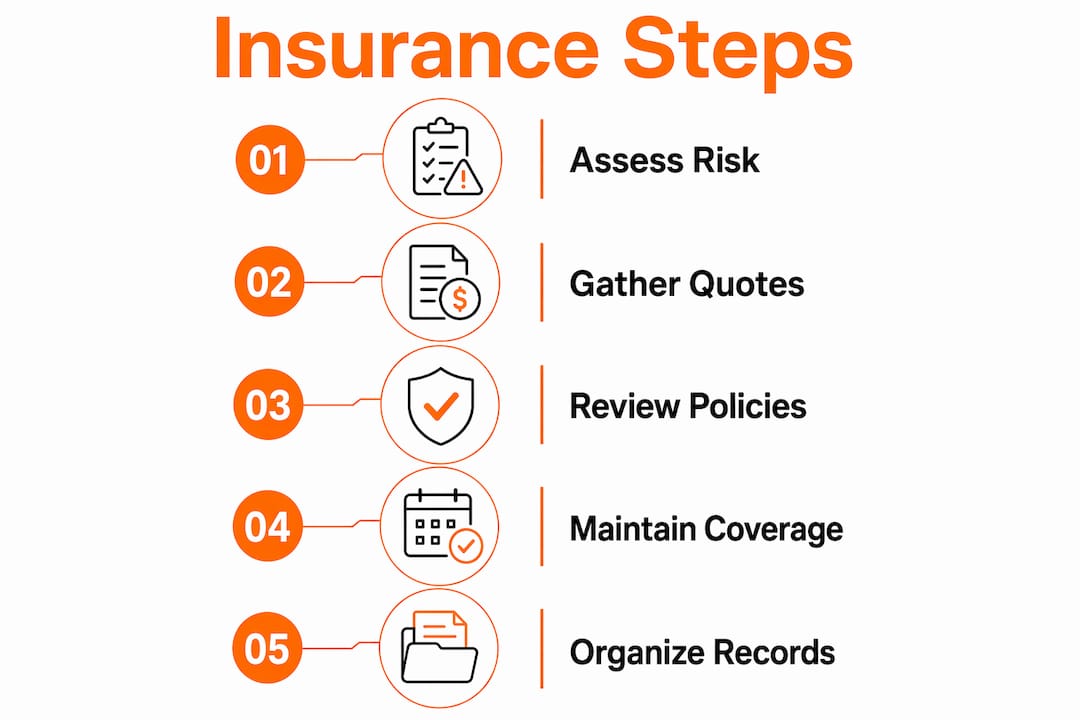
First, assess your actual risks. What type of work do you do, where do you do it, and what could go wrong? A day laborer working on construction sites faces different exposures than a freelance graphic designer working from home.
Second, gather quotes from at least three carriers. Providers such as Next Insurance, The Hartford, BiBerk, and American Family all offer policies tailored to independent contractors. Comparing quotes takes less than an hour online and can reveal meaningful price differences for equivalent coverage.
Third, review each policy carefully before signing. Confirm what is and is not covered, check whether clients or hirers require a Certificate of Insurance (COI), and verify that coverage limits meet any contractual requirements you face.
Fourth, maintain your coverage actively. Tyler Peterson, head of professional risks at Hiscox USA, recommends reviewing policies at least every two years, and sooner if your work changes significantly. Letting a policy lapse, even briefly, can create gaps that leave a claim unresolved.
Finally, keep your income records organized. Consistent documentation of your gig earnings supports both your tax filings and any future insurance applications or claims.
Key Takeaways
Gig workers who treat insurance as a modular, self-managed responsibility, rather than assuming platform or employer coverage will protect them, are far better positioned to sustain their income and weather unexpected setbacks.
| Point | Details |
|---|---|
| Classification drives coverage | 1099 contractors are excluded from employer benefits and must secure all insurance independently. |
| Platform policies have real limits | Occupational accident programs lack statutory protections; auto coverage often applies only during active tasks. |
| Build coverage modularly | Match policy types to your actual risks: general liability for laborers, E&O for service freelancers, commercial auto for drivers. |
| Costs are manageable | General liability averages $42/month; premiums are tax-deductible for self-employed workers. |
| Chambanow supports stability | Consistent job access and income documentation through Chambanow strengthen your position when applying for individual coverage. |
Recommended
Building knowledge that works.