
How to Build a Reputation That Turns Day Jobs Into Steady Work
Steady work usually comes from a handful of hirers who trust you, not from hundreds of strangers.
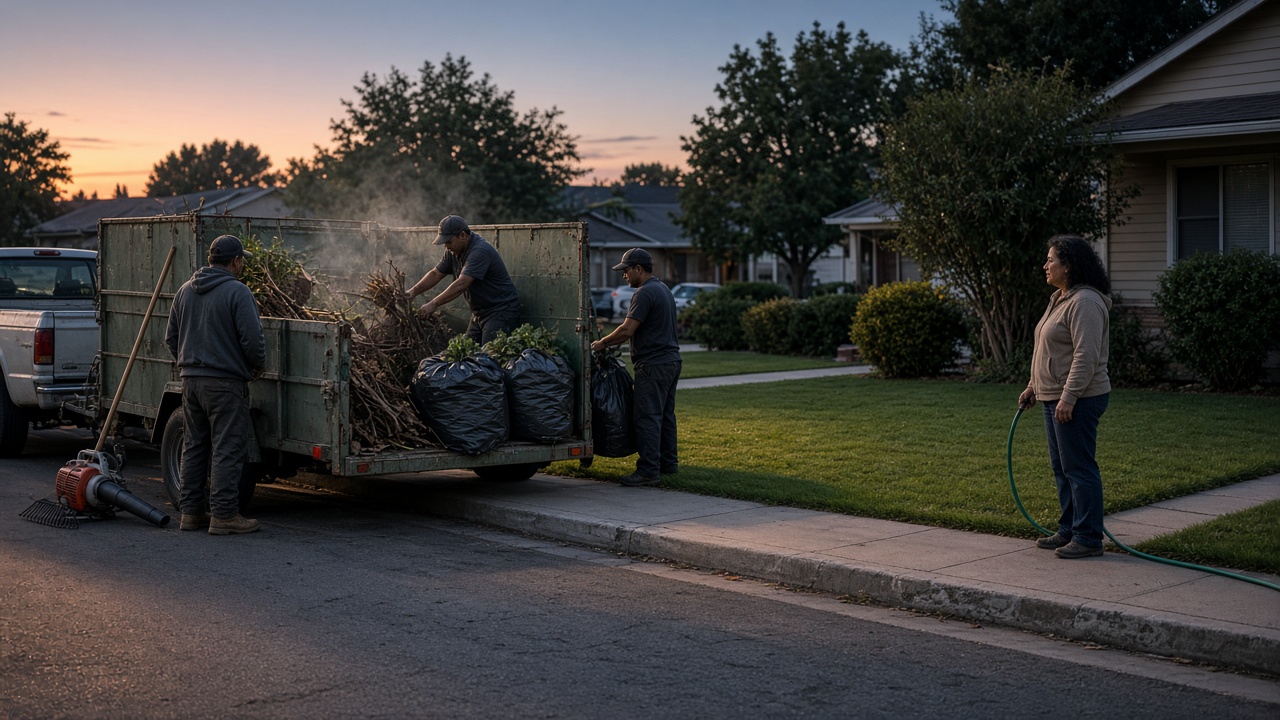
Steady work usually comes from a handful of hirers who trust you, not from hundreds of strangers.
Day labor can feel like starting over every morning. But the workers who stay busy all year rarely depend on luck. They have five, ten, or twenty people who call them first. That is a reputation, and you can build it on purpose. This guide covers how to build a reputation that turns scattered day jobs into regular work, and how to protect it once you have it.
What a reputation really is on day labor jobs
To a hirer, your reputation is the answer to one question: "If I call this person, will the job get done without problems?" Every job you do adds to that answer or takes away from it.
O*NET, the Labor Department's job database, lists dependability as a key work style for construction occupations (https://www.onetonline.org/link/summary/47-2061.00). Skill matters, but most hirers say yes to the worker they can count on.
Who you are building a reputation with
In the 2006 "On the Corner" national day labor study, homeowners and renters made up 49 percent of day laborers' employers and construction contractors 43 percent (https://www.coshnetwork.org/sites/default/files/Day%20Labor%20study%202006.pdf). The data is from 2004, but the two groups still matter in different ways.
- Contractors can give you repeat work week after week if they trust you
- Homeowners may only have one project, but they refer you to neighbors, friends, and family
Treat both as long-term relationships, not one-time transactions.
The five habits that build a reputation
Do exactly what you said you would
Show up when you said, for as long as you said, at the rate you agreed. If anything changes, tell the hirer before it becomes their problem. One no-show can undo ten good jobs.
Do the work well, even when no one is checking
Finish completely. Clean up as if the hirer will inspect every corner, because often they will. Small details, like coiled cords, swept floors, and stacked leftover material, are what people remember.
Communicate early and simply
Confirm the job the night before. Text when you are on your way if the hirer likes that. Tell them about problems as soon as you see them. Ask before doing anything outside the agreed job.
Treat people and property with respect
Respect the hirer's home or site, the other workers, and neighbors. Keep your language clean around clients. Do not take shortcuts that damage anything.
Be honest about what you can and cannot do
Say yes to work you can do and "I'm still learning that" to work you cannot. Hirers remember the worker who bluffed and ruined a wall far longer than the one who said "I don't do tile, but I know someone."
Pick a specialty people can remember you for
"General labor" is hard to remember. "The guy who does great demo" or "the woman who does clean, fast fence installs" is easy to remember and easy to refer. Pick one or two things you do especially well and let hirers know.
Specialties often pay better too. The Bureau of Labor Statistics reports that construction laborers and helpers earned a median of $22.44 an hour in May 2025, while skilled trades such as carpenters ($29.12) earned more (https://www.bls.gov/ooh/construction-and-extraction/construction-laborers-and-helpers.htm). Becoming known for one skill is often the first step toward a trade.
Keep a hirer list
The workers with steady work all keep some version of a contact list. A phone note works fine.
- Name, phone number, and how you met
- Type of work they usually need
- Rate you agreed on last time
- Dates of past jobs
- Notes, such as "has rental properties" or "remodels kitchens every spring"
Check in with your list a few times a year with a short, polite message, especially before busy seasons. Do not spam.
Build proof that others can see
A reputation travels faster when people can see it.
- Photos of finished work, taken with permission, on your phone
- Two or three hirers willing to give a reference
- Reviews or ratings on any platform you use
- Training cards, such as an OSHA 10, that show you take the work seriously
- A complete worker profile that lists your skills, area, and availability
On ChambaNOW, workers can post skills and availability for free and get notifications when jobs are available at https://chambanow.com/for-workers. Hirers can see what you do, and returning hirers can find you again.
Ask for referrals the right way
When a job goes well, it is normal to ask once: "If you know anyone else who needs help, I'd appreciate you passing my name along." Then thank anyone who refers you, and do your best work for the person they sent.
Know when to say no
Protecting your reputation sometimes means turning work down.
- Say no to jobs you are not qualified for, or bring in someone who is
- Say no to double-booking, even if the money is good
- Say no to unsafe shortcuts; a bad injury or a bad result hurts your name
- Say no to hirers who do not pay; a reputation with bad hirers does not help you
If a hirer refuses to pay wages you are owed as an employee, the Department of Labor's Wage and Hour Division takes confidential complaints at 1-866-487-9243, and employers cannot retaliate against you for filing (https://www.dol.gov/agencies/whd/contact/complaints).
Your reputation online
More hirers now find workers through apps and websites, so part of your reputation lives online. Keep your profile current, use a clear photo of yourself if the platform allows it, describe your skills honestly, and answer messages politely, even when you have to say no. A short, professional reply to a job you cannot take still leaves a good impression. If a review is unfair, respond calmly or not at all; arguing in public rarely helps.
How to recover from a bad day
Everyone has one. If you made a mistake, own it right away, offer to fix it, and do not make excuses. Most hirers forgive an honest mistake that gets fixed. Very few forgive one that gets hidden.
Why reputation pays off now
Reliable workers are in demand. BLS projects about 137,000 openings a year for construction laborers and helpers from 2025 to 2035, and Associated Builders and Contractors estimated in January 2026 that construction needs about 349,000 net new workers this year (https://www.abc.org/News-Media/News-Releases/abc-construction-industry-must-attract-349000-workers-in-2026-despite-macroeconomic-headwinds). In a market like that, the workers with a good name get first pick of the jobs.
A monthly reputation check
This is an example routine, not a rule.
- Add every new hirer to your list
- Ask one satisfied hirer for a review or referral
- Update your profile with new skills, photos, or cards
- Look back at any job that went badly and decide what to do differently
ChambaMatters also has related reading at https://chambanow.com/chambamatters/building-a-reputation-that-gets-you-more-work and https://chambanow.com/chambamatters/how-to-stand-out-and-get-hired-more-often.
Key takeaways
- Your reputation is whether hirers trust that the job will get done without problems
- Reliability, quality, early communication, respect, and honesty are the five core habits
- Pick a specialty so people can remember and refer you
- Keep a hirer list, build visible proof, and ask for referrals once
- Protect your name by saying no to unsafe, unqualified, double-booked, or unpaid work
Sources
- O*NET OnLine, 47-2061.00 Construction Laborers: https://www.onetonline.org/link/summary/47-2061.00
- U.S. Bureau of Labor Statistics, Construction Laborers and Helpers: https://www.bls.gov/ooh/construction-and-extraction/construction-laborers-and-helpers.htm
- Valenzuela, Theodore, Meléndez, and Gonzalez, "On the Corner," 2006: https://www.coshnetwork.org/sites/default/files/Day%20Labor%20study%202006.pdf
- Associated Builders and Contractors, January 15, 2026: https://www.abc.org/News-Media/News-Releases/abc-construction-industry-must-attract-349000-workers-in-2026-despite-macroeconomic-headwinds
- U.S. Department of Labor, Wage and Hour Division, How to File a Complaint: https://www.dol.gov/agencies/whd/contact/complaints
Written by Barry Graham, Founder, ChambaNOW
Construyendo conocimiento que funciona.