
A Guide to Hiring Day Laborers for a Home Project
Hiring day laborers for a home project goes best when you plan it in stages, starting a week ahead.
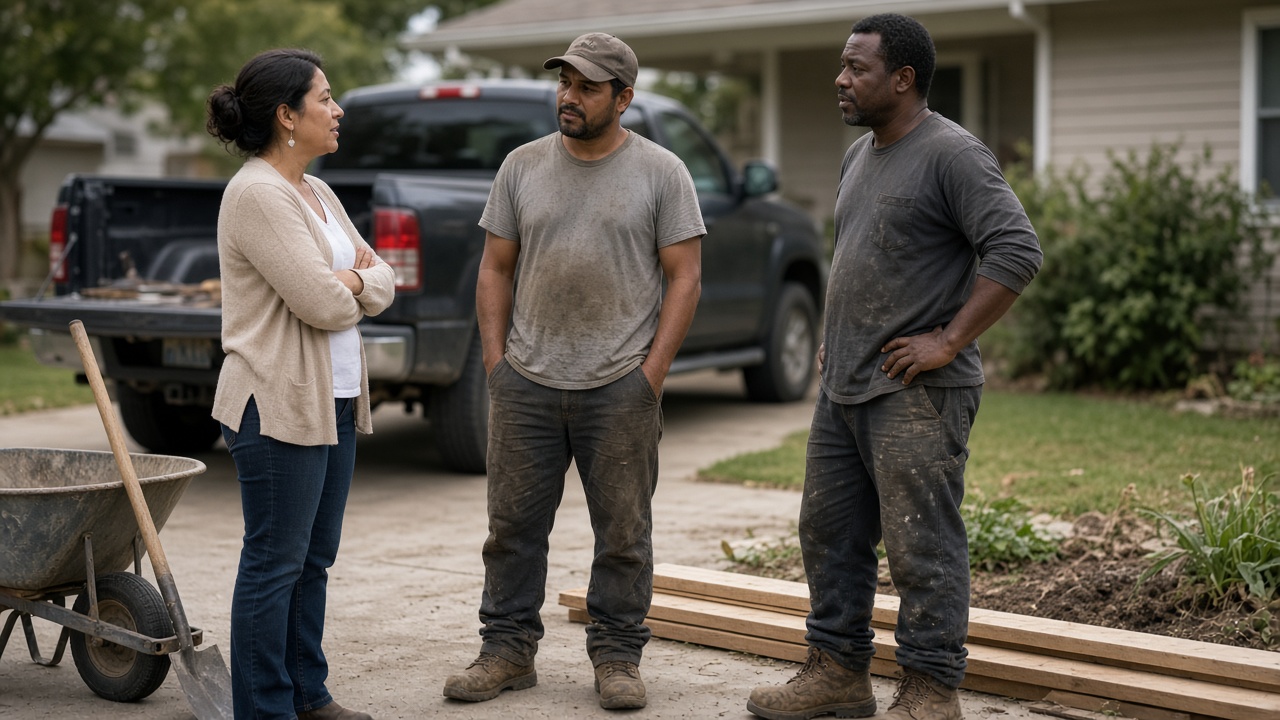
Hiring day laborers for a home project goes best when you plan it in stages, starting a week ahead.
Most home projects that go wrong with hired help do not go wrong because of the workers. They go wrong because the job was not ready, the pay was unclear, or nobody decided what "done" meant. This guide walks you through the whole hiring process as a timeline, so each decision happens at the right moment instead of all at once on the driveway at 7 a.m.
If you want a list of project ideas that suit day labor, ChambaMatters already has one in 25 Home Projects Perfect for Hiring Day Laborers (https://chambanow.com/chambamatters/25-home-projects-perfect-for-hiring-day-laborers). This guide is about the process of hiring for whichever project you pick.
Step 1 Decide whether day labor is the right fit
Day laborers are a great match for work that is physical, clearly defined, and does not require a license or a permit. Think hauling, loading, digging planting beds, yard cleanup, moving furniture, demo of non-structural items like old carpet or a shed, or helping you with a project you are leading yourself.
Day labor is usually the wrong fit when the work needs a licensed trade, such as electrical, plumbing, gas, or HVAC, or when it needs a building permit. Rules vary by state and city, so check with your local building department before you hire for anything beyond general labor. ChambaMatters explains the licensing side in Can a Homeowner Hire Labor Without a Contractor’s License? (https://chambanow.com/chambamatters/can-a-homeowner-hire-labor-without-a-contractor-s-license).
Run two quick checks before you go further.
- If your home was built before 1978 and the job will sand, scrape, cut, or remove painted surfaces, read the lead section below first
- If anyone will dig, even for a fence post or a shrub, you will need to contact 811 a few business days ahead
Step 2 One week out: define the job
Write down the job in plain words. A short paragraph is enough if it answers four questions: what needs to be done, where on the property, how you will know it is finished, and what is not included. ChambaMatters has a full walkthrough in How to Write a Clear Scope of Work Before a Day Labor Job Starts (https://chambanow.com/chambamatters/how-to-write-a-clear-scope-of-work-before-a-day-labor-job-starts).
Then estimate the size of the job. How many people, for how many hours? The crew-size guide at https://chambanow.com/chambamatters/how-many-workers-do-you-need-a-crew-size-guide-for-moving-landscaping-and-cleanu gives practical starting points for moving, landscaping, and cleanup.
Step 3 One week out: set the pay
Decide the rate before you post, not after workers arrive. Two numbers help you sanity-check it.
- The legal floor: your state and city minimum wage. The federal minimum is $7.25 an hour, but many states and cities set higher rates, according to the U.S. Department of Labor (https://www.dol.gov/agencies/whd/minimum-wage/state)
- A market reference: the Bureau of Labor Statistics reports a May 2025 median wage of $18.38 an hour for hand laborers and material movers, and $19.27 for grounds maintenance workers (https://www.bls.gov/ooh/transportation-and-material-moving/hand-laborers-and-material-movers.htm). Local day-labor rates can run higher or lower than these national medians
Also decide how you will pay (cash, check, or app), when (same day is standard for one-day jobs), and whether you are paying by the hour or by the day. For typical rates by job type, see How Much Should You Pay a Day Laborer in 2026? (https://chambanow.com/chambamatters/how-much-should-you-pay-a-day-laborer-in-2026-rates-by-job-type).
Step 4 Five days out: find workers
Post the job where local workers actually look. ChambaNOW is free to post: you describe the job, and workers in your area can apply to it. You can then message applicants about that posted job to confirm details. Start at https://chambanow.com/for-hirers, or browse a city page such as https://chambanow.com/hire/houston-tx/general_labor or https://chambanow.com/hire/phoenix-az/general_labor to see how local hiring works.
Whatever channel you use, a good post includes the date, start time, expected length, location (neighborhood is enough at first), pay rate, the tasks, how heavy the lifting is, and what tools you provide.
Step 5 Three days out: screen and choose
Read each response and ask a few short questions by message or phone.
- Have you done this kind of work before? Where?
- Can you arrive at the start time, and how are you getting here?
- Are you comfortable with the lifting, the heat, or the heights involved?
- Do you have the tools we listed, or should I provide them?
Pick people who answer clearly and specifically. If the job involves a specific skill, the ChambaMatters guide How to Confirm a Worker’s Skills Without a Formal Resume (https://chambanow.com/chambamatters/how-to-confirm-a-worker-s-skills-without-a-formal-resume) shows how to check it.
Step 6 The day before: confirm in writing
Send each worker one message with everything in it: address, start time, where to park, tasks, pay rate, pay method, when you will pay, and your phone number. Ask them to reply to confirm. A written confirmation protects both sides if anyone remembers the deal differently.
Hi Marco, confirming tomorrow, Saturday: 7:30 a.m. start at 1420 Elm St. Park on the street, not the driveway. Job is loading the old deck boards into the trailer and raking the yard. $25/hour, paid by Zelle when we finish. Expected 6 hours. Call me at 555-0142 if anything changes.
Step 7 Day of: start strong
Spend the first ten minutes walking the job with the crew. Show them the work area, where materials and tools are, where to put debris, the restroom, water, and anything off-limits. Point out hazards you know about, such as a soft spot in the deck or a buried sprinkler line.
Stay reachable all day, but do not hover. Check in at natural breaks. If the scope changes, agree on the change and the pay out loud, then confirm by text.
Step 8 After the job: close it out
Walk the finished work with the crew before anyone leaves. Pay in full as agreed, and keep a simple record: date, names, hours, amount, and how you paid. The IRS encourages household employers who are not required to file a W-2 to give workers a receipt with the dates worked, wages paid, and a description of the work (https://www.irs.gov/publications/p926).
Tax rules depend on the situation. Payments for personal work on your own home are generally not reported on Form 1099-NEC, which covers payments made in the course of a trade or business (https://www.irs.gov/pub/irs-pdf/i1099mec.pdf). Separately, if you pay one household employee $3,000 or more in cash wages in 2026, household employment taxes can apply (https://www.irs.gov/publications/p926). If you are unsure, ask a tax professional. ChambaMatters covers payment records in Cash, Check, or App: How to Pay Day Laborers and Keep Records (https://chambanow.com/chambamatters/cash-check-or-app-how-to-pay-day-laborers-and-keep-records).
Finally, save the contact info of workers who did good work. The fastest hire for your next project is someone who already knows your property.
Watch-outs for older homes and digging
If your home was built before 1978, EPA's Renovation, Repair and Painting Rule requires anyone paid to do work that disturbs painted surfaces there to be lead-safe certified and trained, with exceptions for small jobs (https://www.epa.gov/lead/renovation-repair-and-painting-program). For sanding, scraping, or removing painted trim, siding, or walls, EPA recommends hiring a lead-safe certified contractor.
For digging, 811 is the national call-before-you-dig number. You or the person doing the work should contact 811 a few business days ahead so buried utility lines get marked (https://call811.com/before-you-dig/).
Quick hiring timeline
- One week out: define the job, estimate crew size, set pay
- Five days out: post the job with full details
- Three days out: screen and choose workers
- Day before: confirm everything in writing
- Day of: walk the job, stay reachable, confirm changes by text
- After: inspect, pay in full, keep a record, save good contacts
This guide is general information, not legal or tax advice. Rules vary by state and city.
Sources
- U.S. Department of Labor, State Minimum Wage Laws: https://www.dol.gov/agencies/whd/minimum-wage/state
- Bureau of Labor Statistics, Hand Laborers and Material Movers: https://www.bls.gov/ooh/transportation-and-material-moving/hand-laborers-and-material-movers.htm
- Bureau of Labor Statistics, Grounds Maintenance Workers: https://www.bls.gov/ooh/building-and-grounds-cleaning/grounds-maintenance-workers.htm
- IRS, Publication 926, Household Employer's Tax Guide: https://www.irs.gov/publications/p926
- IRS, Instructions for Forms 1099-MISC and 1099-NEC: https://www.irs.gov/pub/irs-pdf/i1099mec.pdf
- EPA, Lead Renovation, Repair and Painting Program: https://www.epa.gov/lead/renovation-repair-and-painting-program
- 811, Before You Dig: https://call811.com/before-you-dig/
Written by Barry Graham, Founder, ChambaNOW
Building knowledge that works.