
How Many Workers Do You Need? A Crew-Size Guide for Moving, Landscaping, and Cleanup
Most small moving, landscaping, and cleanup jobs need two to four workers, but the right number comes from a quick calculation rather than a guess. Estimate the total labor-hours t
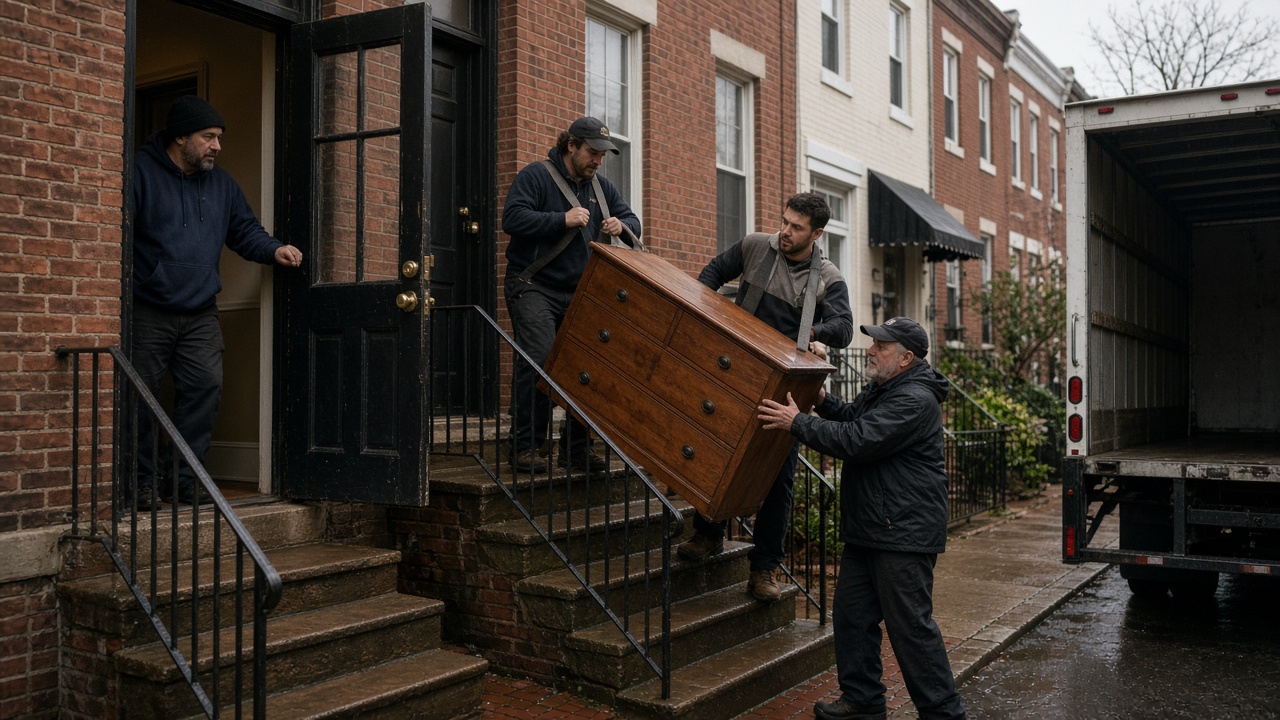
Most small moving, landscaping, and cleanup jobs need two to four workers, but the right number comes from a quick calculation rather than a guess. Estimate the total labor-hours the job requires, divide by the hours you actually have, and round up. Then add people for any task one person cannot do safely, such as lifting heavy furniture, working on a ladder that needs a spotter, or working in high heat. Two workers is the practical minimum for anything involving heavy lifting, because many items should not be lifted by one person.
This article is general planning information. The time estimates below are approximate rules of thumb, not official standards. No government agency publishes crew-size requirements for residential moving or yard work, so adjust them to your own job and ask the workers for their estimate.
What is a labor-hour?
A labor-hour, also called a man-hour or person-hour, is one hour of work by one person. A job that takes two workers four hours is eight labor-hours.
What is the basic crew-size formula?
- Step 1: list every task and estimate how long one person would take
- Step 2: add those times to get total labor-hours
- Step 3: decide how many hours you want the job to take
- Step 4: divide labor-hours by available hours and round up
- Step 5: add workers for safety needs such as heavy lifts, spotters, or heat
- Step 6: add a buffer of about 15 to 25 percent for setup, breaks, and surprises
Example: a garage cleanout you estimate at 10 labor-hours, which you want done in about 4 hours, needs 10 divided by 4, or 2.5 workers, rounded up to 3. If most items are light and the weather is mild, 2 workers for 5 hours may be fine instead.
Why do heavy items need at least two workers?
NIOSH, the federal worker safety research agency, uses a load constant of 51 pounds in its lifting equation, the maximum recommended weight for an ideal two-handed lift under the best conditions. Real lifts are rarely ideal: the recommended weight drops when loads are lifted from the floor, held far from the body, twisted, or lifted often (https://www.cdc.gov/niosh/media/pdfs/Ergonomic-Guidelines-for-Manual-Material-Handling_2007-131.pdf). Anything heavier than that, such as dressers, appliances, mattresses on stairs, or large planters, should be a team lift or moved with equipment.
The Bureau of Labor Statistics says hand laborers and material movers lift and carry heavy objects, and that hand laborers and freight, stock, and material movers have some of the highest rates of injuries and illnesses of all occupations (https://www.bls.gov/ooh/transportation-and-material-moving/hand-laborers-and-material-movers.htm). A bigger crew is often cheaper than an injury.
How many workers for a moving job?
Factors that add time: stairs, long walks from the door to the truck, elevators you have to wait for, fragile items, and disassembly.
- Studio or small one-bedroom, ground floor, mostly packed: 2 workers is a common starting point
- Two-bedroom with stairs or heavy furniture: 3 workers is a common starting point
- Three-bedroom house or more: 3 to 4 workers, or split into loading and unloading crews
- Single heavy item, such as a piano, gun safe, or large appliance: at least 2 workers plus the right equipment; some items call for a specialist
These are approximate starting points, not standards. Unpacked boxes, long carries, and stairs can double the time.
How many workers for a landscaping job?
- Lawn mowing and edging on a typical lot: 1 to 2 workers
- Leaf cleanup and bagging: 2 workers; bagging goes faster with one raking and one holding bags
- Mulch or gravel spreading by the cubic yard: 2 to 3 workers, with one loading wheelbarrows
- Shrub removal or stump digging: 2 workers, plus a third for hauling
- Sod installation: 2 to 4 workers, because sod should go down soon after delivery
NIOSH recommends increasing the number of workers per task as a way to reduce heat stress (https://www.cdc.gov/niosh/heat-stress/recommendations/). On hot days, plan one more worker than you would otherwise and rotate tasks.
How many workers for a cleanup or junk removal job?
- Single room or small garage: 2 workers
- Full garage, basement, or attic: 2 to 3 workers
- Whole-house cleanout or estate cleanout: 3 to 5 workers, possibly over more than one day
- Post-construction cleanup: 2 workers per floor or unit is a reasonable starting point
Junk removal is often limited by trips to the dump, not by labor. If the truck has to leave and come back, an extra worker may just wait. Plan the crew around the vehicle and the disposal schedule.
When do you need extra people for safety?
- Ladders: a second person to steady and spot; ladders appear on OSHA's 2026 preliminary list of most frequently cited standards (https://www.osha.gov/top10citedstandards)
- Roofs, decks, or any work at height: someone on the ground, and proper fall protection for workers
- Power equipment: one person operating, others clear of the work zone
- Heat: a buddy system so workers can watch each other, as OSHA and NIOSH recommend
- New workers: OSHA advises easing new workers into heavy work in hot weather (https://www.osha.gov/heat-exposure/protecting-new-workers)
Is one big crew always faster?
No. Adding workers helps until they start getting in each other's way. In a narrow hallway or a small yard, a fourth person may add little. A crew lead, someone who knows the plan and directs the others, often matters more than another pair of hands.
Crew-size planning checklist
- List tasks and estimate one-person time for each
- Note heavy items, stairs, distances, and parking
- Check the weather forecast and heat index
- Confirm the truck, dumpster, or disposal plan
- Decide who leads the crew and answers questions
- Plan tools for every worker, so no one waits for a shovel
- Ask workers for their own estimate; experienced workers often know better
- Agree on what happens if the job finishes early or runs long
What about cost?
More workers for fewer hours often costs about the same as fewer workers for more hours, because you are paying for labor-hours either way. The difference is travel time, minimum hours some workers charge, and the risk of fatigue. ChambaMatters covers pricing in the guide to pricing a one-day moving, junk removal, or yard-work job.
Where does ChambaNOW fit?
When you post a job, list the number of workers you need and why, so each worker knows it is a team job. Posting a job on ChambaNOW is free, and you can browse local help by task, for example moving help at https://chambanow.com/hire/chicago-il/moving, landscaping at https://chambanow.com/hire/atlanta-ga/landscaping, or junk removal at https://chambanow.com/hire/san-antonio-tx/junk_removal. See how hiring works at https://chambanow.com/for-hirers.
Key takeaways
- Crew size equals estimated labor-hours divided by available hours, rounded up, plus safety additions
- Two workers is the minimum for heavy lifting; NIOSH's ideal-lift constant is 51 pounds
- Add a worker on hot days and rotate tasks, as NIOSH recommends
- Disposal trips and narrow spaces can limit how much extra workers help
- Treat all crew-size numbers here as approximate starting points and confirm with the workers
Sources
- NIOSH, Ergonomic Guidelines for Manual Material Handling (2007-131)
- NIOSH, Heat Stress Recommendations
- OSHA, Protecting New Workers; Top 10 Most Frequently Cited Standards
- Bureau of Labor Statistics, Occupational Outlook Handbook, Hand Laborers and Material Movers
Written by Barry Graham, Founder, ChambaNOW
Building knowledge that works.