
Moving Helper Jobs: What They Pay and How to Get Hired
Moving helper jobs pay about $19 an hour at the national median and are easy labor jobs to start.
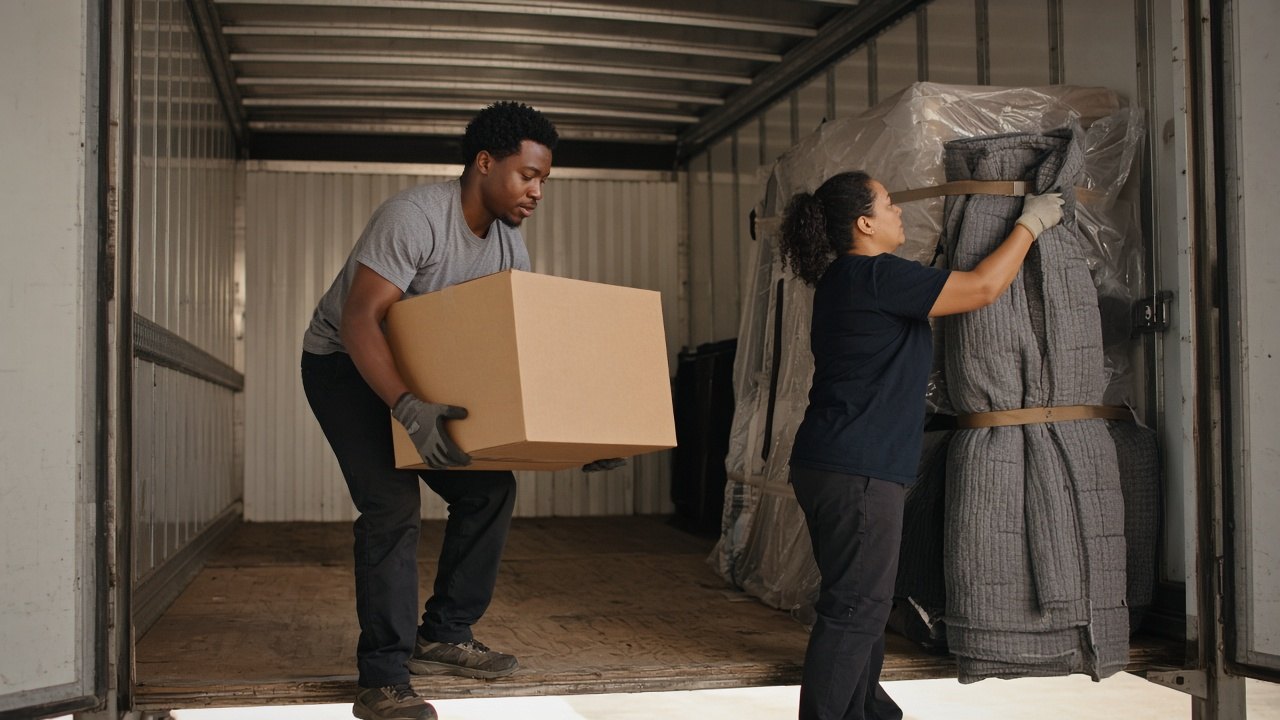
Moving helper jobs pay about $19 an hour at the national median and are easy labor jobs to start.
Moving help is steady work. People move every month, and the end of the month and weekends are especially busy. You do not need a license or years of experience, but you do need strength, care, and reliability. This guide covers what moving helper jobs pay, what the work involves, how to get hired, and how to stay safe.
What does a moving helper do?
A moving helper loads and unloads trucks, carries furniture and boxes, wraps and protects items, and sometimes packs or takes apart furniture. Some jobs are labor-only, where the customer rents the truck or container and the helper does the lifting. Others are with a moving company that supplies the truck and a crew lead.
The short answer: a moving helper is paid to lift, carry, protect, and load belongings safely, usually for a few hours to a full day at a time.
How much do moving helpers make?
The Bureau of Labor Statistics groups moving helpers with hand laborers and material movers. In May 2025 data, that group earned a national median of $19.35 per hour, with the middle half between $17.35 and $22.56. The median annual wage was $40,240 for people working full time.
Pay is higher in many big metro areas. Here are the BLS May 2025 medians for the same group of workers.
- San Francisco and Oakland metro: $23.27 per hour
- San Jose metro: $22.63 per hour
- Phoenix metro: $21.61 per hour
- Los Angeles metro: $20.38 per hour
- Dallas–Fort Worth metro: $18.52 per hour
- Houston metro: $18.27 per hour
Labor-only jobs found directly through hirers may pay differently than company jobs, and tips are sometimes added for hard moves. See how much should you tip movers and day laborers (https://chambanow.com/chambamatters/how-much-should-you-tip-movers-and-day-laborers) for the hirer side of that question.
What skills do moving helpers need?
You can start with no experience, but these skills help you get hired and rehired.
- Safe lifting and team lifting
- Using an appliance dolly, furniture dollies, and straps
- Wrapping furniture with blankets and stretch wrap
- Loading a truck tightly so nothing shifts
- Basic disassembly of beds, tables, and shelves
- Protecting floors, door frames, and walls
- Clear communication with the customer and the crew
ChambaMatters covers the broader skill set in what skills do you need to be a day laborer (https://chambanow.com/chambamatters/what-skills-do-you-need-to-be-a-day-laborer).
How do you get hired as a moving helper?
- Step 1: Build a simple profile. List any moving, warehouse, or delivery experience, and the equipment you can use.
- Step 2: Show you are reliable. Hirers care most about workers who show up on time.
- Step 3: Bring basic gear. Work gloves and closed-toe shoes with good grip are the minimum.
- Step 4: Respond fast. Moving jobs fill quickly, especially near the end of the month.
- Step 5: Ask the right questions before you accept. Stairs, elevators, heavy items, and the distance from the door to the truck all change the job.
- Step 6: Do careful work. Customers remember a worker who protected their furniture.
- Step 7: Ask for repeat work. Property managers, realtors, and small businesses move things often.
See how to find day labor jobs near you (https://chambanow.com/chambamatters/how-to-find-day-labor-jobs-near-you) and how to get rehired after a one-day labor job (https://chambanow.com/chambamatters/how-to-get-rehired-after-a-one-day-labor-job).
Labor-only jobs vs. working for a moving company
Labor-only jobs come straight from customers who rented their own truck, container, or trailer. You arrive, load or unload, and leave. These jobs are often short, flexible, and easy to fit around other work. Working for a moving company usually means a set schedule, a company truck, a crew lead, and pay through the company's payroll. Company work can offer steadier hours and training, while labor-only work gives you more control over which jobs you take. Many workers do both, using labor-only jobs to fill gaps between company shifts.
Questions to ask before you accept a moving job
- How many rooms, and how many large items?
- Are there stairs or an elevator? Is the elevator reserved?
- How far is the truck from the door?
- Are there pianos, safes, or very heavy items?
- Is the truck or container already there, and who is driving?
- Are items packed, or is packing part of the job?
- What is the rate, and how will I be paid?
How do moving helpers stay safe?
Moving is one of the most physically demanding labor jobs. Back injuries are common, and they can keep you out of work. The National Institute for Occupational Safety and Health uses 51 pounds as the starting limit for a one-person lift under ideal conditions, and the safe limit drops for awkward, low, or repeated lifts.
- Step 1: Size up the load before you lift. Test the weight by tipping a corner.
- Step 2: Keep the load close to your body and lift with your legs.
- Step 3: Do not twist. Turn your feet instead.
- Step 4: Use dollies and straps for anything heavy.
- Step 5: Lift with a partner and agree on signals.
- Step 6: Wear gloves with grip and shoes with good soles.
- Step 7: Drink water and take breaks, especially in heat.
Moving helpers should also read how to lift heavy objects safely (https://chambanow.com/chambamatters/how-to-lift-heavy-objects-safely-a-back-safety-guide-for-laborers), another ChambaMatters guide, and heat safety for outdoor labor (https://chambanow.com/chambamatters/heat-safety-for-outdoor-labor-water-shade-and-rest-breaks).
Can moving help become a career?
Yes. Many movers become crew leads or drivers. Driving a large moving truck can require a commercial driver's license depending on the vehicle's weight, and interstate movers have federal rules from the Federal Motor Carrier Safety Administration. Warehouse experience can also lead to forklift and logistics work. See how to go from day laborer to crew lead (https://chambanow.com/chambamatters/how-to-go-from-day-laborer-to-crew-lead).
A moving helper checklist
- Gear: gloves, good shoes, water bottle
- Tools: dolly and straps if you have them
- Details: address, stairs, elevator, and heavy items confirmed
- Pay: rate and payment method confirmed in a message
- Timing: start time and expected length
- Record: note your hours and the hirer's contact
Find moving jobs on ChambaNOW
ChambaNOW lists moving jobs in English and Spanish in cities like Houston (https://chambanow.com/jobs/in/houston-tx/moving), Los Angeles (https://chambanow.com/jobs/in/los-angeles-ca/moving), Phoenix (https://chambanow.com/jobs/in/phoenix-az/moving), and Dallas (https://chambanow.com/jobs/in/dallas-tx/moving). Workers always use ChambaNOW free. Build your profile on the worker page (https://chambanow.com/for-workers).
Quick answers
How much do moving helpers make an hour?
Hand laborers and material movers earned a national median of $19.35 per hour in May 2025.
Do you need experience to be a moving helper?
No. Reliability, safe lifting, and careful handling matter most.
When are moving jobs busiest?
Weekends and the end of the month are usually the busiest times.
What should I wear to a moving job?
Work gloves, closed-toe shoes with good grip, and clothes you can move in.
Sources - U.S. Bureau of Labor Statistics, OEWS May 2025, Laborers and Freight, Stock, and Material Movers, Hand (53-7062) (https://www.bls.gov/oes/current/oes537062.htm) - U.S. Bureau of Labor Statistics, OEWS May 2025, metropolitan area data for San Francisco-Oakland, San Jose, Phoenix, Los Angeles, Dallas-Fort Worth, and Houston (https://www.bls.gov/oes/current/oessrcma.htm) - CDC/NIOSH, Applications Manual for the Revised NIOSH Lifting Equation (https://www.cdc.gov/niosh/docs/94-110/default.html) - OSHA, Materials Handling and Storage (https://www.osha.gov/sites/default/files/publications/osha2236.pdf) - FMCSA, Protect Your Move (https://www.fmcsa.dot.gov/protect-your-move) - FMCSA, Commercial Driver's License (https://www.fmcsa.dot.gov/registration/commercial-drivers-license)
Written by Barry Graham, Founder, ChambaNOW
Construyendo conocimiento que funciona.