
What Skills Do You Need to Be a Day Laborer?
The skills that get day laborers hired again are simple to learn and easy to prove.
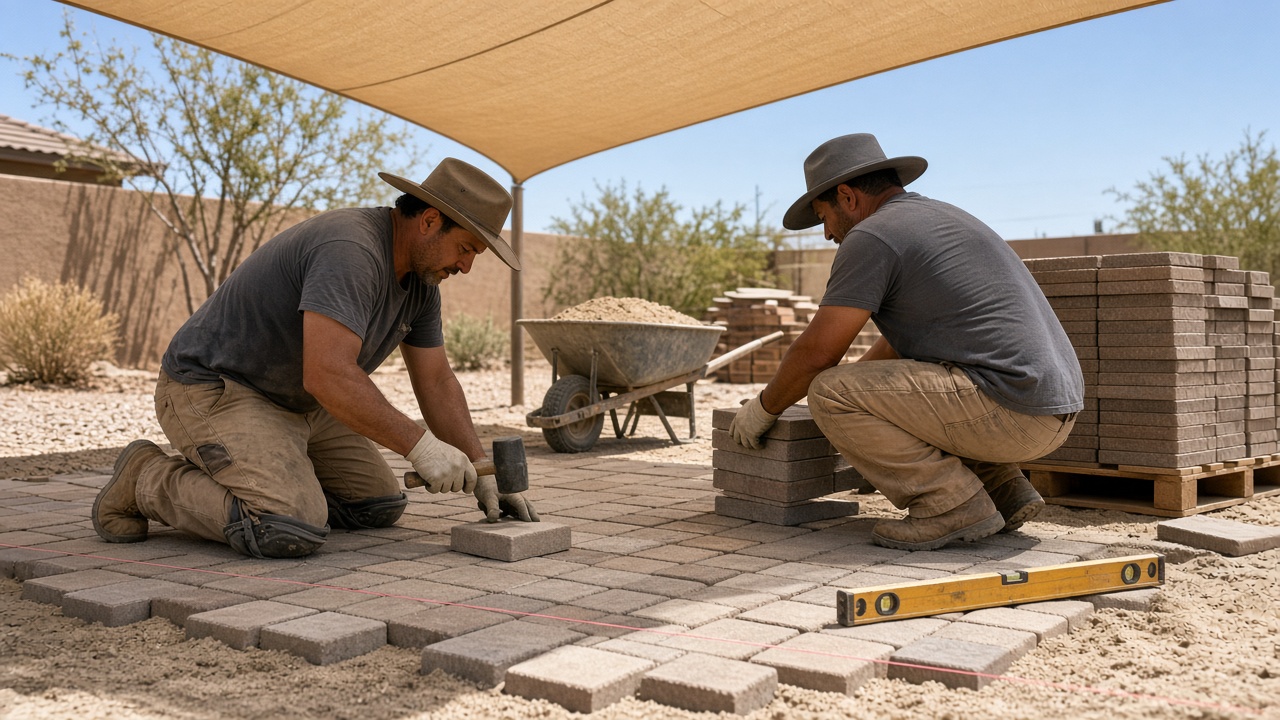
The skills that get day laborers hired again are simple to learn and easy to prove.
You do not need a trade license or a long resume to work day labor. But hirers notice fast who can handle the work and who cannot. The good news is that the core skills are learnable in weeks, not years. This guide breaks them into five groups, shows which jobs ask for which skills, and explains how to prove what you can do.
What the government says the job requires
The Bureau of Labor Statistics lists the important qualities for construction laborers and helpers as physical stamina, physical strength, basic math, mechanical skills, and interpersonal skills, plus color vision for electricians' helpers (https://www.bls.gov/ooh/construction-and-extraction/construction-laborers-and-helpers.htm). For hand laborers and material movers, which covers much moving and loading work, BLS says on-the-job training usually takes a month or less, and the workers have some of the highest injury and illness rates of all occupations (https://www.bls.gov/ooh/transportation-and-material-moving/hand-laborers-and-material-movers.htm).
Put those together and you get the real skill list: work hard without getting hurt, use basic tools, measure and count, and get along with a crew.
Physical skills: strength, stamina, and safe lifting
Strength helps, but stamina and technique matter more. A worker who lifts smart and keeps a steady pace for eight hours is worth more than one who goes all out until noon and then fades.
Safe lifting is a skill, not a talent. The NIOSH lifting equation, from a 2007 federal guide, uses 51 pounds as the starting point for an ideal two-handed lift, and the recommended limit drops when the load is far from your body, low to the ground, twisted, or lifted often (https://www.cdc.gov/niosh/media/pdfs/Ergonomic-Guidelines-for-Manual-Material-Handling_2007-131.pdf). In practice that means keep loads close, lift with your legs, turn your feet instead of twisting your back, and ask for a second person or a dolly on anything heavy or awkward.
Other physical skills hirers notice.
- Pacing yourself so you finish the day strong
- Working in heat and drinking water before you feel thirsty
- Climbing ladders with three points of contact
- Kneeling, bending, and carrying without rushing
Tool skills: the basics every laborer should know
O*NET, the Labor Department's job database, lists operating jackhammers, mixing and pouring concrete, and helping craft workers among common laborer tasks (https://www.onetonline.org/link/summary/47-2061.00). You do not need to master every tool. You do need to handle the common ones safely and know their names.
A practical starter list, based on common day-labor jobs.
- Hand tools: shovel, rake, pry bar, sledgehammer, utility knife, hammer, tape measure, level, wheelbarrow
- Power tools: cordless drill and impact driver, circular saw, reciprocating saw, angle grinder (only after you have been shown how)
- Moving gear: dolly, hand truck, straps, furniture pads
- Cleanup: push broom, shop vacuum, contractor bags
If you have never used a tool on a job, say so and ask to be shown. Under federal construction rules, employers must instruct each employee in recognizing and avoiding unsafe conditions on the job (https://www.ecfr.gov/current/title-29/subtitle-B/chapter-XVII/part-1926/subpart-C/section-1926.21). Asking is not a weakness; guessing with a grinder is.
Measuring and basic math
BLS says construction laborers need basic math for measuring on jobsites. On a real job, that means reading a tape measure to the sixteenth of an inch, adding and subtracting fractions, counting materials, and estimating how many wheelbarrow loads or bags you need. ChambaMatters has a full guide on reading a tape measure for construction and labor jobs.
Quick self-test, as an example: if a board is 96 inches long and you need four equal pieces, each one is 24 inches before the saw cut. If you can do that in your head, you are ahead of many beginners.
Safety awareness
O*NET reports that 97 percent of construction laborers wear protective equipment every day. Safety skills mean more than wearing gear. They include noticing hazards before they hurt someone, knowing where the first aid kit is, and speaking up when something looks wrong.
OSHA says workers have the right to safety training in a language they understand and to required safety equipment (https://www.osha.gov/workers). A completed OSHA 10-hour construction course is a common way to show basic safety knowledge, and many employers prefer it.
People skills: the ones that get you called back
This is the group most beginners underestimate. A hirer will often call back an average worker who is easy to work with before a strong worker who causes problems.
- Showing up on time and texting early if something changes
- Listening to instructions the first time and repeating them back
- Asking one clear question instead of guessing
- Respecting the hirer's home or site and the other workers
- Staying calm when plans change
- Speaking more than one language, especially English and Spanish
Skills by job type
Each kind of day labor job leans on a different mix. Use this list to decide which skills to build first.
- Moving help: safe lifting, padding and strapping furniture, stairs technique, careful handling of walls and floors
- Yard work and landscaping: shovel and rake work, mower and trimmer safety, plant and mulch basics, heat tolerance
- Demolition and cleanout: pry bar and sledge work, debris sorting, dust control, awareness of hidden wires and pipes
- Concrete: mixing, wheelbarrow work, raking and screeding, timing before the mix sets
- Painting prep: masking, sanding, patching, moving furniture, keeping drop cloths tidy
- Construction helper: staging materials, holding and cutting to a mark, reading a tape, keeping the site clean
If you want work in a specific category, browse open jobs in your city, such as demolition in Seattle at https://chambanow.com/jobs/in/seattle-wa/demolition or concrete in San Antonio at https://chambanow.com/jobs/in/san-antonio-tx/concrete, and note what hirers ask for.
How to prove your skills without a resume
Most day-labor hirers never read a resume. They decide based on what you tell them, what you show them, and what someone else says about you.
- Take photos of finished work, with the hirer's permission, and keep them on your phone
- Keep a short list of two or three past hirers who will take a call
- Carry proof of any training, such as an OSHA 10 card
- On ChambaNOW, list each skill separately in your free worker profile at https://chambanow.com/for-workers so hirers searching for that skill can find you
- Offer to start with a short or smaller job if a hirer is unsure
Which skills to learn first
If you are just starting, focus in this order. It is a rule of thumb, not an official ranking.
- Reliability and communication, because they matter on every job
- Safe lifting and basic hand tools, because they prevent injuries and cover most work
- Tape measure reading and simple math, because they move you toward helper work
- One specialty, such as concrete, drywall, or painting prep, because it raises your pay and keeps you busier
Key takeaways
- BLS lists stamina, strength, basic math, mechanical skill, and teamwork as core laborer qualities
- Safe lifting technique matters more than raw strength; NIOSH uses 51 pounds as the starting point for an ideal lift
- Learn the common hand and power tools, and ask to be shown before using anything new
- People skills, especially reliability, are what get you rehired
- Prove your skills with photos, references, training cards, and a specific profile
Sources
- U.S. Bureau of Labor Statistics, Construction Laborers and Helpers (May 2025 data): https://www.bls.gov/ooh/construction-and-extraction/construction-laborers-and-helpers.htm
- U.S. Bureau of Labor Statistics, Hand Laborers and Material Movers: https://www.bls.gov/ooh/transportation-and-material-moving/hand-laborers-and-material-movers.htm
- O*NET OnLine, 47-2061.00 Construction Laborers: https://www.onetonline.org/link/summary/47-2061.00
- NIOSH, Ergonomic Guidelines for Manual Material Handling, 2007: https://www.cdc.gov/niosh/media/pdfs/Ergonomic-Guidelines-for-Manual-Material-Handling_2007-131.pdf
- OSHA, Worker Rights and Protections: https://www.osha.gov/workers
- 29 CFR 1926.21, Safety training and education: https://www.ecfr.gov/current/title-29/subtitle-B/chapter-XVII/part-1926/subpart-C/section-1926.21
Written by Barry Graham, Founder, ChambaNOW
Building knowledge that works.