
How to Get Rehired After a One-Day Labor Job
The best time to land your next job is in the last hour of the one you are on.
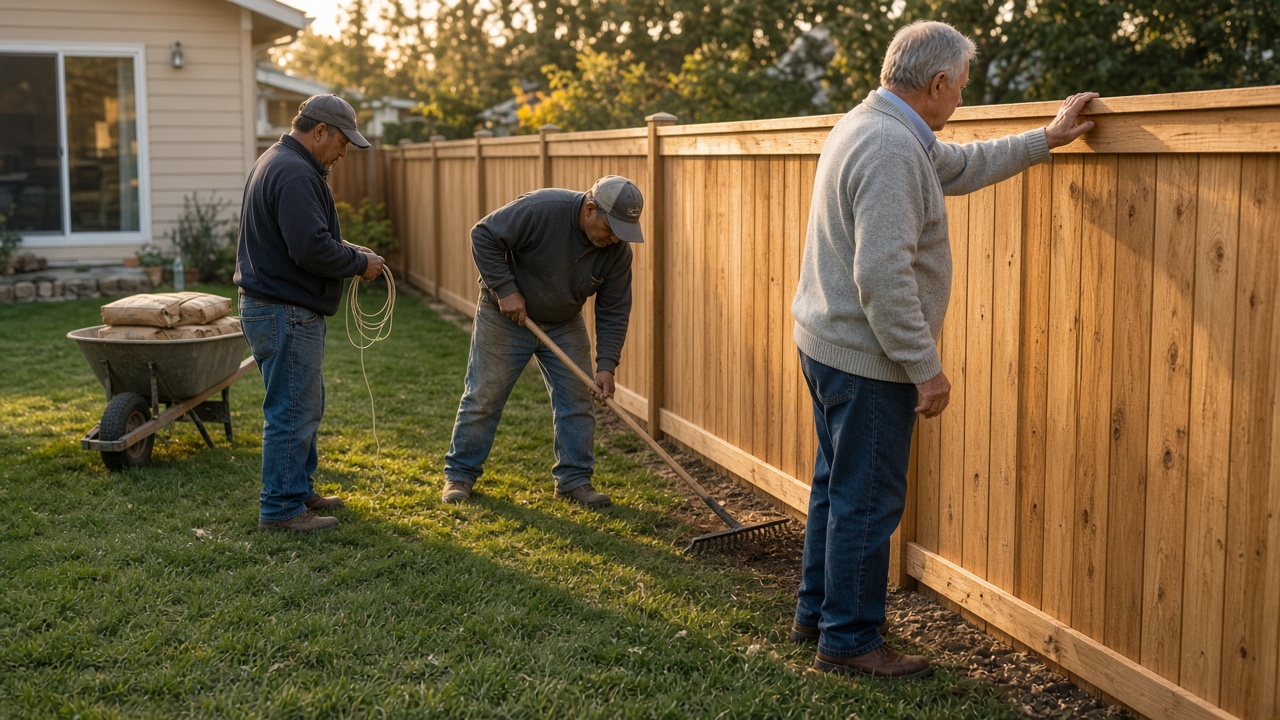
The best time to land your next job is in the last hour of the one you are on.
Most hirers do not go looking for a new worker when they already have one they trust. They scroll back through their texts and call the person who did good work last time. Your goal on every one-day job is to become that name in their phone. This guide covers what to do during the job, at the end of the day, and in the days after, so one job turns into a second, third, and tenth.
Why rehiring is the real goal
Finding new hirers takes time you are not paid for. Repeat hirers save you that time. They already know your rate, your skills, and where you live, and they often call before posting a job anywhere else.
There is no official national figure on how often day laborers get rehired, so treat that as practical experience rather than a statistic. What the data does show is who hires: in the 2006 "On the Corner" national study, homeowners and renters made up 49 percent of day laborers' employers and construction contractors 43 percent (https://www.coshnetwork.org/sites/default/files/Day%20Labor%20study%202006.pdf). Contractors tend to have steady work and need help over and over. Homeowners often have one project, then refer you to neighbors and family. Both are worth keeping.
During the job: what hirers remember
Hirers judge one-day workers on a small number of things. Get these right and most of the rehire work is already done.
- You showed up when you said you would, ready to work
- You understood the job and did not need to be told twice
- You worked steadily, even when no one was watching
- You were careful with their home, site, tools, and materials
- You told them about problems early instead of hiding them
- You were easy to be around
O*NET, the Labor Department's job database, lists dependability as a key work style for construction occupations and lists cleaning work areas among the core tasks of laborers (https://www.onetonline.org/link/summary/47-2061.00). In other words, reliability and a clean site are not extras. They are the job.
The last hour: finish strong
This is where most workers lose the rehire. They slow down, start checking the time, and leave a mess. Do the opposite.
- Ask before you stop: "Anything else you want done before I clean up?"
- Clean up completely, including sweeping, bagging trash, and coiling cords
- Return tools to where they belong
- Walk the hirer through what you finished, and point out anything left to do
- Mention anything you noticed that they may want fixed, without pushing for the work
That walkthrough matters. It shows the hirer the full value of the day, and it often reminds them of the next job they need done.
How to ask for the next job
Many workers never ask. Asking directly, once, is normal and polite. Here is an example of how it can sound.
Thanks for having me today. If you need help again, with this job or anything else, I'd be glad to come back. Can I leave you my number, or save yours?
Then stop talking. Do not beg, do not push, and do not undercut someone else on the crew. If they say yes, make sure they have your name spelled right and your number saved, with a note like "Ana, demo and cleanup."
If you found the job through an app or website, ask the hirer if they would be willing to leave a review or save you for future jobs. On ChambaNOW, workers can post skills and availability for free and get notified when jobs are available, which helps returning hirers find you again; set up your profile at https://chambanow.com/for-workers.
Getting paid without hurting the relationship
Settle pay calmly and privately before you leave. Count it in front of them if it is cash, and say thank you. If something is wrong, raise it politely in the moment.
Know the basics so you are not guessing. Under federal wage law, employees are generally paid for all hours worked, including short rest breaks of 20 minutes or less and travel between job sites during the day (https://www.dol.gov/agencies/whd/fact-sheets/22-flsa-hours-worked). If a hirer refuses to pay what you are owed, you can contact the Department of Labor's Wage and Hour Division confidentially at 1-866-487-9243; employers cannot retaliate against you for filing a complaint (https://www.dol.gov/agencies/whd/contact/complaints). ChambaMatters covers this at https://chambanow.com/chambamatters/your-right-to-be-paid.
Most pay problems never get that far. A clear agreement in a text before the job starts prevents most of them.
The follow-up: the day after
A short message the next day keeps you in their mind without being pushy. This is an example, not a template you have to use.
Hi Mr. Johnson, this is Ana from yesterday's garage cleanout. Thanks again for the work. I'm free most mornings this week if anything else comes up.
Send it once. If you do not hear back, wait a few weeks and send one short check-in, especially around busy seasons like spring yard work or end-of-year move-outs.
Keep a simple record of every hirer
The workers who stay busiest keep a list. It does not need to be fancy; a note on your phone works.
- Hirer's name and phone number
- Where the job was and what you did
- Date, hours, and pay
- Anything they mentioned about future work
- Who referred you, so you can thank them
That record also protects you. The Wage and Hour Division says the more information you have when filing a complaint, the better it can address the problem.
Referrals: the second way to get rehired
Even if one hirer has no more work, they may know someone who does. Homeowners talk to neighbors. Contractors talk to other contractors. When a job goes well, it is fine to say, "If you know anyone else who needs help, I'd appreciate you passing my number along."
Mistakes that cost you the callback
These are common examples, not an official list.
- Leaving early without asking
- Leaving a mess, even a small one
- Arguing about pay in front of others
- Asking for more money at the end that was not agreed at the start
- Texting the hirer every day after the job
- Bad-mouthing the last hirer or other workers
Build toward steady work
Getting rehired once is the first step. Getting rehired by the same five or ten hirers is how day labor turns into steady work. ChambaMatters goes deeper on that in its guides on building a reputation at https://chambanow.com/chambamatters/building-a-reputation-that-gets-you-more-work and standing out at https://chambanow.com/chambamatters/how-to-stand-out-and-get-hired-more-often. Demand is there: the Bureau of Labor Statistics projects about 137,000 openings a year for construction laborers and helpers through 2035 (https://www.bls.gov/ooh/construction-and-extraction/construction-laborers-and-helpers.htm).
Key takeaways
- Repeat hirers are the fastest path to steady work; every job is a chance to earn one
- Reliability, steady work, care with property, and a clean site are what hirers remember
- Finish strong, walk the hirer through the work, and ask once, directly, for future jobs
- Send one short follow-up message, then keep a simple record of every hirer
- Settle pay privately and know where to get help if you are not paid
Sources
- O*NET OnLine, 47-2061.00 Construction Laborers: https://www.onetonline.org/link/summary/47-2061.00
- U.S. Department of Labor, Fact Sheet 22, Hours Worked: https://www.dol.gov/agencies/whd/fact-sheets/22-flsa-hours-worked
- U.S. Department of Labor, Wage and Hour Division, How to File a Complaint: https://www.dol.gov/agencies/whd/contact/complaints
- Valenzuela, Theodore, Meléndez, and Gonzalez, "On the Corner," 2006: https://www.coshnetwork.org/sites/default/files/Day%20Labor%20study%202006.pdf
- U.S. Bureau of Labor Statistics, Construction Laborers and Helpers: https://www.bls.gov/ooh/construction-and-extraction/construction-laborers-and-helpers.htm
Written by Barry Graham, Founder, ChambaNOW
Building knowledge that works.