
January Lease Turnovers: Staffing End-of-Year Move-Outs and Move-Ins
January lease turnovers are tight because many move-outs and move-ins land on the same week.
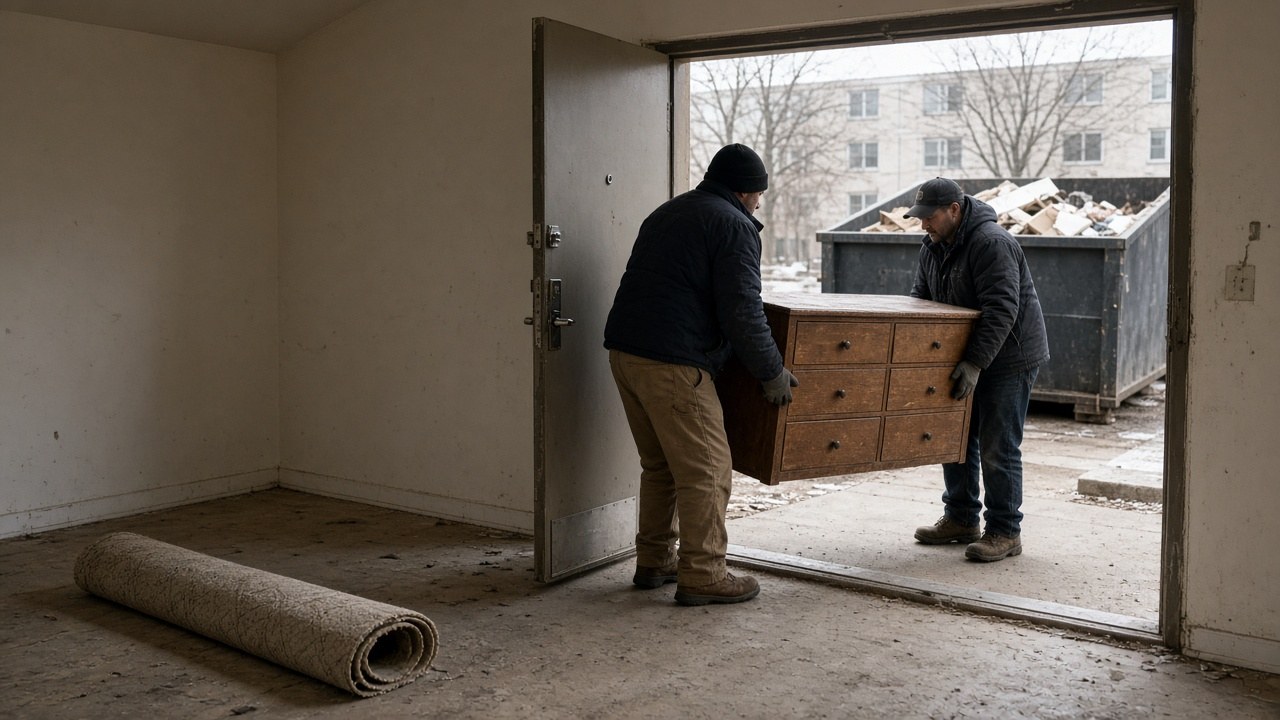
January lease turnovers are tight because many move-outs and move-ins land on the same week.
Year-end leases often end on December 31 or January 1. That compresses inspections, hauling, cleaning, and minor repairs into a holiday week when staff and vendors are harder to book. This guide is about staffing that rush. It is a seasonal companion to a property manager's guide to hiring turnover and make-ready labor (https://chambanow.com/chambamatters/a-property-manager-s-guide-to-hiring-turnover-and-make-ready-labor), which covers the year-round process.
Why January is different
The calendar is the problem, not the work itself. A mid-year turnover may give you several empty days. A January 1 move-in can land on the same morning as a move-out, or only a day later. Holiday closures, weather, and workers' own family plans all shrink the labor pool.
If you can leave a gap between residents, use it. If you cannot, plan the labor in shifts and write a sequence that does not depend on one crew doing everything in one morning.
A practical January sequence
- Step 1: In early December, list every unit with a year-end move-out and the next move-in date.
- Step 2: Schedule the move-out inspection as soon as keys are back, or during a notice walk-through if your process allows it.
- Step 3: Book haul-out, cleaning, and any approved repairs as separate jobs or clearly staged blocks on the same job.
- Step 4: Leave paint, carpet, and anything that must dry or cure enough time, especially in cold or humid weather.
- Step 5: Photograph the finished unit before the new resident arrives.
- Step 6: Keep one person in charge of keys, access, and sign-off so crews are not waiting in the lot.
A property manager's guide to finding reliable day labor fast (https://chambanow.com/chambamatters/a-property-manager-s-guide-to-finding-reliable-day-labor-fast) is useful when a crew falls through in this window.
What temporary labor can handle
- Hauling left-behind furniture, bags, and trash, including a dumpster or transfer-station run you arrange
- Basic unit cleaning: floors, bathrooms, kitchen surfaces, inside appliances if you include them
- Patio, balcony, and storage-closet clear-outs
- Moving your staging furniture or appliances that already belong to the property
- Grounds tidy near the unit, including a walk and entry
- Reporting damage, missing appliances, or signs of a leak
For heavier debris after a remodel, use a guide to hiring demo and debris-haul labor (https://chambanow.com/chambamatters/a-guide-to-hiring-demo-and-debris-haul-labor-for-a-home-remodel) rather than treating it as a standard make-ready.
What to keep with licensed trades or trained staff
- Electrical, plumbing, gas, and HVAC repairs
- Paint or other work that disturbs paint in a pre-1978 housing unit. The EPA's Lead Renovation, Repair and Painting Program requires certified firms and trained workers for many paid projects like that (https://www.epa.gov/lead/lead-renovation-repair-and-painting-program)
- Carpet replacement, refinishing, or other contracted vendor work
- Lock changes, if your policy or local rule assigns that to a locksmith or office staff
- Legal questions about deposits, deductions, or holdovers. Deposit timelines and allowable deductions are set by state and sometimes city law. This article is not legal advice
Federal lead disclosure rules also apply to most rentals of pre-1978 housing. EPA's real estate disclosure page explains that landlords must provide the federally approved pamphlet and disclosures before a lease (https://www.epa.gov/lead/real-estate-disclosures-about-potential-lead-hazards). Build time for that paperwork into the January rush.
Fair Housing still applies
Advertising, applications, and showings must follow the Fair Housing Act. HUD's Fair Housing page is the starting point for the federal rules (https://www.hud.gov/fairhousing). Do not ask a labor crew to screen visitors or to describe "the kind of tenant" you want in a listing photo or a hallway comment. Keep helpers focused on the physical work.
How to staff the week
- Book crews in December, not on December 30
- Use two shorter crews if one full-day crew is hard to find, for example a haul-out team and a later cleaning team
- Have a backup worker or a second posted job ready if someone cannot come
- Stage supplies, a dumpster or truck, and unit keys the day before
- Pay same day, and write the rate and hours in the post
- For weather, have an indoor-only backup plan so a freeze does not cancel cleaning
What to pay
Cleaning and haul-out labor often tracks janitorial and mover-helper rates. Bureau of Labor Statistics May 2025 national medians were $17.71 an hour for janitors and cleaners and $19.35 for hand laborers and movers. Local rates vary, and holiday-week work may need a higher offer to get a confirmed crew. See how much should you pay a day laborer in 2026 (https://chambanow.com/chambamatters/how-much-should-you-pay-a-day-laborer-in-2026-rates-by-job-type) and a guide to setting pay, hours, and a scope of work (https://chambanow.com/chambamatters/a-guide-to-setting-pay-hours-and-a-scope-of-work-before-laborers-arrive).
Example labor estimates
These are hypothetical illustrations, not quotes.
- One-bedroom clean only, 1 worker for 5 hours at about $18: about $90
- Two-bedroom haul-out plus clean, 2 workers for 8 hours at about $19: about $304
- A same-day stack of two units, two crews in sequence: budget a second minimum and a paid overlap so the cleaning crew is not standing idle
A week-of-January staffing plan
Think of the week as a grid, not as one long Saturday. If a unit must be ready on January 1, try to finish haul-out as soon as keys are back, clean the next block, and leave a buffer for paint or repairs that still need to dry. A two-crew plan, with a morning haul-out team and an afternoon cleaning team, is often more reliable than one tired group doing both.
If several units turn on the same day, assign a single office person to keys, lockboxes, and vendor windows. Helpers should not be standing in a lot waiting for an apartment to open. Write the unit order in the job post, and tell each crew which unit is first, second, and last.
Dumpsters, paint, and weather
Order dumpsters or schedule transfer-station runs in December. A holiday-week dumpster can be late, and leftover furniture will block the cleaners. Cold weather also slows paint and some adhesives. If a vendor still has to paint, do not book the photo-ready wipe for the same morning unless you know the paint is dry.
If a freeze or a storm is forecast, move outdoor haul-out earlier and keep indoor cleaning on the calendar. Have a covered place for bags and leftover items so they are not sitting in ice.
Common mistakes in the January rush
- Waiting until December 30 to post the labor jobs
- Asking one crew to haul, clean, and do minor repairs in a single short visit
- Forgetting access cards, parking rules, or elevator reservations
- Sending cleaners in before the dumpster has been emptied
- Leaving deposit or legal questions for the labor crew instead of the office
Hiring January turnover help on ChambaNOW
ChambaNOW is a bilingual marketplace for short cleaning, moving, and general labor jobs. Posting a job is free. Post each unit or each day's route with access instructions, then message workers about that posted job. Start on the hirer page (https://chambanow.com/for-hirers), or browse workers in cities such as Houston (https://chambanow.com/hire/houston-tx) and Phoenix (https://chambanow.com/hire/phoenix-az).
Quick answers
Why are January turnovers harder than mid-year ones?
Many leases end on January 1, and holiday weeks shrink the labor pool. The work is the same, but the window is shorter.
Can I use day laborers for a full make-ready?
Yes for haul-out, cleaning, and simple clearing. Licensed trades should handle mechanical work and many paint jobs in older housing.
When should I post the labor jobs?
In December, as soon as move-out and move-in dates are firm. Do not wait until keys are on the desk.
Should haul-out and cleaning be one job or two?
Two stages are safer if the timing is tight. A cleaning crew should not have to climb over leftover furniture.
Sources
- U.S. Environmental Protection Agency, Lead Renovation, Repair and Painting Program (https://www.epa.gov/lead/lead-renovation-repair-and-painting-program)
- U.S. Environmental Protection Agency, Real Estate Disclosures about Potential Lead Hazards (https://www.epa.gov/lead/real-estate-disclosures-about-potential-lead-hazards)
- U.S. Department of Housing and Urban Development, Fair Housing (https://www.hud.gov/fairhousing)
- U.S. Bureau of Labor Statistics, OEWS May 2025, Janitors and Cleaners (37-2011) (https://www.bls.gov/oes/current/oes372011.htm)
- U.S. Bureau of Labor Statistics, OEWS May 2025, Laborers and Freight, Stock, and Material Movers, Hand (53-7062) (https://www.bls.gov/oes/current/oes537062.htm)
Written by Barry Graham, Founder, ChambaNOW
Building knowledge that works.