
Is an OSHA 10 Card Worth It for Day Laborers?
For most day laborers who want construction work, the OSHA 10 card is worth it.
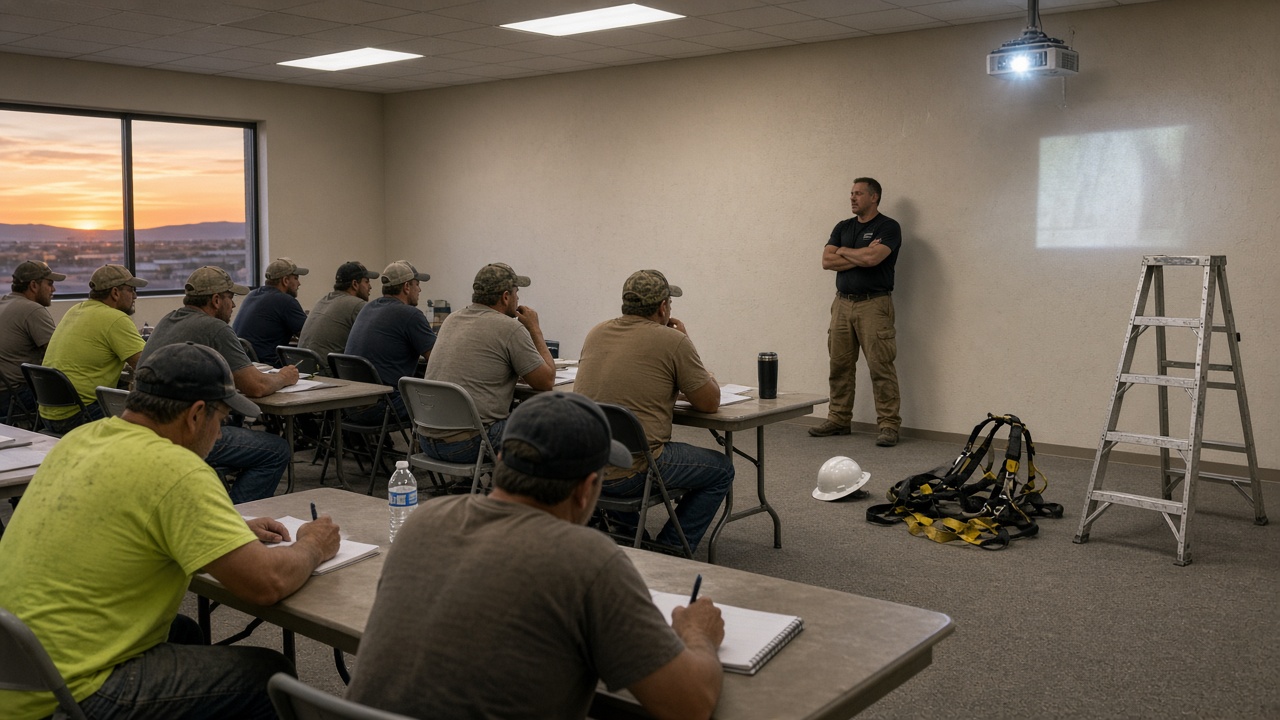
For most day laborers who want construction work, the OSHA 10 card is worth it.
But it is worth being clear about what the card is and is not. It is not a license, it is not a certification, and federal OSHA does not require it. It is a 10-hour safety awareness course that many employers, and a handful of states and cities, treat as the minimum to step onto a construction site. Here is how to decide whether it is worth your time and money.
What the OSHA 10 actually is
The OSHA 10-hour card comes from OSHA's Outreach Training Program. According to OSHA, the 10-hour class is meant to give workers awareness of common job hazards, while the 30-hour class is for supervisors or workers with some safety responsibility (https://www.osha.gov/training/outreach).
OSHA is direct about the limits. The program is voluntary, it does not meet the training requirements of any specific OSHA standard, and none of its courses is a certification. OSHA also notes that some states, cities, or others may require outreach training as a condition of employment.
There are separate courses for construction and for general industry. For day labor on building sites, demolition, and remodeling, the construction version is the one employers usually mean.
Where the OSHA 10 is required
Federal OSHA does not require it. Some states and cities do, in certain situations.
- Nevada: State law passed in 2009 and effective January 1, 2010 requires construction workers to have an OSHA 10 or 30-hour construction card. Nevada's state training program says the card does not expire for Nevada construction work and offers free classes (https://www.4safenv.state.nv.us/training/10-30-hour-osha-training/osha-10-hour-construction-training/).
- Other states: The same Nevada page lists six other states that require OSHA 10 construction cards in certain situations: New York, Rhode Island, Massachusetts, Connecticut, New Hampshire, and Missouri. These rules mostly apply to public works projects.
- New York State: Labor Law 220-h requires workers on state or municipal public work contracts of at least $250,000 (per the statute text) to complete an OSHA-approved construction safety course of at least 10 hours before starting work (https://www.nysenate.gov/legislation/laws/LAB/220-H). Confirm the threshold in the contract, since public-works thresholds can be adjusted.
- Missouri: Workers on public works projects must complete a 10-hour OSHA construction program within 60 days of starting work on the project (https://revisor.mo.gov/main/OneSection.aspx?section=292.675).
- New York City: Under Local Law 196 of 2017, workers on sites that require a site safety plan and a designated safety professional need a Site Safety Training card showing at least 40 hours of training. One approved path starts with the OSHA 10 and adds courses such as fall prevention and supported scaffold training. Cards are valid for five years (https://www.nyc.gov/site/buildings/safety/sst-worker-information.page).
Outside those rules, it often comes down to the employer. The Bureau of Labor Statistics says employers often require construction laborers and helpers to complete safety certification meeting OSHA guidelines, before or after hiring (https://www.bls.gov/ooh/construction-and-extraction/construction-laborers-and-helpers.htm). For carpenters, BLS states that all carpenters must pass the OSHA 10-hour safety course (https://www.bls.gov/ooh/construction-and-extraction/carpenters.htm).
When the OSHA 10 is clearly worth it
- You want construction, demolition, or remodeling work on commercial sites
- You live or work in Nevada, New York City, or a state that requires it for public works
- You want to move toward a trade apprenticeship or a helper job
- You are applying through staffing agencies that place workers on large sites
- You want to stand out from other beginners when a foreman is choosing a crew
When it matters less
- Most of your work is residential moving, yard work, or house cleaning for homeowners
- You only take occasional short jobs and do not plan to work on construction sites
Even then, the safety knowledge is useful. Falls, struck-by hazards, electrical hazards, and caught-in hazards are not limited to big sites.
What you learn in 10 hours
Course content varies by trainer, but construction Outreach classes cover hazard recognition and prevention, workers' rights, employer responsibilities, and how to file a complaint, according to OSHA. Expect topics such as fall protection, ladders and scaffolds, electrical hazards, personal protective equipment, and being struck by or caught between objects.
The most valuable part for many workers is learning their rights. OSHA's worker page says you have the right to training in a language you understand, required safety equipment, and to report hazards without retaliation (https://www.osha.gov/workers).
How to get a real card and avoid fake ones
Fake and unauthorized cards are a real problem. A fake card can get you removed from a site and does not protect you.
- Take the class only from an OSHA-authorized trainer or an authorized online provider
- Ask the trainer to show proof of their current OSHA Outreach trainer authorization
- Check the trainer against OSHA's Outreach Trainer Watch List, linked from https://www.osha.gov/training/outreach
- Expect your card from the trainer after the course; OSHA says trainers have 90 days to issue cards
- Keep a photo of your card on your phone
OSHA does not keep records of Outreach classes, so if you lose your card, you have to ask the trainer or online provider for a replacement. OSHA says cards cannot be issued for training completed more than five years ago, so do not wait years to ask.
Cost and time
Prices vary by provider and city, and this article does not list a price because we could not verify a current national figure. Some public programs offer free classes, such as Nevada's state program. Unions, worker centers, community colleges, and pre-apprenticeship programs sometimes offer it free or at low cost. Ask locally before you pay.
The course is 10 hours of training, often spread over two days in person. Online versions exist; make sure the provider is OSHA-authorized.
OSHA 10 or OSHA 30?
The OSHA 30 is longer and aimed at supervisors and workers with safety responsibility. If you are just starting, take the 10. If you are moving toward a crew lead or foreman role, the 30 makes more sense later. In New York City, holding a recent OSHA 30 counts toward the 40-hour Site Safety Training card.
How to use the card to get hired
Once you have it, use it.
- Mention it in every application and conversation with a foreman
- List it on your ChambaNOW worker profile, which is free for workers, at https://chambanow.com/for-workers
- Carry the physical card on construction sites
- Pair it with another skill, such as concrete or demolition, so you stand out twice
The bottom line
The OSHA 10 does not make you a skilled worker, and it is not a legal license. But it is a low-cost, short course that opens doors on construction sites, is required in some places, and teaches you how to stay alive on the job. For a day laborer aiming for construction work, it is one of the best first investments you can make.
Key takeaways
- The OSHA 10 is a voluntary 10-hour safety awareness course, not a license or certification
- Nevada requires it for construction work; New York, Missouri, and several other states require it on certain public works; NYC requires a 40-hour SST card on many sites
- BLS says employers often require OSHA-guideline safety training for laborers
- Use only OSHA-authorized trainers and check the Outreach Trainer Watch List
- Get it if you want construction, demolition, or trade work
Sources
- OSHA, Outreach Training Program: https://www.osha.gov/training/outreach
- Nevada SCATS, OSHA 10-Hour Construction Training: https://www.4safenv.state.nv.us/training/10-30-hour-osha-training/osha-10-hour-construction-training/
- New York Labor Law 220-h: https://www.nysenate.gov/legislation/laws/LAB/220-H
- Missouri Revised Statutes 292.675: https://revisor.mo.gov/main/OneSection.aspx?section=292.675
- NYC Department of Buildings, SST Card Information: https://www.nyc.gov/site/buildings/safety/sst-worker-information.page
- U.S. Bureau of Labor Statistics, Construction Laborers and Helpers: https://www.bls.gov/ooh/construction-and-extraction/construction-laborers-and-helpers.htm
- U.S. Bureau of Labor Statistics, Carpenters: https://www.bls.gov/ooh/construction-and-extraction/carpenters.htm
- OSHA, Worker Rights and Protections: https://www.osha.gov/workers
Written by Barry Graham, Founder, ChambaNOW
Construyendo conocimiento que funciona.