
How to Get Into a Trade Apprenticeship From Day Labor
Your day labor experience can be the first step into a paid trade apprenticeship.
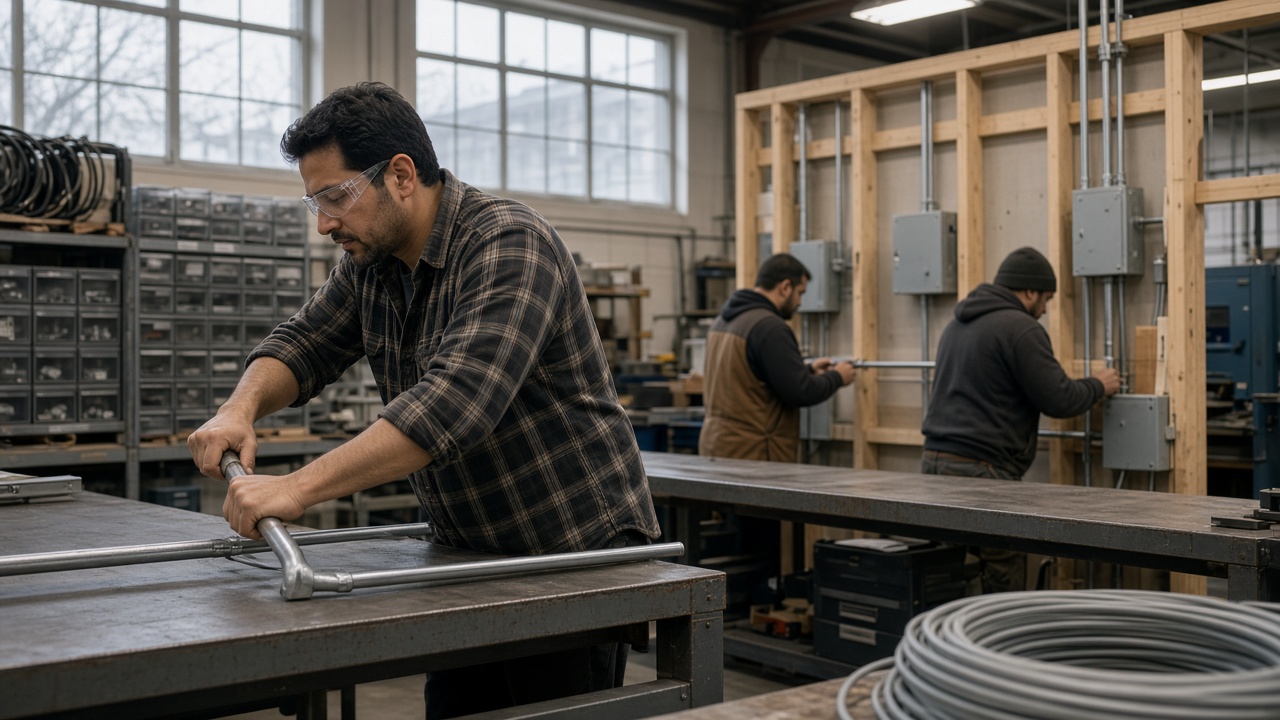
Your day labor experience can be the first step into a paid trade apprenticeship.
An apprenticeship is a job where you get paid to learn a trade, with raises built in as your skills grow. For a day laborer, it is one of the clearest ways to go from unpredictable short jobs to a career with steady pay and a credential that travels with you. This guide explains how apprenticeships work, what the federal rules say, and the steps to get in.
What a Registered Apprenticeship is
The U.S. Department of Labor describes Registered Apprenticeship as a paid job with a mentor, progressive wage increases, classroom instruction, and a portable, nationally recognized credential (https://www.apprenticeship.gov/career-seekers). You are hired by an employer or a program sponsor, such as a union training committee or a contractor association, and you work while you learn.
Federal standards for registered programs set the basic shape (https://www.ecfr.gov/current/title-29/subtitle-A/part-29/section-29.5).
- The eligible starting age is not less than 16
- Time-based programs require at least 2,000 hours of on-the-job learning
- A minimum of 144 hours of related classroom instruction per year is recommended
- Wages must rise on a progressively increasing schedule as skills grow
- The probationary period cannot exceed 25 percent of the program or one year, whichever is shorter
When you finish, the Office of Apprenticeship or your state apprenticeship agency issues a nationally recognized Certificate of Completion of Apprenticeship, according to the Department of Labor's apprentice FAQ (https://www.apprenticeship.gov/help/apprentices-and-career-seekers).
How long apprenticeships take in construction
It depends on the trade. For electricians, the Bureau of Labor Statistics says most learn in a 4- or 5-year apprenticeship, typically with 2,000 hours of paid on-the-job training each year plus technical instruction (https://www.bls.gov/ooh/construction-and-extraction/electricians.htm). Carpentry, plumbing, ironwork, and other trades have their own lengths. Ask each program directly.
Why it is worth the effort
The pay difference between general labor and a finished trade is large. BLS reports May 2025 medians of $22.44 an hour for construction laborers and helpers, $29.12 for carpenters, and $30.38 for electricians. Electricians are projected to grow 9 percent from 2025 to 2035, much faster than average, with about 72,700 openings a year.
Apprentices earn less than fully trained workers at the start, but federal standards require a rising pay schedule, so your pay goes up as you learn.
Does day labor experience count?
It can. The Department of Labor says previous work or classroom experience may be used toward completion of an apprenticeship, though it varies by program. BLS notes that workers with construction experience may qualify for a shortened electrician apprenticeship based on experience and testing, and that some electricians enter apprenticeships after working as helpers.
Even when it does not shorten the program, day labor experience helps you get selected. It shows you can handle the physical work, you know how a site runs, and you already show up early.
Step 1: Pick one or two trades
Apprenticeship applications take time, so focus. Think about what you already do well on day labor jobs.
- If you like working with wood and building things, look at carpentry
- If you are careful, good with detail, and can tell wire colors apart, look at electrical (BLS lists color vision as important)
- If you have done a lot of demo and site work, look at the laborers' trade, which also has apprenticeships
- If you like heavy material and outdoor work, look at concrete, masonry, or ironwork
- If you work well in tight spaces and like problem solving, look at plumbing or pipefitting
Step 2: Check the entry requirements
Requirements vary by program, but common ones include a minimum age, a high school diploma or equivalency, a driver's license, and the ability to do the physical work. BLS says a high school diploma is required to become an electrician. If you do not have a diploma, BLS gives the example of an electrician's helper who earns a high school equivalency to enter an apprenticeship (https://www.bls.gov/ooh/construction-and-extraction/construction-laborers-and-helpers.htm). Many adult education programs offer equivalency classes free or at low cost.
Step 3: Consider a pre-apprenticeship
If you do not meet the requirements yet, or you want a stronger application, look at pre-apprenticeship. The Department of Labor describes it as a program designed to prepare people to enter and succeed in a Registered Apprenticeship (https://www.apprenticeship.gov/employers/explore-pre-apprenticeship). Quality programs have a documented partnership with at least one registered apprenticeship program, and many include safety training, math review, and industry credentials.
Step 4: Find openings
Several free tools help.
- The Apprenticeship Job Finder at https://www.apprenticeship.gov/apprenticeship-job-finder lets you search by keyword and location and apply directly to the employer or sponsor
- The national apprenticeship line is 877-872-5627
- American Job Centers can help you find and apply to apprenticeships; find yours at https://www.careeronestop.org/LocalHelp/AmericanJobCenters/find-american-job-centers.aspx
- BLS suggests contacting local union-management apprenticeship committees, contractors, and your state apprenticeship agency
- Veterans can ask about advanced standing for military experience and about Helmets to Hardhats at https://www.helmetstohardhats.org/
Many union programs open applications only at certain times of year. Call ahead and ask when the next application window is.
Step 5: Build your application from your day labor work
Most day laborers have no paperwork showing their experience. Start creating it now.
- Keep a log of every job: date, hirer, type of work, hours, and tools used
- Ask two or three regular hirers if they will give you a reference
- Take photos of finished work, with permission
- Get your OSHA 10 card from an authorized trainer
- Brush up on math, especially fractions, measurement, and basic algebra, since many trade programs test it
A free ChambaNOW worker profile at https://chambanow.com/for-workers can also help you keep working while you apply, since you can post skills and availability and get notified when jobs come in.
Step 6: Apply, test, and interview
Selection steps vary by program. Some use an aptitude test, an interview, a review of experience, or a waiting list ranked by score. Ask each program what its steps are. Show up to every appointment early and dressed for work, and treat the interview like a first day on site.
A realistic example timeline
This is an illustration, not a typical or guaranteed path.
- Months 1 to 6: day labor on demo, concrete, and framing cleanup; get OSHA 10; start a job log
- Months 6 to 9: take a free pre-apprenticeship class at night; ask carpenters for references
- Month 10: apply when the local carpentry apprenticeship opens; take the test
- Month 12: start as a first-year apprentice with a rising wage schedule
Key takeaways
- Registered Apprenticeships are paid jobs with rising wages, classroom instruction, and a national credential
- Federal standards require at least 2,000 hours of on-the-job learning for time-based programs and set a starting age of at least 16
- Day labor experience may count toward completion and helps you get selected
- Use pre-apprenticeships, the Apprenticeship Job Finder, American Job Centers, and local trade committees
- Start a job log and gather references now, before the application window opens
Sources
- Apprenticeship.gov, Career Seekers: https://www.apprenticeship.gov/career-seekers
- 29 CFR 29.5, Standards of apprenticeship: https://www.ecfr.gov/current/title-29/subtitle-A/part-29/section-29.5
- Apprenticeship.gov, Apprentice and Career Seeker FAQs: https://www.apprenticeship.gov/help/apprentices-and-career-seekers
- Apprenticeship.gov, Explore Pre-Apprenticeship: https://www.apprenticeship.gov/employers/explore-pre-apprenticeship
- Apprenticeship.gov, Apprenticeship Job Finder: https://www.apprenticeship.gov/apprenticeship-job-finder
- U.S. Bureau of Labor Statistics, Electricians (May 2025 data): https://www.bls.gov/ooh/construction-and-extraction/electricians.htm
- U.S. Bureau of Labor Statistics, Construction Laborers and Helpers: https://www.bls.gov/ooh/construction-and-extraction/construction-laborers-and-helpers.htm
- CareerOneStop, American Job Center Finder: https://www.careeronestop.org/LocalHelp/AmericanJobCenters/find-american-job-centers.aspx
Written by Barry Graham, Founder, ChambaNOW
Building knowledge that works.