
How to Speak Up About Safety on a Job Site
Speaking up about a hazard is part of doing the job right, not a way of causing trouble.
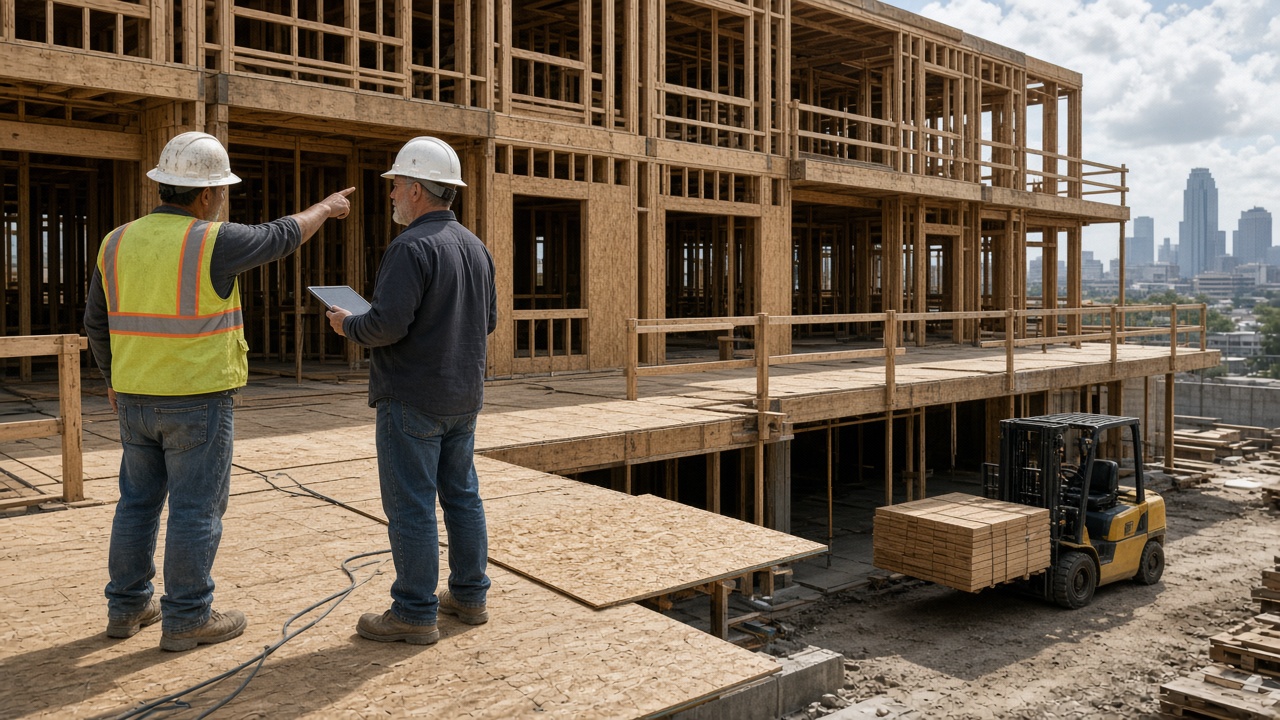
Speaking up about a hazard is part of doing the job right, not a way of causing trouble.
Many new workers stay quiet when something looks dangerous. They do not want to look weak, slow the crew down, or lose the job. But construction is one of the most dangerous kinds of work in the country, and the person who says "wait" is often the one who prevents an injury. This guide covers how to speak up so the hazard gets fixed, and what the law says if it does not.
Why it matters
The Bureau of Labor Statistics reported 5,070 fatal work injuries in the United States in 2024, including 1,032 among construction and extraction workers. Falls, slips, and trips caused 370 of those construction and extraction deaths. Hispanic or Latino workers had 1,229 fatal injuries, and 68.5 percent of those were foreign-born workers (https://www.bls.gov/news.release/cfoi.nr0.htm).
OSHA's preliminary list of the most frequently cited standards for fiscal year 2026 again put construction fall protection at number one (https://www.osha.gov/top10citedstandards). Open edges, missing guardrails, and unsafe ladders are among the most common hazards you will see, and they are fixable.
Your rights, in plain words
OSHA says federal law gives you the right to a safe workplace and the right to speak up or report safety concerns without being punished. OSHA's worker page lists rights including (https://www.osha.gov/workers).
- Safety training in a language you understand
- Machines that are safe to work on
- Required safety equipment, such as gloves or a harness and lifeline for falls
- Protection from toxic chemicals
- Requesting an OSHA inspection and speaking to the inspector
- Reporting an injury or illness and getting copies of your medical records
If you were placed by a staffing agency, OSHA says the agency and the host employer share responsibility for your safety, so you can raise concerns with either (https://www.osha.gov/temporaryworkers).
Step 1: Stop and look
If something looks wrong, stop what you are doing before you or someone else is exposed. Take a moment to see exactly what the problem is: a missing guardrail, a damaged cord, a trench without protection, a ladder on soft ground, a load swinging over people.
Step 2: Tell the right person, right away
Go to your foreman, the lead on your task, or the site safety person. Say it calmly and clearly. You do not need perfect words. These are examples of how it can sound.
Hey, the guardrail's missing on the east side of the second floor. Somebody could go over. Can we block it off before anyone works there?
This cord's cut through to the wires. I'm going to put it aside. Is there another one?
I haven't been trained on this lift. Can someone show me first, or can I do something else?
Describe the hazard, say why it matters, and suggest a fix if you have one. That makes it easy to say yes.
Step 3: Offer to help fix it
Most hazards get fixed fastest when someone helps. Offer to set up cones, carry guardrail sections, find a new cord, or move material. Never try to fix something that needs training you do not have, such as electrical work or scaffold changes.
Step 4: If it is not fixed, ask again and write it down
Sometimes the first answer is "don't worry about it." If the hazard is still there, ask again, politely, and ask who else you should talk to. Write down what you saw, when, who you told, and what they said. A photo can help, as long as taking one is allowed on that site.
When you can refuse dangerous work
OSHA says you may have a legal right to refuse work in a situation where you would be exposed to a hazard, if all of these conditions are met (https://www.osha.gov/workers/right-to-refuse).
- Where possible, you asked the employer to eliminate the danger, and they did not
- You refuse in good faith, meaning you truly believe there is an imminent danger
- A reasonable person would agree there is a real danger of death or serious injury
- There is not enough time to get it fixed through normal channels, such as an OSHA inspection
OSHA says to ask the employer to fix the hazard or give you other work, tell them you will not do the task until it is fixed, and stay at the worksite until you are told to leave. Do not just walk off.
How to report a hazard to OSHA
You can file a complaint with OSHA at any time about a hazardous condition. OSHA says that, if you can, it helps to tell the employer first, since they may fix it quickly. Complaints can be confidential.
- Online through https://www.osha.gov/workers/file-complaint
- By phone at 1-800-321-6742
- Through someone else: OSHA says a complaint can be filed for you by a union representative, an attorney, clergy, a family member, or a nonprofit group such as a worker center
OSHA also notes that written or online complaints signed by workers are more likely to result in an on-site inspection.
If you are punished for speaking up
OSHA says it is illegal for an employer to fire, demote, transfer, or otherwise retaliate against a worker for raising safety concerns or complaining to OSHA. If it happens, you must file a whistleblower complaint within 30 days of the retaliation. You can call 1-800-321-6742; OSHA says no form is required for a retaliation complaint, but you must contact OSHA (https://www.osha.gov/workers/right-to-refuse). More information is at https://www.whistleblowers.gov/.
Harassment is a safety issue too
A 2023 U.S. Equal Employment Opportunity Commission report found that harassment is pervasive on many construction worksites, that it is a workplace safety issue as well as a civil rights issue, and that retaliation is a serious problem (https://www.eeoc.gov/newsroom/eeoc-chair-issues-new-report-building-future-advancing-equal-employment-opportunity). If threats or harassment are making a site unsafe, that is worth raising too. ChambaMatters covers your rights at https://chambanow.com/chambamatters/discrimination-harassment-and-immigration-threats and how to get help at https://chambanow.com/chambamatters/how-to-report-a-problem-and-get-help.
Make speaking up easier for everyone
You can help build a crew where people look out for each other.
- Thank anyone who points out a hazard to you
- Ask "anything I should watch out for?" at the start of every job
- Back up a coworker who raises a concern
- Do not mock people who ask for safety gear or training
The best crews treat safety talk as normal. ChambaMatters has more on your rights at https://chambanow.com/chambamatters/your-right-to-a-safe-workplace.
Key takeaways
- BLS counted 1,032 deaths among construction and extraction workers in 2024, 370 of them from falls, slips, and trips
- Stop, describe the hazard clearly to the right person, and suggest a fix
- If it is not fixed, ask again, write it down, and consider an OSHA complaint
- You may refuse imminently dangerous work under OSHA's conditions, but stay on site
- Retaliation is illegal; file a whistleblower complaint within 30 days
Sources
- OSHA, Worker Rights and Protections: https://www.osha.gov/workers
- OSHA, Workers' Right to Refuse Dangerous Work: https://www.osha.gov/workers/right-to-refuse
- OSHA, File a Complaint: https://www.osha.gov/workers/file-complaint
- U.S. Bureau of Labor Statistics, Census of Fatal Occupational Injuries 2024, released February 19, 2026: https://www.bls.gov/news.release/cfoi.nr0.htm
- OSHA, Top 10 Most Frequently Cited Standards: https://www.osha.gov/top10citedstandards
- OSHA, Protecting Temporary Workers: https://www.osha.gov/temporaryworkers
- U.S. Equal Employment Opportunity Commission, "Building for the Future," May 31, 2023: https://www.eeoc.gov/newsroom/eeoc-chair-issues-new-report-building-future-advancing-equal-employment-opportunity
Written by Barry Graham, Founder, ChambaNOW
Building knowledge that works.