
A Homeowner’s Guide to Jobsite Safety When Hiring Temporary Labor
When you hire help at home, your house becomes a jobsite, and you know its hazards better than anyone.
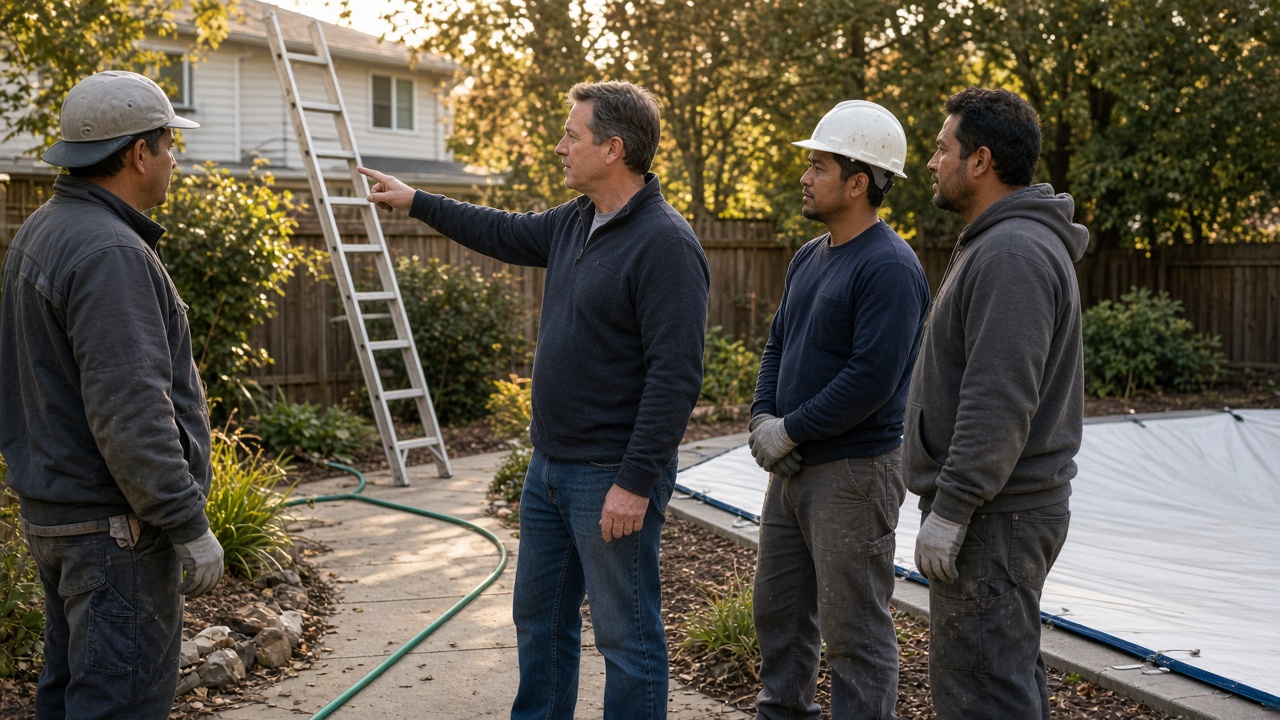
When you hire help at home, your house becomes a jobsite, and you know its hazards better than anyone.
Big construction sites have safety managers, written plans, and posted rules. Your backyard does not. When you hire temporary labor for a home project, you are the person who knows where the soft deck board is, which outlet trips, and where the power line crosses the yard. This guide is a homeowner's safety plan: a hazard walk of your own property, the jobs to keep off the list, and what to have ready if something goes wrong.
For the formal side of safety rules on temporary labor sites, see OSHA Basics Every Temporary Labor Site Should Cover Before Work Starts (https://chambanow.com/chambamatters/osha-basics-every-temporary-labor-site-should-cover-before-work-starts). For what happens after an injury, see What Happens If a Day Laborer Gets Hurt on Your Property? (https://chambanow.com/chambamatters/what-happens-if-a-day-laborer-gets-hurt-on-your-property).
Why it is on you
OSHA's rules are written for employers, and how they apply to a homeowner who hires help depends on the situation. Federal OSHA regulations, for example, say that people who privately employ others in their own homes for ordinary domestic household tasks, like house cleaning, are not covered by the OSH Act (https://www.ecfr.gov/current/title-29/subtitle-B/chapter-XVII/part-1975/section-1975.6). But construction-type work at your home carries the same hazards as on any jobsite, and an injury on your property can become your problem through insurance, liability, or workers' compensation rules in your state. Planning for safety is the practical choice either way.
Step 1 Walk your property like a hazard inspector
Before workers arrive, walk the house and yard with the job in mind. Look up, down, and around.
Outside, check for these hazards.
- Overhead power lines near trees, the roof edge, or where a ladder will stand
- Holes, window wells, uneven pavers, and hidden stumps
- Rotted deck boards, loose railings, and broken steps
- Wasp nests, fire ants, and animal burrows
- Slopes, wet grass, and algae on patios
- Pools, spas, and ponds near the work area
Inside, check for these hazards.
- Attic access, attic heat, and places where someone could step between joists and through a ceiling
- Basement stairs without handrails and poor lighting
- Overloaded outlets and old extension cords
- Clutter along the paths workers will carry things
Fix what you can. Mark the rest with tape, cones, or flags, and point each hazard out at the start of the job. Then do the walk again at lunch. Work changes a site: a trench gets dug, a railing comes off, a pile of debris blocks a path. A two-minute midday check catches new hazards before they cause an afternoon injury.
Step 2 Keep high-risk jobs off the list
Some tasks are risky enough that you should not hand them to a general laborer, especially without proper equipment.
- Roof work. OSHA's construction training materials note that most construction fatalities are caused by fall hazards (https://www.osha.gov/sites/default/files/constrfocusfour_introduction.pdf), and OSHA requires most construction employers to provide fall protection at 6 feet or more (https://www.ecfr.gov/current/title-29/subtitle-B/chapter-XVII/part-1926/subpart-M/section-1926.501). A homeowner rarely has the anchors, harnesses, and training on hand
- Tree work near power lines. OSHA says tree trimming or removal within 10 feet of a power line must be done by trained line-clearance trimmers (https://www.osha.gov/sites/default/files/tree_trimming_safety.pdf)
- Electrical, gas, and plumbing work, which generally belong to licensed trades
- Deep trenches. OSHA requires cave-in protection in excavations 5 feet or deeper, and sometimes shallower (https://www.ecfr.gov/current/title-29/subtitle-B/chapter-XVII/part-1926/subpart-P/section-1926.652)
If the project needs any of these, bring in a licensed and insured professional for that part.
Step 3 Set up ladders the safe way
Ladders are the most common way a simple home job turns dangerous. Provide ladders in good condition that are tall enough for the work, and share OSHA's basic ladder rules (https://www.osha.gov/sites/default/files/publications/portable_ladder_qc.pdf).
- Inspect the ladder before use and take damaged ladders out of service
- Keep three points of contact when climbing
- Set extension ladders on stable, level ground, with the base about one-quarter of the working length away from the wall
- Extend the ladder at least 3 feet above the landing when using it to reach a roof or upper level
- Do not stand on the top step of a stepladder unless it is designed for that
- Keep metal ladders away from power lines
Step 4 Make power and tools safe
Show the crew which outlets to use, and make sure outdoor outlets are GFCI-protected and working. Replace damaged extension cords instead of taping them. If you are lending power tools, check that guards and switches work, and show the crew how each tool operates. OSHA's construction rules say tools must be kept in safe condition whether the employer or the worker supplies them (https://www.ecfr.gov/current/title-29/subtitle-B/chapter-XVII/part-1926/subpart-I/section-1926.300).
Step 5 Call 811 before digging
Even shallow digging can hit a buried line. 811 says to contact your state 811 center a few business days before any digging and wait until all utilities respond (https://call811.com/before-you-dig/).
Step 6 Plan for heat and weather
OSHA reports that almost half of heat-related deaths happen on a worker's first day, and more than 70 percent in the first week (https://www.osha.gov/heat-exposure/protecting-new-workers). Temporary workers are always "new" to your site. Start early on hot days, keep cool water close to the work, set up shade, and encourage regular breaks (https://www.osha.gov/heat-exposure/water-rest-shade). Stop outdoor work during lightning.
Step 7 Check for lead and asbestos in older homes
If your home was built before 1978 and the job will disturb painted surfaces, EPA's lead rule requires anyone paid to do that work to be lead-safe certified, with exceptions for small jobs (https://www.epa.gov/lead/renovation-repair-and-painting-program). If old flooring, pipe insulation, or popcorn ceilings may be disturbed, EPA advises having a trained and accredited professional check for asbestos first (https://www.epa.gov/asbestos/protect-your-family).
Step 8 Protect your household
Keep children and pets away from the work area for the whole job. Close gates. Tell everyone in the house where the crew is working and which areas are off-limits. Store chemicals, pool supplies, and fuel away from the work.
Step 9 Have an emergency plan
Before work starts, make sure you have each of these in place.
- The full street address written where anyone can read it to 911
- A stocked first aid kit in a known place
- The nearest urgent care and emergency room
- Your phone number in every worker's phone
- A clear rule that anyone can stop work if something looks unsafe
If someone is hurt, get them care first. Then call your insurer. Your homeowners policy and your state's workers' compensation rules may matter, so it is worth calling your insurance agent before the job, not after.
Homeowner safety checklist
- Property walked; hazards fixed or marked
- No roof work, tree work near lines, electrical, gas, or deep trenching by general labor
- Safe ladders and OSHA ladder basics shared
- GFCI outlets, good cords, and working tool guards
- 811 contacted before digging
- Water, shade, and breaks for heat
- Lead and asbestos checked in older homes
- Kids, pets, and chemicals kept away
- Address posted, first aid kit ready, insurer called
When you post the job, mention the safety basics you will provide. It signals a well-run job to good workers. ChambaNOW is free to post at https://chambanow.com/for-hirers.
This guide is general information, not legal advice. For insurance and liability questions, talk with your insurance agent or an attorney.
Sources
- 29 CFR 1975.6: https://www.ecfr.gov/current/title-29/subtitle-B/chapter-XVII/part-1975/section-1975.6
- OSHA, Construction Focus Four Outreach Training Packet: https://www.osha.gov/sites/default/files/constrfocusfour_introduction.pdf
- 29 CFR 1926.501, Fall protection: https://www.ecfr.gov/current/title-29/subtitle-B/chapter-XVII/part-1926/subpart-M/section-1926.501
- OSHA, Tree Trimming Safety: https://www.osha.gov/sites/default/files/tree_trimming_safety.pdf
- 29 CFR 1926.652, Excavations: https://www.ecfr.gov/current/title-29/subtitle-B/chapter-XVII/part-1926/subpart-P/section-1926.652
- OSHA, Portable Ladder Safety QuickCard: https://www.osha.gov/sites/default/files/publications/portable_ladder_qc.pdf
- 29 CFR 1926.300, Hand and power tools: https://www.ecfr.gov/current/title-29/subtitle-B/chapter-XVII/part-1926/subpart-I/section-1926.300
- 811, Before You Dig: https://call811.com/before-you-dig/
- OSHA, Protecting New Workers (heat): https://www.osha.gov/heat-exposure/protecting-new-workers
- OSHA, Water. Rest. Shade.: https://www.osha.gov/heat-exposure/water-rest-shade
- EPA, Lead Renovation, Repair and Painting Program: https://www.epa.gov/lead/renovation-repair-and-painting-program
- EPA, Protect Your Family from Asbestos-Contaminated Materials: https://www.epa.gov/asbestos/protect-your-family
Written by Barry Graham, Founder, ChambaNOW
Building knowledge that works.