
A Guide to Hiring Painters and Painting Helpers for a Home
Hiring painters goes well when you match the job to the right worker and settle prep and lead rules first.
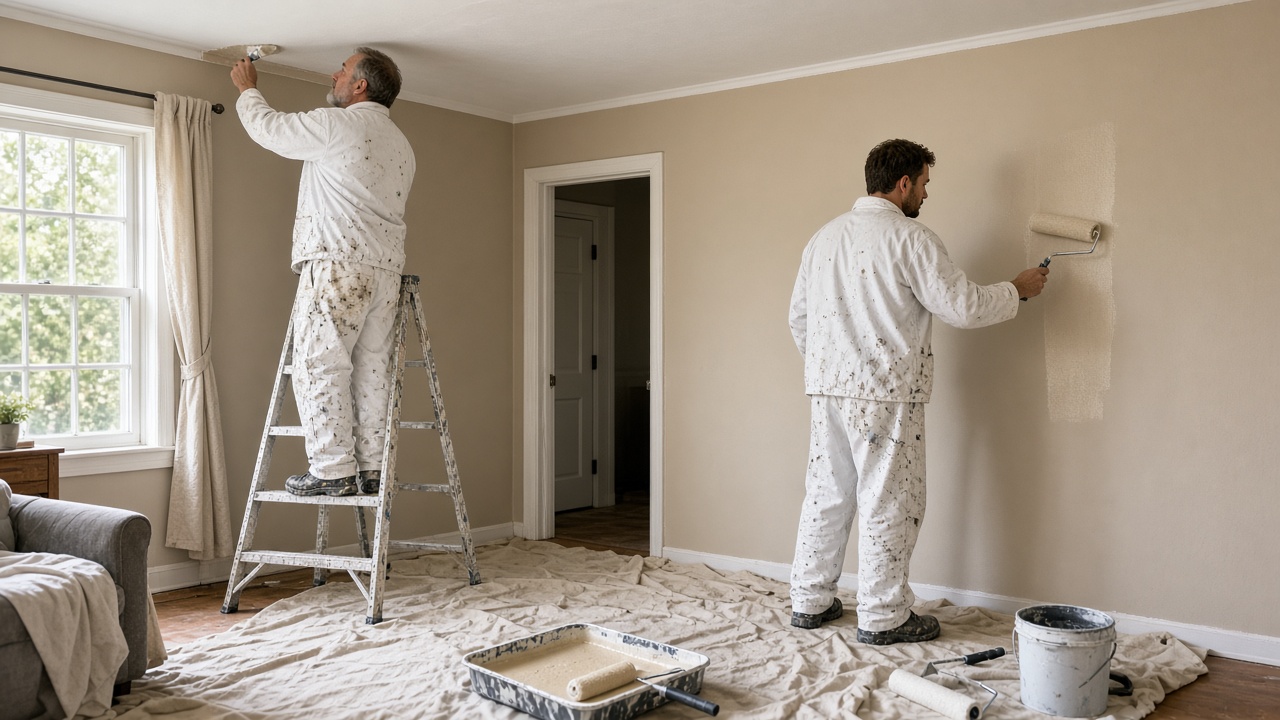
Hiring painters goes well when you match the job to the right worker and settle prep and lead rules first.
Painting is one of the most popular home projects, and one where hiring decisions show up on every wall. A great painter makes clean lines and smooth walls look easy. A rushed job leaves drips, lap marks, and paint on the floor. This guide helps you decide whether you need an experienced painter, a helper, or both, and how to set the job up so it comes out right.
Painter or painting helper?
They are different roles, and mixing them up is a common mistake.
- An experienced painter can assess surfaces, patch and prep, cut in clean lines by hand, roll evenly, spray if needed, and judge when a wall needs another coat
- A painting helper moves furniture, masks and covers, scrapes and sands under direction, cleans tools, rolls large flat areas, and keeps the job tidy
If you are painting yourself and want an extra set of hands, hire a helper. If you want a finished result you will not touch up, hire an experienced painter, and add a helper if the job is large. The Bureau of Labor Statistics reports a May 2025 median wage of $23.75 an hour for construction and maintenance painters, and notes that some employers require painters to provide their own tools (https://www.bls.gov/ooh/construction-and-extraction/painters-construction-and-maintenance.htm). It reports a median of $40,470 a year for painter and plasterer helpers (https://www.bls.gov/ooh/construction-and-extraction/construction-laborers-and-helpers.htm).
Step 1 Check licensing rules for painting in your state
Many states treat painting as contracting work above certain dollar amounts. In California, for example, the state contractors board says the minor work exemption applies only to jobs under $1,000 in labor and materials that do not require a permit, and only if the unlicensed person employs no one (https://www.cslb.ca.gov/Resources/IndustryBulletins/2024/AB%202622%20Implementation.FINAL.pdf). In Arizona, the minor work exemption applies to projects under $1,000 that do not require a building permit and are not part of a larger project (https://azleg.gov/ars/32/01121.htm).
If your job is above your state's threshold, hire a licensed painting contractor for the painting itself. You can still hire helpers for your own share of the work, like moving furniture and cleanup.
Step 2 Know the lead rule if your home was built before 1978
This is the most important legal point in home painting. EPA's Renovation, Repair and Painting Rule requires that anyone paid to perform work that disturbs painted surfaces in homes built before 1978 be certified, with workers trained in lead-safe practices (https://www.epa.gov/lead/renovation-repair-and-painting-program). Scraping, sanding, and removing painted trim are all included.
Very small jobs are excluded under EPA's minor repair limits: generally 6 square feet or less of painted surface per room inside, or 20 square feet or less outside, with no window replacement, no demolition of painted surfaces, and no prohibited practices (https://www.ecfr.gov/current/title-40/chapter-I/subchapter-R/part-745/subpart-E/section-745.83). Prohibited practices include open-flame burning of paint and power sanding or grinding without a shroud and HEPA vacuum attachment (https://www.ecfr.gov/current/title-40/chapter-I/subchapter-R/part-745/subpart-E/section-745.85).
For most real prep work on an older home, EPA recommends hiring a lead-safe certified contractor. Helpers can still move furniture, cover floors, and clean up under that contractor's direction.
Step 3 Define the scope in painter's terms
A clear paint scope prevents the most common disputes. Answer these questions in writing.
- Which rooms and which surfaces: walls, ceilings, trim, doors, cabinets, exterior siding
- Colors and sheens for each surface
- Number of coats, and whether primer is included
- Who buys the paint and supplies, and which brand and product line
- How much patching, caulking, and sanding is included
- Who moves furniture and removes outlet covers and hardware
- How the floors and furniture will be protected
- How cleanup and leftover paint are handled
If you buy the paint, buy a little extra of each color for touch-ups, and keep the labels.
Step 4 Prepare the space
Prep is most of the work in painting. Before the crew arrives, clear the rooms as much as you can, and take down art, curtains, and anything on the walls. Decide where the crew can wash brushes and rollers. Do not let anyone rinse brushes into a storm drain; ask your city how it wants paint rinse water and leftover paint handled.
Provide ventilation. Open windows where weather allows and use fans to move air out of the room.
Step 5 Plan for ladders and heights
Painting means ladders, and ladders mean falls. Provide stable ladders tall enough for the work, or ask the painter to bring them. Share OSHA's ladder basics: inspect the ladder before use, keep three points of contact, do not stand on the top step unless it is designed for it, and keep metal ladders away from power lines (https://www.osha.gov/sites/default/files/publications/portable_ladder_qc.pdf).
Two-story exteriors, steep roofs, and high stairwells need scaffolding or professional equipment. That is work for an experienced, insured painting contractor.
Plan a realistic schedule
Painting takes longer than most homeowners expect because of drying time. Read the paint can or the manufacturer's product sheet for recoat times, and build them into the plan. A room that needs patching, primer, and two finish coats may need more than one visit, even if each visit is short. Paying a crew to wait for drywall mud to dry is money wasted; schedule the patching first and the painting later.
For exterior work, check the product's minimum temperature and the weather forecast. Rain, dew, and direct afternoon sun can all ruin a fresh coat. Many crews start on the shaded side of the house and follow the shade around. Agree in advance on what happens if weather cancels a day, including whether there is any minimum pay for a crew that shows up and gets sent home.
Step 6 Write the post and choose the worker
Be specific about what you need. "Experienced interior painter for three bedrooms, walls and trim, two coats, I supply paint" will draw different applicants than "helper to move furniture and mask for a weekend paint job." Ask painters for photos of past work and a reference.
ChambaNOW is free to post at https://chambanow.com/for-hirers, and you can message applicants about that painting job. Local pages include https://chambanow.com/hire/los-angeles-ca/painting, https://chambanow.com/hire/denver-co/painting, https://chambanow.com/hire/philadelphia-pa/painting, and https://chambanow.com/hire/atlanta-ga/painting.
Step 7 Judge the work before you pay
Look at the walls with a light at a low angle, the way the sun hits them in the late afternoon. Check for these things.
- Clean, straight lines where walls meet ceilings and trim
- Even color with no lap marks, thin spots, or roller texture changes
- No drips, runs, or brush hairs
- Patches that disappear under the paint
- No paint on floors, outlets, hinges, or glass
- Hardware and covers replaced
Point out touch-ups before the crew leaves, then pay as agreed.
Painting hiring checklist
- Decided: experienced painter, helper, or both
- State licensing threshold checked
- Pre-1978 home: lead-safe certified contractor for paint-disturbing work
- Scope written: surfaces, colors, sheens, coats, primer, prep, and supplies
- Rooms cleared and ventilation planned
- Safe ladders; professionals for high exterior work
- Final inspection in angled light before paying
This guide is general information, not legal advice. Licensing and lead rules vary by state, and some states run their own lead programs.
Sources
- Bureau of Labor Statistics, Painters, Construction and Maintenance: https://www.bls.gov/ooh/construction-and-extraction/painters-construction-and-maintenance.htm
- Bureau of Labor Statistics, Construction Laborers and Helpers: https://www.bls.gov/ooh/construction-and-extraction/construction-laborers-and-helpers.htm
- California CSLB, Industry Bulletin 24-07 (AB 2622): https://www.cslb.ca.gov/Resources/IndustryBulletins/2024/AB%202622%20Implementation.FINAL.pdf
- Arizona Revised Statutes 32-1121: https://azleg.gov/ars/32/01121.htm
- EPA, Lead Renovation, Repair and Painting Program: https://www.epa.gov/lead/renovation-repair-and-painting-program
- 40 CFR 745.83, Definitions: https://www.ecfr.gov/current/title-40/chapter-I/subchapter-R/part-745/subpart-E/section-745.83
- 40 CFR 745.85, Work practice standards: https://www.ecfr.gov/current/title-40/chapter-I/subchapter-R/part-745/subpart-E/section-745.85
- OSHA, Portable Ladder Safety QuickCard: https://www.osha.gov/sites/default/files/publications/portable_ladder_qc.pdf
Written by Barry Graham, Founder, ChambaNOW
Construyendo conocimiento que funciona.