
A Guide to Setting Pay, Hours, and a Scope of Work Before Laborers Arrive
Settle pay, hours, and scope before workers arrive, and most day labor disputes never happen.
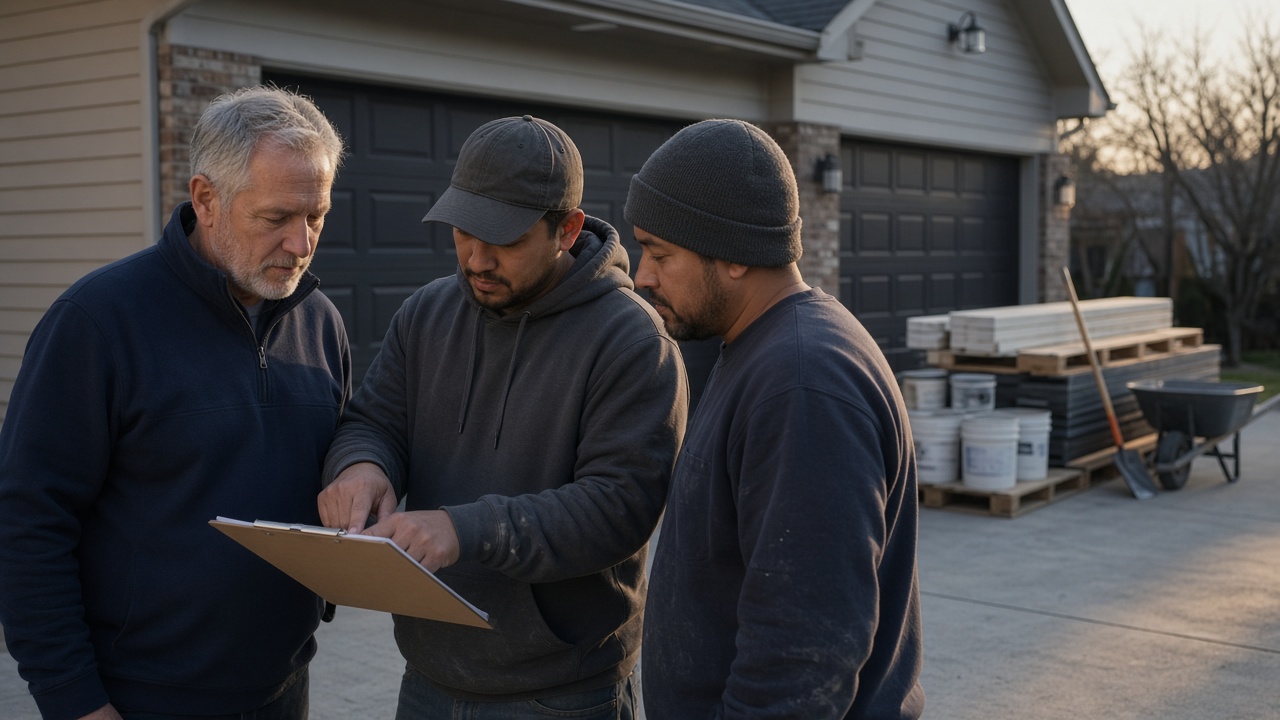
Settle pay, hours, and scope before workers arrive, and most day labor disputes never happen.
When a day labor job goes sideways, the cause is almost always one of three things: the pay was unclear, the hours were unclear, or the job was unclear. Each one is easy to settle the night before, and hard to fix in the middle of the afternoon. This guide is a pre-arrival checklist that puts all three on one page, so you and the crew start the day with the same expectations.
ChambaMatters has deeper guides on each piece: How Much Should You Pay a Day Laborer in 2026? (https://chambanow.com/chambamatters/how-much-should-you-pay-a-day-laborer-in-2026-rates-by-job-type) for rates, and How to Write a Clear Scope of Work Before a Day Labor Job Starts (https://chambanow.com/chambamatters/how-to-write-a-clear-scope-of-work-before-a-day-labor-job-starts) for scope. This guide ties them together into one pre-arrival routine.
The one-page job sheet
Before the job, fill out a single page, or a single text message, with three blocks: pay, hours, and scope. If any line is blank, you are not ready.
Block 1 Pay
- Rate: a number, such as $24 an hour or $190 for the day
- Basis: hourly, day rate, or by the job
- Minimum: the least you will pay if the job finishes early, such as a four-hour minimum
- Extra time: how you pay if the job runs past the estimate
- Method: cash, check, or a named payment app
- Timing: when payment happens, such as at the end of the day before the crew leaves
- Extras: whether you are providing lunch, reimbursing parking, or covering dump fees
Block 2 Hours
- Start time and where to report
- Expected finish time, as an honest estimate
- Breaks and lunch: when, and whether lunch is paid
- Travel during the day: for example, a run to the dump or a second address
- Weather or cancellation plan: what happens if rain or a delay cancels part of the day
Block 3 Scope
- Tasks, in the order they should happen
- What "done" looks like for each task
- What is not included
- Tools, equipment, and safety gear you provide, and what workers should bring
- Hazards and off-limits areas
- Who on site gives instructions and answers questions
Check the pay against the law
Before you send the job sheet, run three quick legal checks on the pay block.
- Minimum wage. The federal minimum wage is $7.25 an hour, but many states and cities set higher rates. The U.S. Department of Labor keeps a current state table (https://www.dol.gov/agencies/whd/minimum-wage/state). If you pay a day rate, divide it by the hours you expect to make sure it clears the minimum, with room to spare if the day runs long
- Overtime. For workers who are employees, federal law generally requires time and a half after 40 hours in a workweek (https://www.dol.gov/agencies/whd/flsa/faq). Some states go further. The DOL notes, for example, that California requires daily overtime after 8 hours and double time after 12
- Reporting time. Some states require minimum pay when an employee reports to work and is sent home early. California, for example, requires reporting time pay when an employee gets less than half the scheduled day (https://www.dir.ca.gov/dlse/FAQ_ReportingTimePay.htm)
Whether these rules apply depends on whether the worker is legally your employee, which turns on the facts of the relationship, not the label. If you are unsure, ask your state labor department or an employment professional.
Check the hours against how work time is counted
Federal rules give helpful guidance on what counts as paid time for employees, and they are a good fairness test for any hire. Under the DOL's hours-worked guidance, rest breaks of 20 minutes or less are generally counted as paid time, while a bona fide meal period of 30 minutes or more can be unpaid if the worker is completely relieved of duty (https://www.dol.gov/agencies/whd/fact-sheets/22-flsa-hours-worked). Travel from one job site to another during the workday is generally work time. And if you ask workers to meet at one place to pick up tools or instructions before going to the job, travel from that meeting place to the site generally counts as hours worked (https://www.ecfr.gov/current/title-29/subtitle-B/chapter-V/subchapter-B/part-785/subpart-C/subject-group-ECFR1b3bf6a8f3b1c4f/section-785.38).
Put your break plan in the job sheet so nobody has to guess.
Check the scope against the hours
This is the step most hirers skip. Read your task list, then read your estimated hours, and ask whether they match. If you have three hours of hauling, a full tear-out of a deck, and a dump run, all in a five-hour estimate, the job will run long and someone will be unhappy.
The ChambaMatters crew-size guide (https://chambanow.com/chambamatters/how-many-workers-do-you-need-a-crew-size-guide-for-moving-landscaping-and-cleanu) can help you match people and hours to the work. When in doubt, cut the scope or add a worker rather than squeezing the hours.
Check tools and costs
If you require workers to bring their own tools, think about the cost. Federal rules say that when an employer requires an employee to provide tools for the job, the cost cannot cut into the minimum wage or overtime the employee is owed (https://www.ecfr.gov/current/title-29/subtitle-B/chapter-V/subchapter-A/part-531/subpart-C/subject-group-ECFRd42c2e4b995d7cd/section-531.35). Supplying the tools yourself is often simpler.
Send the job sheet as a confirmation
Once all three blocks are filled in, send them to each worker in one message and ask for a reply. A written confirmation, even by text, is your best tool if anyone remembers the deal differently.
Confirming Saturday at 2210 Cedar Ave. Start 8 a.m., expected finish around 2 p.m. Pay $25/hour, 4-hour minimum, paid by Zelle before you leave. 15-minute paid break mid-morning, 30-minute unpaid lunch at noon (lunch provided). Tasks: tear out the old garden beds, load wood into the trailer, spread the new soil, sweep the patio. Not included: anything with the sprinkler system. I provide shovels, wheelbarrow, gloves, and water. Bring boots. Reply YES to confirm.
On ChambaNOW, you can message the workers who applied to your posted job, which keeps the confirmation in the same thread as the job. ChambaNOW is free to post at https://chambanow.com/for-hirers.
Re-check on arrival
Spend the first five minutes walking the job with the crew and going over the sheet out loud. Point out the tasks, the finish line, the break plan, and the pay. If anything changes during the day, agree on the change and the pay before the work continues, then text a one-line update.
Use the same sheet to close out the day. Walk the tasks against the "done" lines, note the actual start and finish times, add any agreed changes, and pay the total before the crew leaves. Keep the sheet with your payment record. Next time you hire for a similar job, last time's sheet, with real hours filled in, becomes your starting estimate.
Pre-arrival checklist
- Pay block complete: rate, basis, minimum, extra time, method, timing, extras
- Hours block complete: start, finish estimate, breaks, travel, weather plan
- Scope block complete: tasks, done, not included, tools, hazards, contact
- Pay checked against state and city minimum wage, overtime, and reporting rules
- Breaks and travel time handled fairly
- Scope realistic for the hours and crew size
- Tool costs considered
- Job sheet sent and confirmed in writing
- Sheet reviewed with the crew on arrival
This guide is general information, not legal advice. Wage and hour rules vary by state and city.
Sources
- U.S. Department of Labor, State Minimum Wage Laws: https://www.dol.gov/agencies/whd/minimum-wage/state
- U.S. Department of Labor, FLSA Questions and Answers: https://www.dol.gov/agencies/whd/flsa/faq
- California Labor Commissioner, Reporting Time Pay FAQ: https://www.dir.ca.gov/dlse/FAQ_ReportingTimePay.htm
- U.S. Department of Labor, Fact Sheet 22, Hours Worked: https://www.dol.gov/agencies/whd/fact-sheets/22-flsa-hours-worked
- 29 CFR 785.38, Travel that is part of the day's work: https://www.ecfr.gov/current/title-29/subtitle-B/chapter-V/subchapter-B/part-785/subpart-C/subject-group-ECFR1b3bf6a8f3b1c4f/section-785.38
- 29 CFR 531.35, Free and clear payment: https://www.ecfr.gov/current/title-29/subtitle-B/chapter-V/subchapter-A/part-531/subpart-C/subject-group-ECFRd42c2e4b995d7cd/section-531.35
Written by Barry Graham, Founder, ChambaNOW
Building knowledge that works.