
A Guide to Hiring a Cleanup Crew After a Renovation
A hired cleanup crew can turn a dusty post-renovation house back into a clean, livable home.
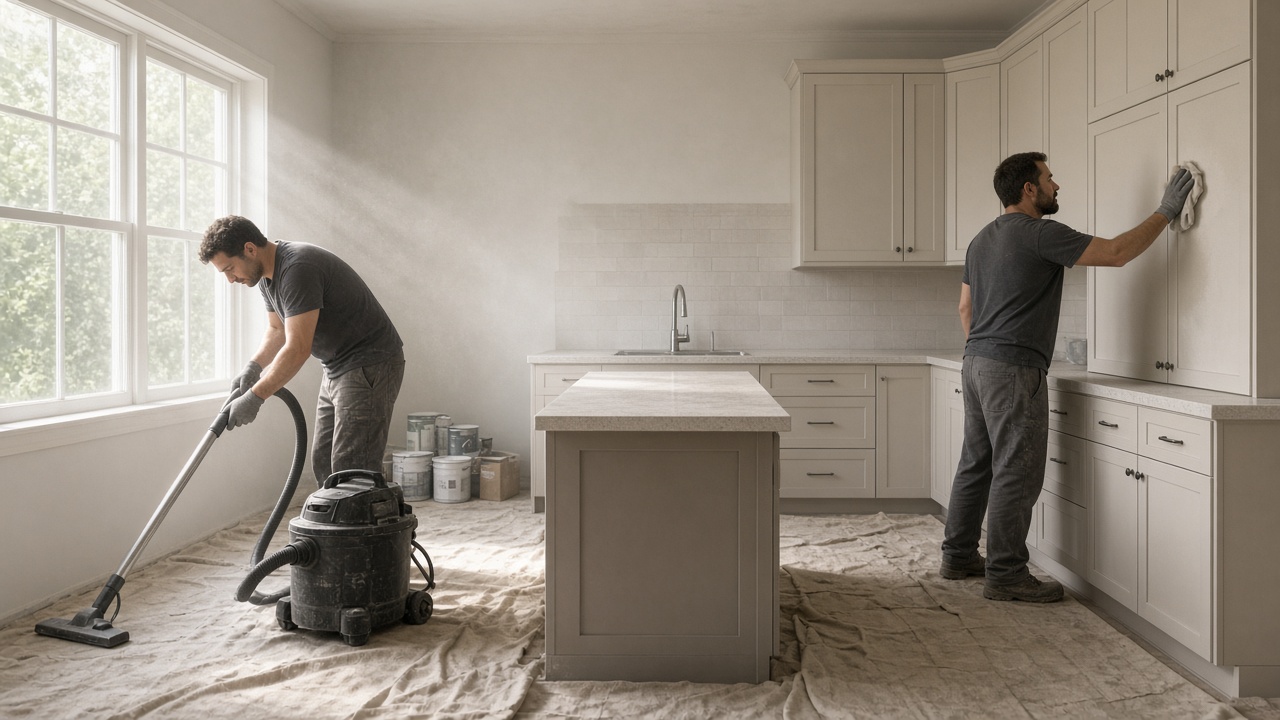
A hired cleanup crew can turn a dusty post-renovation house back into a clean, livable home.
Renovation dust gets everywhere, and the cleanup after the last tradesperson leaves is a different job from regular house cleaning. It involves fine dust, leftover debris, stickers and overspray, and sometimes hazards like lead or silica. This guide explains how to plan and hire a post-renovation cleanup crew, what to sort out with your contractor first, and how to judge the result.
For keeping dust under control while work is still going on, see How to Keep Your Home Clean During Renovations (https://chambanow.com/chambamatters/how-to-keep-your-home-clean-during-renovations). This guide picks up when the construction work is done.
Step 1 Check what your contractor already owes you
Read your renovation contract before you hire anyone. Many contracts include some level of cleanup, often called broom clean, plus removal of construction debris. Ask your contractor directly.
- Will you remove all debris, scrap, and packaging?
- Will you leave the space broom clean or better?
- Will you remove protective film, tape, and floor protection?
- If the home was built before 1978, will you complete EPA's required cleaning and cleaning verification?
That last question matters. Under EPA's Renovation, Repair and Painting Rule, renovation firms working in pre-1978 homes must follow specific cleaning steps after the work, and a certified renovator must perform the post-renovation cleaning verification, which includes wiping windowsills and floors and comparing the cloths to an EPA verification card (https://www.ecfr.gov/current/title-40/chapter-I/subchapter-R/part-745/subpart-E/section-745.85). Do not hire a separate crew to take over that step. Your crew's job begins after the contractor's required cleanup is complete.
Step 2 Know the three phases of post-renovation cleaning
Cleaning crews and contractors often describe the work in phases.
- Rough clean: removing large debris, scrap, packaging, and the heaviest dust once the major work is done
- Final or detail clean: cleaning every surface top to bottom, inside cabinets and drawers, windows and tracks, fixtures, floors, vents, and trim
- Touch-up clean: a quick pass after punch-list repairs or before you move furniture back in
Decide which phases you are hiring for, and say so in your job post.
Step 3 Understand the dust you are dealing with
Construction dust is not just dirt. Some of it is a health concern.
- Silica dust comes from cutting or grinding concrete, stone, brick, tile, and some countertops. OSHA's construction standard bars employers from allowing dry sweeping or dry brushing where it could expose workers to silica, unless wet sweeping, HEPA vacuuming, or similar methods are not feasible, and it limits the use of compressed air for cleaning (https://www.ecfr.gov/current/title-29/subtitle-B/chapter-XVII/part-1926/subpart-Z/section-1926.1153)
- Lead dust can be present when older painted surfaces were disturbed. EPA notes that renovation in pre-1978 homes can easily create dangerous lead dust (https://www.epa.gov/lead/renovation-repair-and-painting-program)
- Possible asbestos debris needs special handling. EPA advises against dusting, sweeping, or vacuuming debris that may contain asbestos (https://www.epa.gov/asbestos/protect-your-family)
The practical takeaway for your crew is simple: clean with HEPA vacuums and damp methods, not brooms, leaf blowers, or compressed air. EPA defines a HEPA vacuum as one with a filter that captures particles of 0.3 microns with 99.97% efficiency and expels all air through that filter (https://www.ecfr.gov/current/title-40/chapter-I/subchapter-R/part-745/subpart-E/section-745.83). If you suspect asbestos or unfinished lead work, stop and call the contractor or a qualified professional before cleaning.
Step 4 Plan supplies and equipment
Decide who brings what. A post-renovation crew typically needs the following.
- HEPA-filter vacuums with crevice and brush attachments
- Microfiber cloths, buckets, and a two-bucket or flat mop system
- Non-abrasive cleaners safe for new finishes, plus glass cleaner
- Plastic razor scrapers for stickers, labels, and paint specks on glass
- Step ladders for high shelves, ceiling fans, and light fixtures
- Contractor bags for leftover debris
- Gloves, safety glasses, and dust masks or respirators where needed
Ask your contractor or the manufacturer what is safe for new materials. Fresh grout, natural stone, and some flooring can be damaged by the wrong cleaner.
Step 5 Write the job post
Include the type of renovation, the size of the space, which phases you need, whether supplies are provided, and the timing relative to the contractor's finish. Mention stairs, high windows, or very large rooms.
ChambaNOW is free to post at https://chambanow.com/for-hirers, and you can message the workers who apply about that cleanup job. Local cleaning pages include https://chambanow.com/hire/atlanta-ga/cleaning, https://chambanow.com/hire/los-angeles-ca/cleaning, and https://chambanow.com/hire/chicago-il/cleaning.
Pay must meet your state and local minimum wage (https://www.dol.gov/agencies/whd/minimum-wage/state). For a national reference, the Bureau of Labor Statistics reports a May 2025 median of $17.71 an hour for janitors and building cleaners (https://www.bls.gov/ooh/building-and-grounds-cleaning/janitors-and-building-cleaners.htm). Post-construction cleaning is harder and dustier than routine cleaning, so expect to offer more to attract experienced workers.
Step 6 Prepare the home for the crew
Change or check the HVAC filter after construction, since dust collects in the system. Keep the system off during the heaviest cleaning if your contractor recommends it. Open windows for ventilation if weather allows. Move any boxes or furniture out of the rooms being cleaned so the crew can reach every surface.
Step 7 Use a room-by-room checklist
Give the crew a checklist and walk the house with them at the start.
- Ceilings, corners, and crown molding dusted from the top down
- Light fixtures, ceiling fans, and vent covers cleaned
- Walls spot-cleaned where safe for fresh paint
- Windows, sills, frames, and tracks vacuumed and wiped
- Doors, door frames, and hardware wiped
- Cabinets and drawers vacuumed and wiped inside and out
- Countertops, backsplashes, sinks, and fixtures cleaned and polished
- Appliances wiped inside and out, with stickers removed
- Baseboards, outlets, and switch plates wiped
- Floors HEPA-vacuumed, then damp-mopped or cleaned per flooring instructions
- Bathrooms fully cleaned, including tub, shower, glass, and toilet
- Debris bagged and removed, with recycling sorted
Work top to bottom, and finish with floors.
When to call a specialist instead
General cleanup crews are the right hire for construction dust and debris. Some situations call for a specialist instead.
- Visible mold or water damage. EPA says that in most cases you can handle mold cleanup yourself if the moldy area is less than about 10 square feet; for larger areas or a lot of water damage, it points to professional remediation guidance (https://www.epa.gov/mold/brief-guide-mold-moisture-and-your-home)
- Smoke or fire damage, which usually needs restoration equipment and methods
- Suspected asbestos or unfinished lead work, which needs a trained and accredited or certified professional
- Sewage backups, which carry health risks beyond ordinary dirt
Step 8 Inspect before you pay
Walk every room with the crew lead when they finish. Run a hand along a few high shelves and windowsills. Look at glass in the sunlight. Open a few drawers. Point out anything missed while the crew is still there, then pay in full as agreed.
Cleanup hiring checklist
- Contract checked for the contractor's cleanup duties
- Pre-1978 home: contractor's EPA cleaning verification completed first
- Phases chosen: rough, final, or touch-up
- HEPA and damp-cleaning methods required; no dry sweeping or blowers
- Supplies and safe cleaners decided
- HVAC filter checked and rooms cleared
- Room-by-room checklist ready
- Final walkthrough before payment
This guide is general information. If you suspect lead or asbestos hazards, contact your contractor, your state health department, or a qualified professional.
Sources
- 40 CFR 745.85, Work practice standards: https://www.ecfr.gov/current/title-40/chapter-I/subchapter-R/part-745/subpart-E/section-745.85
- 40 CFR 745.83, Definitions: https://www.ecfr.gov/current/title-40/chapter-I/subchapter-R/part-745/subpart-E/section-745.83
- 29 CFR 1926.1153, Respirable crystalline silica: https://www.ecfr.gov/current/title-29/subtitle-B/chapter-XVII/part-1926/subpart-Z/section-1926.1153
- EPA, Lead Renovation, Repair and Painting Program: https://www.epa.gov/lead/renovation-repair-and-painting-program
- EPA, Protect Your Family from Asbestos-Contaminated Materials: https://www.epa.gov/asbestos/protect-your-family
- U.S. Department of Labor, State Minimum Wage Laws: https://www.dol.gov/agencies/whd/minimum-wage/state
- Bureau of Labor Statistics, Janitors and Building Cleaners: https://www.bls.gov/ooh/building-and-grounds-cleaning/janitors-and-building-cleaners.htm
- EPA, A Brief Guide to Mold, Moisture and Your Home: https://www.epa.gov/mold/brief-guide-mold-moisture-and-your-home
Written by Barry Graham, Founder, ChambaNOW
Building knowledge that works.