
A Homeowner’s Guide to Hiring Temporary Labor Without a Contractor’s License
You can use temporary labor on a home project legally if licensed work stays with licensed professionals.
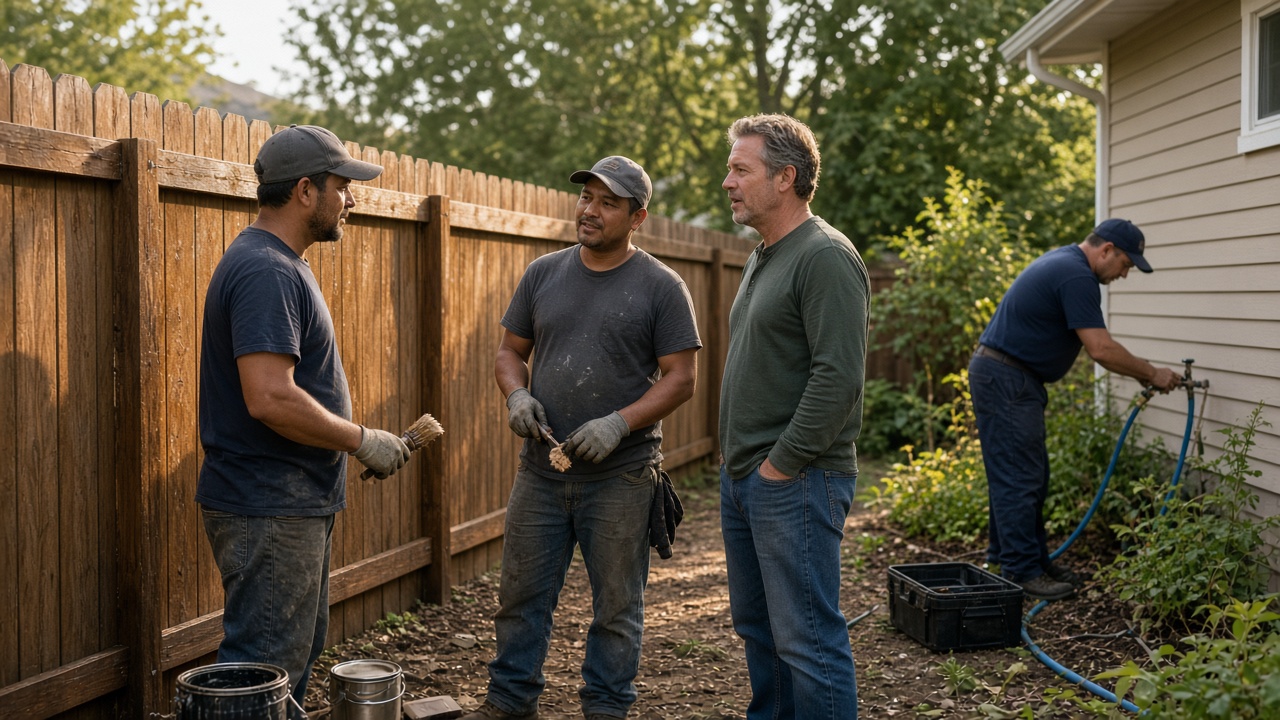
You can use temporary labor on a home project legally if licensed work stays with licensed professionals.
Many home projects mix two kinds of work. Some of it is general labor anyone can be hired to do, like hauling, cleanup, and carrying materials. Some of it belongs to licensed contractors and trades, like wiring, plumbing, and structural changes. The trouble starts when the line blurs, and a helper hired to haul debris gets asked to "just move that outlet." This guide is a practical plan for keeping that line clear from the first phone call to the final inspection.
For the legal background, including owner-builder rules and state examples, read Can a Homeowner Hire Labor Without a Contractor’s License? (https://chambanow.com/chambamatters/can-a-homeowner-hire-labor-without-a-contractor-s-license). This guide assumes you have read it, or want the how-to version.
Step 1 Map your project into tasks and lanes
Write every task in your project on a list, from demo to final cleanup. Then put each one in a lane.
- Labor lane: work that needs effort and care but not a license or permit, such as hauling, cleaning, moving, yard work, and carrying materials
- Check lane: small repairs and installs that may be allowed without a license under your state's minor-work rules, depending on price and permits
- Licensed lane: electrical, plumbing, gas, HVAC, structural, and any work that requires a building permit
Most confusion lives in the check lane. Treat those tasks as licensed until you confirm otherwise.
Step 2 Call your building department with specific questions
A ten-minute call can save you from a failed inspection or a fine. Have your task list in front of you and ask these questions.
- Does any part of this project require a permit?
- Who can pull the permit: me as the owner, or only a licensed contractor?
- Which tasks must be done by a licensed trade?
- If I act as my own contractor, what are my supervision and inspection responsibilities?
- Are there limits on selling or renting the home after owner-builder work?
Write down the answers, the date, and the name of the person you spoke with.
Step 3 Learn your state's minor-work threshold
Many states let unlicensed people do small jobs below a dollar limit, but the details matter. In California, the minor work exemption covers jobs under $1,000 in combined labor and materials, only if no permit is required and the unlicensed person employs no one (https://www.cslb.ca.gov/Resources/IndustryBulletins/2024/AB%202622%20Implementation.FINAL.pdf). In Arizona, the exemption covers projects under $1,000 that need no building permit, and it does not apply when the work is part of a larger operation or split into contracts under $1,000 (https://azleg.gov/ars/32/01121.htm).
The practical rule: do not break a project into small pieces to stay under a threshold. Arizona's statute spells that out, and it is a red flag anywhere.
Step 4 Decide who leads the project
You have two basic paths for projects that include licensed work.
- Hire a licensed general contractor. The contractor pulls permits, hires and supervises the trades, and usually brings or hires the labor. You can still hire your own helpers for things outside the contract, like clearing rooms beforehand or hauling your own junk
- Act as your own owner-builder, where your state allows it. You pull the permit, hire licensed trades for licensed work, and may hire general labor yourself. You also take on responsibility for supervision and inspections
Owner-builder rules carry real duties. Florida law, for example, requires an owner-builder to provide direct, onsite supervision of all work not performed by licensed contractors (https://www.flsenate.gov/Laws/Statutes/2025/489.103). California's contractors board warns that owner-builders who hire unlicensed workers may be considered employers, with payroll tax and workers' compensation obligations (https://www.cslb.ca.gov/Resources/GuidesAndPublications/OwnerBuildersPamphlet.pdf). Arizona's owner exemption applies to owners doing the work themselves, with their own employees, or with licensed contractors, on property not intended for sale or rent (https://azleg.gov/ars/32/01121.htm).
If those duties sound like more than you want, hire a licensed general contractor.
Step 5 Write separate scopes for labor and licensed work
Give your hired laborers a written scope that names only labor-lane tasks, and says clearly what they should not touch.
Today: carry old cabinets to the trailer, remove carpet and tack strip in the back bedroom, sweep and bag debris. Do not disconnect or move any plumbing, wiring, or gas lines. If you find wires, pipes, or water damage, stop and call me.
Give licensed trades their own scope or contract. This keeps responsibilities clear for you, for the workers, and for any inspector or insurer who asks later. ChambaMatters has a template in How to Write a Clear Scope of Work Before a Day Labor Job Starts (https://chambanow.com/chambamatters/how-to-write-a-clear-scope-of-work-before-a-day-labor-job-starts).
Step 6 Sequence labor around the licensed trades
Laborers and licensed trades work well together when you schedule them in the right order.
- Before the trades: clear rooms, remove contents, non-structural demo after utilities are shut off by a professional, haul debris
- During the trades: carry materials, keep paths clear, clean up between stages, under the direction of the contractor where they agree
- After inspection: final cleanup, haul-away, moving furniture back
Ask the licensed contractor before you put your own helpers on their site. Some will welcome help with hauling; others prefer to control everyone on the job.
Step 7 Know when to stop and call a licensed pro
Build stop rules into every labor job. Tell workers to stop and call you if any of these happen.
- They find wiring, pipes, or gas lines that were not expected
- They see signs of water damage, rot, or mold in walls or floors
- A wall, beam, or post turns out to be holding something up
- Old materials look like they could contain asbestos, or painted surfaces in a pre-1978 home will be disturbed (https://www.epa.gov/lead/renovation-repair-and-painting-program)
- The job grows into something that needs a permit
When a stop rule triggers, pause and call the right licensed professional before work continues.
Step 8 Watch for red flags in who you hire
Be cautious when someone offers to do licensed work without a license. In California and Arizona, unlicensed people who advertise small jobs under the minor-work exemption must state in their ads that they are not licensed, according to the California contractors board bulletin and Arizona statute cited above. Anyone who claims they can do wiring, plumbing, or permitted work "without all that paperwork" is a reason to keep looking. You can check a contractor's license with your state board; ChambaMatters explains how in Verify Contractor Licenses (https://chambanow.com/chambamatters/verify-contractor-licenses).
For labor-lane work, post a clear job. ChambaNOW is free to post at https://chambanow.com/for-hirers, and you can message the workers who apply about that job. See local pages like https://chambanow.com/hire/los-angeles-ca/general_labor or https://chambanow.com/hire/phoenix-az/general_labor.
Step 9 Keep the paper trail
Keep permits, inspection records, licensed contractors' license numbers and insurance certificates, your written scopes, and payment records together. Call your insurer before work starts to ask about coverage for people working on your property.
Project checklist
- Every task sorted into labor, check, or licensed lanes
- Building department called; answers written down
- State minor-work threshold checked; no splitting of projects
- Path chosen: licensed general contractor or owner-builder
- Separate written scopes for laborers and licensed trades
- Labor scheduled around the trades
- Stop rules shared with every worker
- Licenses verified; records and insurance in order
This guide is general information, not legal advice. Licensing rules differ by state, county, and city. Check with your state licensing board and local building department, and consult a qualified professional for your situation.
Sources
- California CSLB, Industry Bulletin 24-07 (AB 2622): https://www.cslb.ca.gov/Resources/IndustryBulletins/2024/AB%202622%20Implementation.FINAL.pdf
- California CSLB, Owner-Builders Beware: https://www.cslb.ca.gov/Resources/GuidesAndPublications/OwnerBuildersPamphlet.pdf
- Arizona Revised Statutes 32-1121: https://azleg.gov/ars/32/01121.htm
- Florida Statutes 489.103: https://www.flsenate.gov/Laws/Statutes/2025/489.103
- EPA, Lead Renovation, Repair and Painting Program: https://www.epa.gov/lead/renovation-repair-and-painting-program
Written by Barry Graham, Founder, ChambaNOW
Building knowledge that works.