
A Guide to Budgeting Labor Costs for a Weekend Project
A weekend project budget works best when you price labor by hours, then add the costs that come with it.
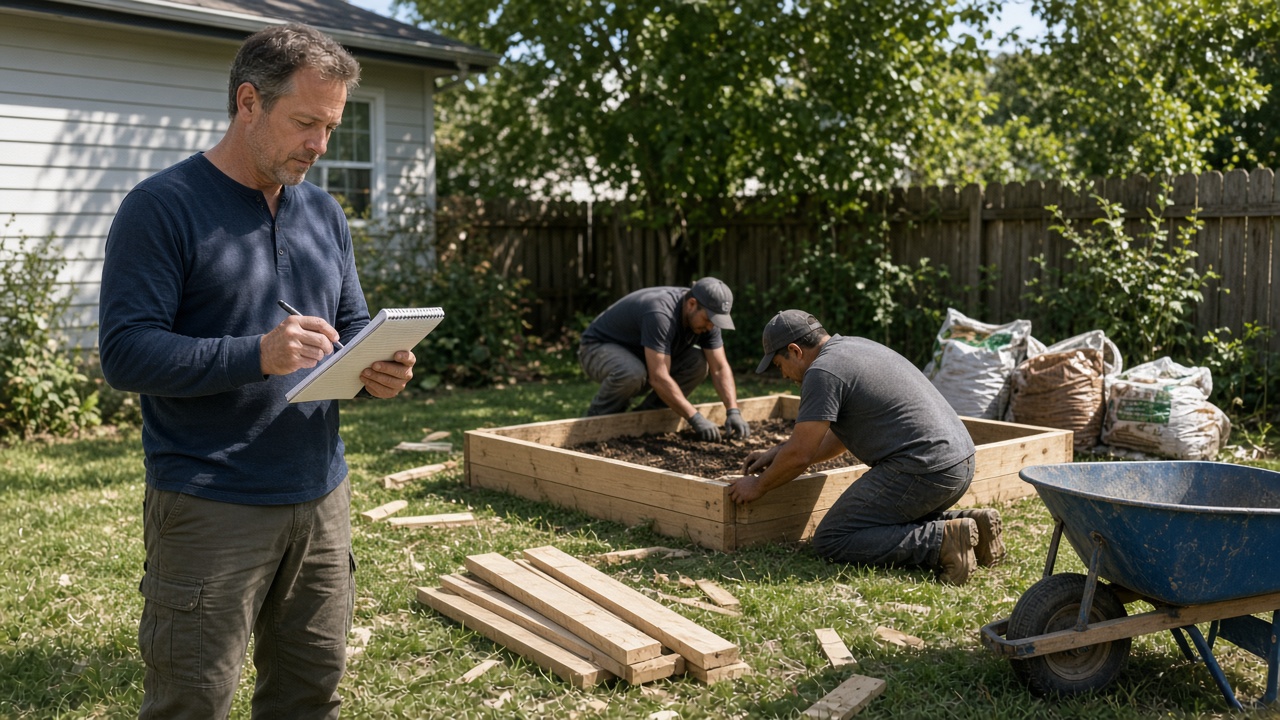
A weekend project budget works best when you price labor by hours, then add the costs that come with it.
Most weekend projects go over budget for the same reasons: the job took longer than planned, the crew needed equipment nobody priced, or the debris cost more to dump than anyone expected. This guide gives you a simple worksheet to estimate labor costs before you post a job, plus the extras that usually get missed.
If you are deciding what to pay per hour or per day, ChambaMatters covers rates in How Much Should You Pay a Day Laborer in 2026? (https://chambanow.com/chambamatters/how-much-should-you-pay-a-day-laborer-in-2026-rates-by-job-type). This guide is about building the whole labor budget around that rate.
The basic labor formula
Labor cost = number of workers x hours each x hourly rate.
That is the core. Everything else in this guide is about getting each of those three numbers right and then adding what rides along with them.
Step 1 Break the project into tasks
Write the project as a list of tasks, not a single line. "Redo the backyard" is hard to estimate. "Remove old sod, haul it, level the soil, lay pavers along the side path, spread mulch in two beds" is much easier.
For each task, ask how many people it needs and roughly how long it takes. If you are unsure, the ChambaMatters crew-size guide (https://chambanow.com/chambamatters/how-many-workers-do-you-need-a-crew-size-guide-for-moving-landscaping-and-cleanu) gives starting points for moving, landscaping, and cleanup.
Step 2 Estimate hours honestly
Most first-time hirers underestimate time. Build in the parts of the day that are not hands-on work but still take time.
- Walkthrough and setup at the start
- Breaks and lunch
- Trips to the dumpster, truck, or store
- Cleanup at the end
- Weather delays for outdoor work
Round up. If a task feels like five hours, budget six.
Step 3 Choose a rate and check the legal floor
Pick a rate that will attract reliable workers in your area, then confirm it meets the legal minimum. The federal minimum wage is $7.25 an hour, but many states and cities set higher minimums, according to the U.S. Department of Labor (https://www.dol.gov/agencies/whd/minimum-wage/state). For example, the DOL lists 2026 state minimums of $16.90 in California, $15.15 in Arizona, and $17.13 in Washington, while Texas and Georgia follow the federal rate. Some cities set their own, higher minimums.
National medians can also help you sanity-check. The Bureau of Labor Statistics reports May 2025 medians of $18.38 an hour for hand laborers and material movers, $19.27 for grounds maintenance workers, and $17.71 for janitors and building cleaners (https://www.bls.gov/ooh/transportation-and-material-moving/hand-laborers-and-material-movers.htm). Local day-labor rates can be higher or lower than these national medians, and short or weekend jobs may need a higher offer to attract workers. Treat the medians as a reference point, not a price list.
Step 4 Decide hourly or day rate, and the minimum
Hourly pay is easiest to budget when the job length is uncertain. A day rate is simpler when the job is well defined. Either way, decide what happens if the job finishes early or runs long. Many hirers set a minimum number of paid hours, which helps workers who travel to the site and makes your offer more competitive.
In some states, rules on minimum pay for reporting to work can apply to employees. California, for example, has reporting time pay rules when an employee reports to work but gets less than half the scheduled day (https://www.dir.ca.gov/dlse/FAQ_ReportingTimePay.htm). If you are unsure whether those rules apply to your situation, check with your state labor department.
Step 5 Add the costs that ride along with labor
These items often decide whether a project stays on budget.
- Equipment rental: sod cutter, tiller, plate compactor, dumpster, trailer, dolly
- Disposal: dumpster rental, transfer station fees, or haul-away charges. Landfill tipping fees vary widely by region, so get a local quote
- Materials: get a written quote and confirm delivery timing
- Tools and supplies: contractor bags, gloves, safety glasses, blades, fuel
- Food and water: optional, but common on weekend jobs and appreciated
- Parking or street-use permits, if your city requires one for a dumpster or truck
Step 6 Add a contingency
Things change once work starts. A stump is bigger than it looked, or the soil under the old patio is full of rubble. Set aside a contingency amount you are comfortable with, and decide in advance what it is for. That way, when the crew asks whether to keep going, you already know the answer.
Agree with the crew up front on how extra work gets handled. A simple rule works: if something outside the plan comes up, the crew lead stops and tells you, you agree on the extra time and pay, and you confirm it by text. That keeps the contingency from disappearing into work you never approved, and it keeps the crew from doing extra work they are not sure they will be paid for.
A sample worksheet
Here is a simple example using made-up numbers to show the math. Replace them with your own local rates and quotes.
- Task 1, remove sod and haul to trailer: 2 workers x 4 hours = 8 labor hours
- Task 2, level soil and lay side-path pavers: 2 workers x 4 hours = 8 labor hours
- Task 3, spread mulch in two beds and clean up: 2 workers x 2 hours = 4 labor hours
- Total: 20 labor hours
- At a hypothetical $25 an hour: 20 x $25 = $500 in labor
- Add: sod cutter rental, dumpster or haul fee, pavers, mulch, and supplies from your local quotes
- Add: your contingency
Notice that the labor line is only part of the total. On many weekend projects, disposal and equipment are where budgets break.
Step 7 Plan payment and records
Decide how and when you will pay, and set the money aside before the job. Same-day payment is standard for one-day jobs. Keep a simple record of who worked, the hours, the amount, and how you paid. ChambaMatters covers payment methods in Cash, Check, or App: How to Pay Day Laborers and Keep Records (https://chambanow.com/chambamatters/cash-check-or-app-how-to-pay-day-laborers-and-keep-records).
Tax rules depend on who you are and what the work is. Payments for personal work on your own home are generally not reported on Form 1099-NEC, which applies to payments made in the course of a trade or business; for business payments made in 2026, the 1099-NEC threshold is $2,000 (https://www.irs.gov/pub/irs-pdf/i1099mec.pdf). Separately, if you pay a household employee $3,000 or more in cash wages in 2026, household employment taxes can apply (https://www.irs.gov/publications/p926). Ask a tax professional if you are unsure.
Step 8 Post the job with the numbers
When the budget is set, put the rate, the expected hours, and the payment method in your job post. Clear numbers attract workers who are ready to commit. ChambaNOW is free to post at https://chambanow.com/for-hirers, and you can message applicants about that job to confirm details. City pages such as https://chambanow.com/hire/san-antonio-tx/general_labor or https://chambanow.com/hire/chicago-il/general_labor show local hiring.
Budget checklist
- Project broken into tasks
- Workers and hours estimated per task, rounded up
- Rate chosen and checked against state and city minimum wage
- Early-finish and overtime plan decided
- Equipment, disposal, materials, supplies, and permits priced
- Contingency set aside
- Payment method chosen and money ready
- Records plan in place
This guide is general information, not tax or legal advice.
Sources
- U.S. Department of Labor, State Minimum Wage Laws: https://www.dol.gov/agencies/whd/minimum-wage/state
- Bureau of Labor Statistics, Hand Laborers and Material Movers: https://www.bls.gov/ooh/transportation-and-material-moving/hand-laborers-and-material-movers.htm
- Bureau of Labor Statistics, Grounds Maintenance Workers: https://www.bls.gov/ooh/building-and-grounds-cleaning/grounds-maintenance-workers.htm
- Bureau of Labor Statistics, Janitors and Building Cleaners: https://www.bls.gov/ooh/building-and-grounds-cleaning/janitors-and-building-cleaners.htm
- California Labor Commissioner, Reporting Time Pay FAQ: https://www.dir.ca.gov/dlse/FAQ_ReportingTimePay.htm
- IRS, Instructions for Forms 1099-MISC and 1099-NEC: https://www.irs.gov/pub/irs-pdf/i1099mec.pdf
- IRS, Publication 926: https://www.irs.gov/publications/p926
Written by Barry Graham, Founder, ChambaNOW
Building knowledge that works.