
Top ZipRecruiter Alternatives for Better Hiring in 2026
Discover the best ZipRecruiter alternatives for 2026. Enhance your hiring with targeted job boards, faster local hires, and niche talent sourcing.

If you need higher-quality candidates or faster local hires, a blended approach works better than ZipRecruiter alone: pair one high-reach job board with a targeted, language-enabled marketplace and you will cover both volume and precision in a single hiring cycle.
Here is where to start, mapped to the four most common hiring needs:
- Volume and speed: A major job board like Indeed gives you broad active-candidate reach quickly, with pay-per-application pricing that keeps early costs predictable.
- Passive and senior roles: LinkedIn Jobs reaches professionals who are not actively searching, making it the go-to for management, technical, or specialized positions.
- Niche and technical talent: AI sourcing marketplaces surface passive candidates with specific skill sets, cutting manual screening time for hard-to-fill roles.
- Local, bilingual, and immediate hires: Chambanow connects hirers with local workers who are available the same day, with built-in real-time translation that removes language friction entirely.
The fastest way to validate which option fits your next open role is a two-tool experiment: run one inbound channel and one targeted tool simultaneously for a single position, then compare time-to-first-qualified candidate and cost-per-hire.
Table of Contents
- How do the top ZipRecruiter alternatives compare?
- Which platforms should you actually use?
- How do you choose the right alternative for your next hire?
- When is Chambanow the best alternative?
- What is ZipRecruiter and why do teams use it?
- Key Takeaways
- The real cost of defaulting to one channel
- Chambanow fills the gap the big boards leave open
How do the top ZipRecruiter alternatives compare?
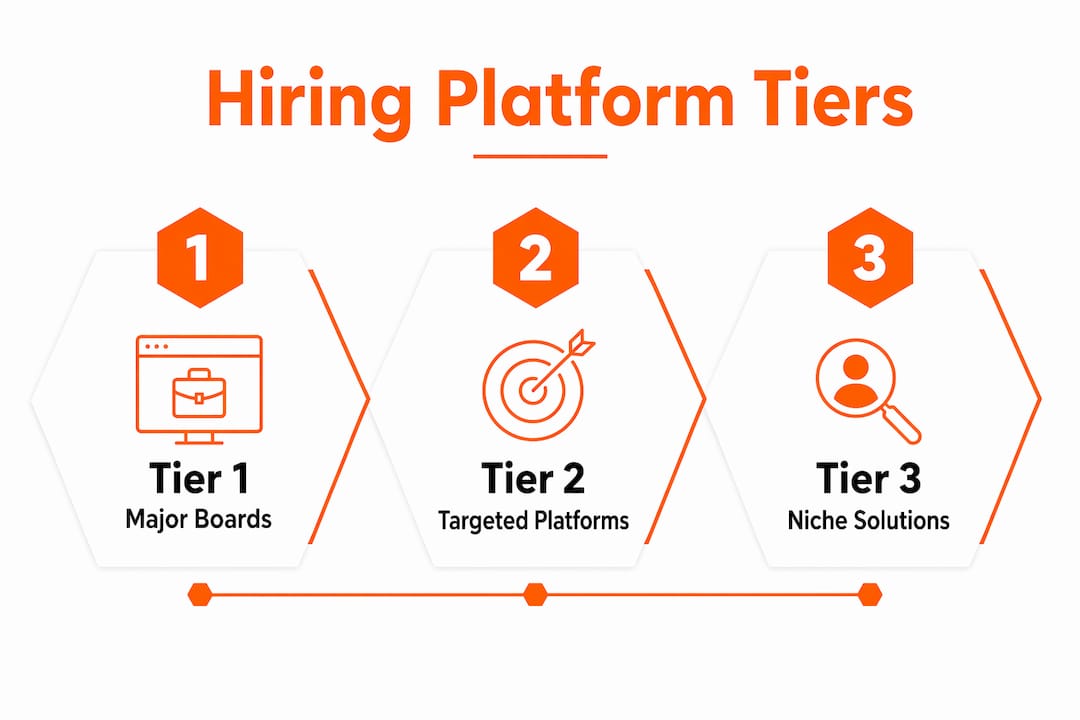
Different platform types solve different problems. The table below maps each category to the hiring situation it fits best, so you can match the tool to the role rather than defaulting to whatever you used last time.
| Platform type | Best for | Candidate reach | Pricing model | Standout features | ATS compatibility |
|---|---|---|---|---|---|
| Major job board (e.g., Indeed) | Volume, entry-to-mid-level | Primarily active | Pay-per-application or sponsored posts | Massive index, resume database, easy apply | Broad; most ATS platforms |
| Professional network (e.g., LinkedIn Jobs) | Passive, senior, specialized | Active and passive | Per-seat subscription or per-job post | InMail, talent insights, employer branding | Strong; integrates with most enterprise ATS |
| AI sourcing/marketplace | Niche, technical, passive | Primarily passive | Sourcing fee or per-hire charge | AI matching, outbound campaigns, candidate signals | Varies; often API-based |
| ATS careers site | Employer-brand-driven hires | Active (organic) | Included in ATS subscription | Branded experience, pipeline tracking | Native |
| Bilingual/local marketplace (Chambanow) | Local, immediate, bilingual | Active and available-today | Subscription (Hirer Plus) or per-post | Real-time translation, same-day availability, local profiles | Growing |
Pricing shapes vary considerably across these categories. Job board pricing typically runs on pay-per-post or pay-per-application models, while talent databases charge monthly per-seat fees, and specialized marketplaces or sourcing services bill per hire or per sourcing campaign. Knowing which model fits your budget before you sign up prevents the common trap of paying for reach you do not need.
Which platforms should you actually use?
ZipRecruiter (the baseline)
ZipRecruiter distributes job posts to a wide network of partner sites automatically, which is its core appeal. For high-volume, time-sensitive roles where active applicant flow matters more than candidate precision, that distribution model works. The tradeoff is well-documented: job boards focused on volume tend to attract active applicants rather than passive talent, and “easy apply” functionality often floods inboxes with low-signal submissions. ZipRecruiter is a reasonable starting point for commodity roles, but it struggles when the position requires specific skills, bilingual ability, or local availability.
Pros: Fast applicant flow, wide distribution, simple posting interface. Cons: Lower candidate quality for specialized roles, limited passive reach, cost can climb with sponsored posts.
Indeed

Indeed remains the largest job board in the United States by traffic, which makes it the most practical high-volume alternative. Its pay-per-application model gives hiring managers more cost control than a flat post fee, and the resume database lets recruiters search proactively rather than waiting for inbound applications.
Pros: Massive active-candidate pool, flexible pricing, resume search. Cons: High “easy apply” volume means significant screening time; passive reach is limited.
LinkedIn Jobs
LinkedIn is the right tool when the role requires experience, credentials, or a passive candidate who is not actively browsing job boards. The platform’s professional network gives recruiters access to candidates who are employed and not looking, which is exactly the population that general job boards miss. Employer branding features also let companies build a presence that attracts candidates over time, not just for a single post.
Pros: Strong passive reach, professional context, employer branding tools. Cons: Higher cost per seat, competitive for attention in crowded professional categories.
Glassdoor
Glassdoor’s value is tied to employer reputation. Candidates research companies on Glassdoor before applying anywhere else, so a strong rating there improves conversion across every other channel you use. Job postings on Glassdoor reach candidates who are already researching your company, which tends to produce more intentional applicants.
Pros: Employer brand visibility, motivated applicants, review-driven trust signals. Cons: Posting alone without a strong rating yields limited results; review management takes ongoing effort.
Hired
Hired focuses on technical and sales talent, using an AI matching model that surfaces candidates based on skills and preferences rather than keyword search. Candidates on Hired signal active interest in switching roles, which reduces cold-outreach friction. It fits best when you are filling a specific technical role and need candidates who have already indicated they are open to offers.
Pros: Pre-vetted technical talent, strong candidate signals, less screening noise. Cons: Narrower candidate pool, higher per-hire cost, limited for non-technical roles.
Monster
Monster is one of the original job boards and still carries a broad active-candidate database, particularly for blue-collar, administrative, and mid-market roles. It is a reasonable supplemental channel when Indeed or ZipRecruiter are not producing enough volume, though it rarely outperforms them on quality.
Pros: Large database, familiar to many active job seekers, broad role coverage. Cons: Lower brand relevance among younger candidates, interface feels dated compared to newer platforms.
Chambanow
Chambanow is built for a hiring need that general job boards cannot address well: local, bilingual, and same-day availability. Workers on Chambanow create profiles that show their skills and when they are ready to work, and hirers can browse, filter, and message them directly. Built-in real-time language translation removes the communication barrier that often slows down hiring for bilingual or Spanish-speaking roles. For contractors, small businesses, and anyone who needs a worker on-site today, Chambanow fills a gap that LinkedIn and Indeed simply were not designed for.
Pros: Same-day availability, bilingual matching, local worker profiles, real-time translation. Cons: Narrower geographic coverage than national boards; best suited for local and trades-adjacent roles.
How do you choose the right alternative for your next hire?

Start with the role brief before you open any platform. The answers to these questions will point you to the right tool faster than any feature comparison.
The core checklist:
- What seniority level is this role? (Entry-level favors volume boards; senior favors LinkedIn or targeted sourcing.)
- Is this a skills-specific or culture-fit hire? (Skills-specific benefits from AI sourcing; culture-fit benefits from employer-brand channels like Glassdoor.)
- How urgent is this? (Same-day or this-week urgency points to local marketplaces or staffing; 30-day timelines allow for passive sourcing campaigns.)
- Does the role require bilingual ability or local presence? (If yes, a bilingual marketplace like Chambanow is the most direct path.)
- What is the budget per hire? (Pay-per-application models suit tight budgets; per-seat subscriptions make sense for ongoing hiring volume.)
- Does your ATS integrate with this platform? (Poor integration creates manual work that erodes any time savings.)
When you are prioritizing reach, use a major job board as your primary channel. When you need precision, layer in a targeted tool: an AI sourcing platform for technical roles, or a local marketplace for geography- and language-dependent positions. Evaluating alternatives on passive candidate access, candidate signal quality, and ATS integration will save you from platforms that look good in demos but create more work in practice.
Red flags to watch during a trial: a flood of “easy apply” submissions with no resume customization, cost-per-application climbing without a corresponding improvement in interview rate, and candidates who cannot articulate why they applied for your specific role. These are signs the platform is optimizing for volume, not fit.
A practical experiment plan: Pick one open role. Run a two-week inbound campaign on a job board, then a two-week targeted outbound or marketplace trial. Track three numbers: time-to-first-qualified candidate, interview-to-offer rate, and cost-per-hire. That single cycle gives you enough data to decide which channel earns a larger budget.
When is Chambanow the best alternative?
Chambanow is the clearest choice when the role has three characteristics: it is local, it is urgent, and language is a factor. General job boards were built for national reach and keyword matching. They were not built for a contractor in Phoenix who needs a skilled laborer by 7 AM, or a restaurant owner in Los Angeles who needs a bilingual front-of-house worker this week.
Chambanow’s bilingual local marketplace addresses those gaps directly. Workers post their availability in real time, hirers can filter by location and skill, and the platform’s automatic translation means a hirer and a worker can communicate clearly even when they do not share a first language. That removes one of the most persistent friction points in local hiring.
Use cases where Chambanow consistently outperforms general boards:
- Day-labor and immediate on-site needs (construction, landscaping, moving, event setup)
- Bilingual customer-facing roles where language fluency is a job requirement, not a preference
- Short-term local projects where a national job board’s applicant pool is geographically irrelevant
- Urgent trades and maintenance hires where same-day availability is the deciding factor
City-specific hire pages, like the same-day hiring page for Phoenix or the Los Angeles page, show workers available in your area today, which is a fundamentally different experience from posting a job and waiting for applications to arrive.
Pro Tip: When running a first trial hire on a bilingual local marketplace, start with a short paid shift rather than a full-time commitment. Evaluate the worker’s communication, reliability, and skill on that first job before extending a longer engagement. This approach gives you a real-world quality signal faster than any resume screen.
What is ZipRecruiter and why do teams use it?
ZipRecruiter launched in 2010 as a job distribution tool, and that original purpose still defines how most teams use it. When you post a job on ZipRecruiter, it pushes that listing to a network of partner job sites automatically, which means a single post can generate applicant flow from multiple sources without additional effort. For hiring managers who need to fill a high-volume, time-sensitive role and do not have a dedicated sourcing team, that distribution model reduces the manual work of posting to multiple boards individually.
The platform also uses AI-powered matching to suggest candidates from its database and notify job seekers about relevant openings, which accelerates early-stage applicant flow. ZipRecruiter’s appeal is speed: it gets applications moving quickly, which matters when a position has been open too long and a manager needs visible progress.
Where it falls short is quality and targeting. AI sourcing tools and targeted marketplaces consistently outperform broad job boards when the role requires specific skills, passive candidates, or local and bilingual workers. ZipRecruiter’s strength is distribution, not precision, and understanding that distinction is what leads most recruiters to look for a smarter complement rather than a wholesale replacement. Understanding recruitment software options beyond job boards helps teams build a toolkit that matches their actual hiring mix.
Key Takeaways
The most effective approach to replacing or supplementing ZipRecruiter is matching the platform type to the specific hiring need, not defaulting to the tool with the most name recognition.
| Point | Details |
|---|---|
| Volume hires | Use a major job board like Indeed with pay-per-application pricing to control costs while generating applicant flow. |
| Passive and senior roles | LinkedIn Jobs reaches employed professionals who are not browsing job boards; expect higher cost but stronger candidate signals. |
| Specialized and technical talent | AI sourcing marketplaces reduce screening time by surfacing passive candidates with verified skill matches. |
| Local and bilingual hires | Chambanow’s same-day availability and real-time translation make it the most direct path for local, language-dependent roles. |
| Experiment before committing | Run a two-week inbound plus two-week targeted trial on one role; track time-to-first-qualified, interview-to-offer rate, and cost-per-hire. |
The real cost of defaulting to one channel
There is a pattern that shows up repeatedly in hiring conversations: a recruiter posts to ZipRecruiter, gets flooded with applications, spends two weeks screening, and still cannot find a qualified candidate. The instinct is to post to more boards. The actual fix is usually to post to a different kind of board.
Volume does not equal quality, and the teams that figure this out earliest tend to adopt a primary distribution channel for active-candidate flow plus one precision tool for the roles that matter most. That second tool might be LinkedIn for a director-level search, an AI sourcing platform for a niche technical role, or Chambanow for a bilingual local hire that needs to happen this week. The blended approach does not require a bigger budget. It requires a clearer match between the role’s actual requirements and the platform’s actual strengths. When a recruiter stops asking “which board has the most applicants” and starts asking “which tool reaches the right candidate for this specific role,” the interview-to-offer rate tends to improve noticeably. That shift in framing is the practical takeaway from every credible comparison of job board alternatives.
Chambanow fills the gap the big boards leave open
Most job boards are built for scale, not for the hiring situations that feel most urgent: a local contractor who needs a bilingual worker on-site by tomorrow morning, a small business owner who cannot afford to wait three weeks for a national search to produce results, or a project manager who needs someone available today in a specific city.
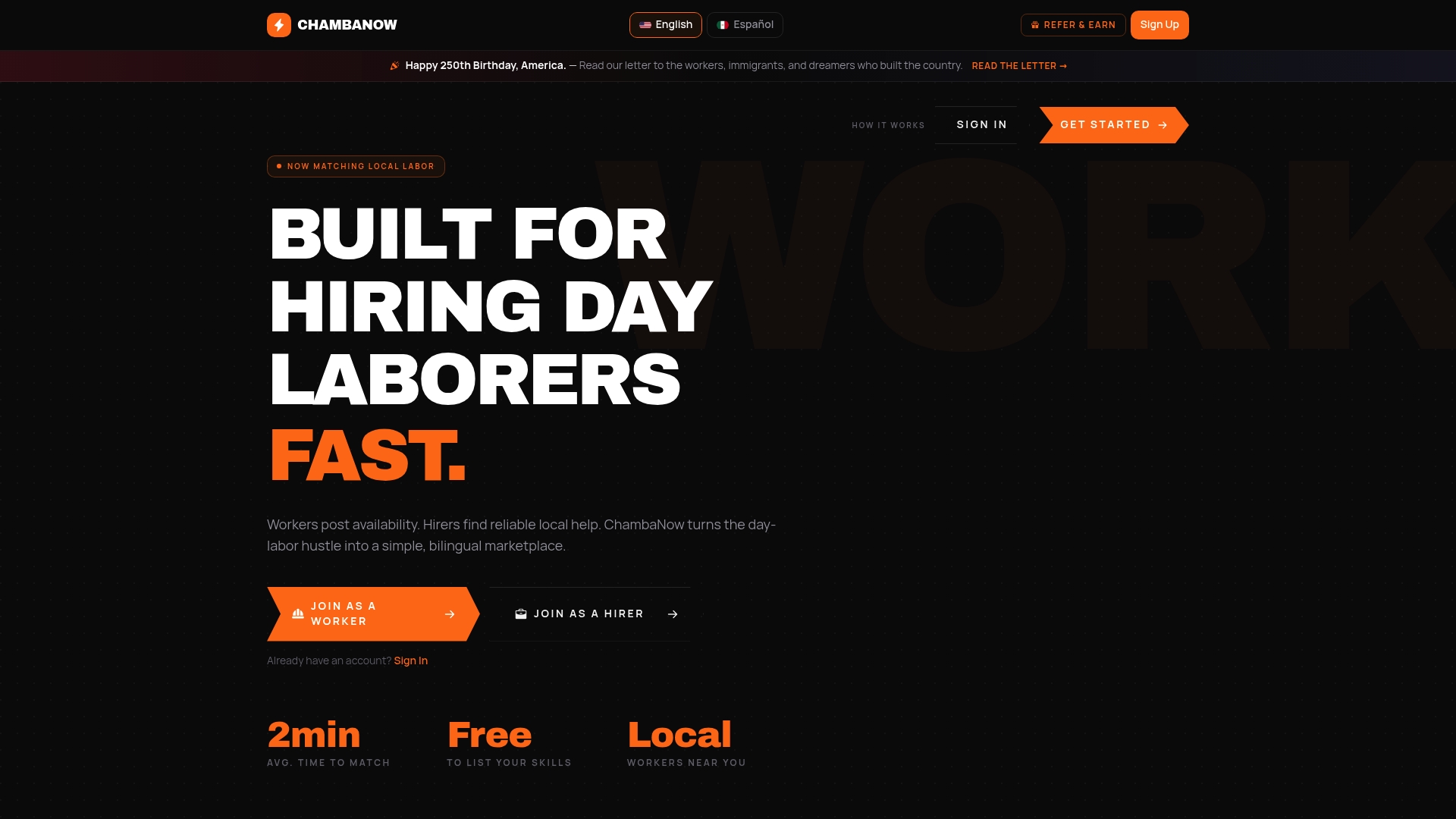
Chambanow is built for exactly those moments. Hirers can browse local worker profiles, filter by skill and availability, and communicate through automatic translation, all without a long-term contract standing between them and their next hire. Workers show when they are ready to work, which means the gap between posting and placing is measured in hours, not weeks. City-specific pages like same-day workers in Los Angeles and available workers in Long Beach let hirers see who is ready in their area right now. To see what a trial hire looks like and what it costs, visit the Chambanow pricing page and post your first shift today.
Recommended
Building knowledge that works.