
Winterizing a Rental Before Cold Weather: A Property Manager’s Labor Checklist
Winterizing a rental before a freeze is a short labor job that can prevent costly water damage.
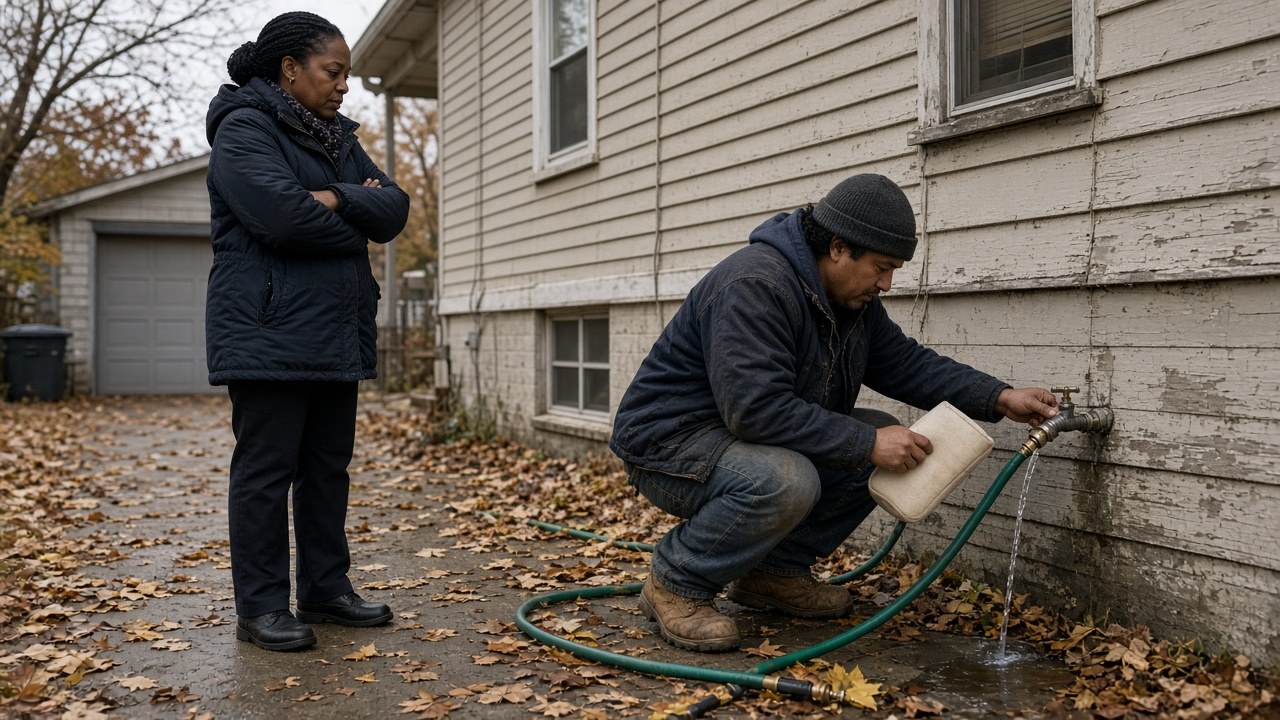
Winterizing a rental before a freeze is a short labor job that can prevent costly water damage.
A vacant or lightly occupied unit is easy to forget until a pipe bursts. Property managers can use temporary labor for the simple, repeatable tasks, and leave mechanical repairs to licensed trades. This is not a snow-removal plan and not a full make-ready. For snow, see how to hire snow shoveling and snow removal help (https://chambanow.com/chambamatters/how-to-hire-snow-shoveling-and-snow-removal-help). For turnovers, see a property manager's guide to hiring turnover and make-ready labor (https://chambanow.com/chambamatters/a-property-manager-s-guide-to-hiring-turnover-and-make-ready-labor).
Why winterizing is worth a dedicated visit
The American Red Cross explains that water expands as it freezes and can break pipes, no matter the material. The pipes that fail most often are outdoor hose bibs, sprinkler and pool lines, and supply lines in unheated spaces such as basements, crawl spaces, attics, garages, or cabinets on exterior walls.
A one-day labor visit before the first hard freeze can close those obvious gaps. It is cheaper than a flood in a vacant unit over a holiday weekend.
What hired labor can do
Give helpers a unit-by-unit checklist and show them one example unit first.
- Disconnect, drain, and store outdoor hoses
- Close the inside valves that feed outdoor hose bibs, then open the outside bibs so they can drain, and leave those outside valves open, as the Red Cross recommends
- Install simple foam faucet covers if you supply them
- Move patio furniture, grills, and loose items into a designated storage area
- Close windows, vents you have marked, and garage doors on units with water lines in the garage
- Add or adjust weatherstripping and door sweeps that you supply
- Wrap exposed, reachable pipes with pipe sleeves you supply, after you show the correct pipes
- Note and photograph problems: a broken window, no heat, a drip, or a missing smoke alarm
- Clear leaves and debris from exterior faucets, window wells, and short walkway stretches if that is in the scope
The Red Cross also says that if a home will be empty in cold weather, the heat should stay on and set no lower than 55°F. Have your team confirm the thermostat setting and that the unit actually produces heat. Do not use an oven, a grill, or a generator indoors to warm a unit. If you need a carbon monoxide refresher for heating equipment, see the CDC's carbon monoxide prevention page (https://www.cdc.gov/carbon-monoxide/prevention/index.html).
What should not go to general labor
- Furnace, boiler, or gas appliance repair or lighting
- Electrical work, including new space-heater circuits
- Sprinkler or pool-line antifreeze, unless a licensed contractor directs it. The Red Cross says not to put antifreeze in those lines unless directed, because it can harm people, pets, and landscaping
- Thawing a pipe with an open flame. The Red Cross says to call a licensed plumber if a frozen pipe cannot be located or safely thawed
- Roof or ladder work in ice or snow
- Any task that needs a contractor's license in your state
If a unit has no heat, treat it as an emergency for a licensed HVAC technician, not as a labor punch list.
A property manager's winterizing checklist
- List of units, with vacant units first
- Hose bibs, inside shutoff locations, and whether each outside valve should be left open
- Thermostat target, often at least 55°F when a unit is empty, following Red Cross guidance
- Cabinet doors on exterior walls left open only if you want that done in a vacant unit, with chemicals moved up and out of reach
- Pipe-wrap supplies and which pipes to cover
- Window, door, and garage-door checks
- Photo log of each unit after the visit
- Who to call if there is no heat or a leak
- Pay, time window, and how keys or access will work
Write the access rules into the job post. A guide for property managers hiring temporary labor (https://chambanow.com/chambamatters/a-guide-for-property-managers-hiring-temporary-labor) covers access, supervision, and pay in more detail.
What to pay and how long it takes
Outdoor shutoffs and hose work on a small property can be a few hours. A scattered set of vacant units takes longer because of access and notes. Closest Bureau of Labor Statistics May 2025 national medians are $17.71 an hour for janitors and cleaners, $18.82 for landscaping workers, and $23.84 for general maintenance and repair workers. Local rates vary. Use your market's maintenance-helper rate if the work is mostly shutoffs and covers, and a higher rate if you need experienced maintenance help.
Example labor estimates
These are hypothetical illustrations, not quotes.
- Four outdoor hose bibs and patio storage at one small property, 1 worker for 3 hours at about $19: about $57
- A walk of several vacant units, photos, thermostats, and hose bibs, 2 workers for 6 hours at about $22: about $264
- Pipe wrap and weatherstripping on units you have already marked, add a few hours and the cost of materials you supply
How to hire help step by step
- Step 1: Walk one unit yourself and write the exact shutoff and thermostat steps.
- Step 2: Stage hose bib covers, pipe sleeves, bags, and a camera or phone for the photo log.
- Step 3: Post the job with the unit count, access plan, hours, and rate.
- Step 4: Meet helpers at the first unit and demonstrate the shutoff and drain steps.
- Step 5: Collect the photo log and a list of units that still have no heat or a leak.
- Step 6: Call a licensed plumber or HVAC technician the same day for those issues.
Hiring winterizing help on ChambaNOW
ChambaNOW is a bilingual marketplace for short labor and maintenance-helper jobs. Posting a job is free. Spell out the unit list and access rules, then message workers about that posted job. Start on the hirer page (https://chambanow.com/for-hirers), or browse workers in colder-weather markets such as Chicago (https://chambanow.com/hire/chicago-il) and New York (https://chambanow.com/hire/new-york-ny).
Quick answers
When should a rental be winterized?
Before the first hard freeze, not after a storm warning the same night. Vacant units should be first.
Can day laborers winterize a furnace?
No. They can check that a thermostat is set and that the unit feels warm, then report problems. Lighting, repair, and gas work belong to a licensed technician.
Should the heat be turned off in a vacant unit to save money?
The Red Cross says that if a home will be empty in cold weather, leave the heat on and set no lower than 55°F. A frozen pipe usually costs more than the heating bill.
Is this the same as a January turnover?
No. Winterizing is protection against cold. Turnover is making a unit ready for a new resident. You may do both in the same season, but they are different scopes.
Sources
- American Red Cross, Preventing and Thawing Frozen Pipes (https://www.redcross.org/get-help/how-to-prepare-for-emergencies/types-of-emergencies/winter-storm/frozen-pipes.html)
- Centers for Disease Control and Prevention, Carbon Monoxide Prevention (https://www.cdc.gov/carbon-monoxide/prevention/index.html)
- U.S. Bureau of Labor Statistics, OEWS May 2025, Janitors and Cleaners (37-2011) (https://www.bls.gov/oes/current/oes372011.htm)
- U.S. Bureau of Labor Statistics, OEWS May 2025, Landscaping and Groundskeeping Workers (37-3011) (https://www.bls.gov/oes/current/oes373011.htm)
- U.S. Bureau of Labor Statistics, OEWS May 2025, Maintenance and Repair Workers, General (49-9071) (https://www.bls.gov/oes/current/oes499071.htm)
Written by Barry Graham, Founder, ChambaNOW
Building knowledge that works.