
The True Cost of Doing It Yourself
Doing it yourself can feel like the cheapest option.
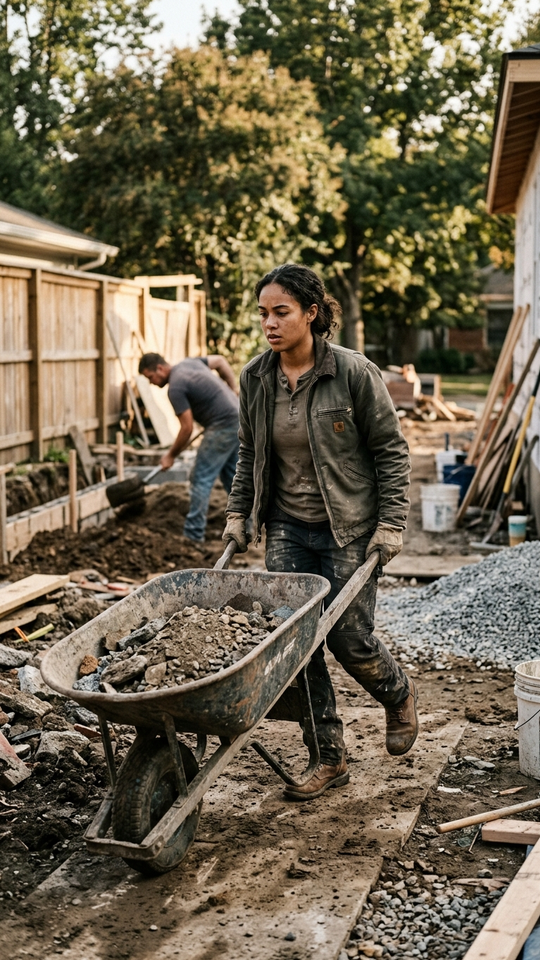
Doing it yourself can feel like the cheapest option.
No labor bill. No scheduling. No hiring. Just roll up your sleeves, give up a Saturday, and get it done.
At least, that is the idea.
But when you look at the full cost of a physical project—your time, lost weekend, tool rentals, extra trips to the hardware store, fatigue, mistakes, and the possibility of injury—DIY is not always as inexpensive as it first appears.
Sometimes hiring two workers for a few hours costs less than sacrificing an entire weekend.
Your Time Has Value
The biggest cost most people forget is their own time.
Imagine you need to clean out a garage, remove old fencing, move landscaping material, clear a backyard, haul construction debris, or relocate heavy furniture.
You estimate it will take eight hours.
Then reality arrives.
You spend an hour gathering tools.
Another hour driving to buy supplies.
The work takes longer than expected.
You stop for lunch.
You discover you need another trip to the hardware store.
By Saturday evening, you are exhausted—and only two-thirds finished.
Now Sunday is gone too.
What looked like an eight-hour project has consumed most of your weekend.
Even if you never write yourself a check, those hours still have value.
Compare That With Two Workers
Now consider the same project with two capable workers.
A task that might take one person 10 or 12 hours could potentially be completed in four to six hours with two people working together.
The exact time depends on the job, but the principle is simple:
More hands can dramatically reduce the time required for physical work.
If two workers are paid $25 per hour for five hours, the total labor cost is $250.
For that $250, you may get your entire Saturday back.
You also avoid doing hours of lifting, digging, hauling, bending, loading, sweeping, and carrying.
For many homeowners, that trade begins to look very different once the numbers are on paper.
The $250 Question
Ask yourself this:
Would you pay $250 to avoid spending your entire weekend hauling debris, moving furniture, or digging up a yard?
For some people, the answer will be no.
They enjoy doing the work themselves.
For others, the answer is an immediate yes.
Maybe that weekend is the only time you have with your family.
Maybe you already work a physically demanding job.
Maybe you could use that time to run your business.
Maybe you simply do not want to spend Sunday night sore and exhausted.
The value of hiring help is not only what gets done.
It is also what you get to do instead.
DIY Projects Almost Always Take Longer Than Expected
One of the biggest differences between professional or experienced labor and DIY work is speed.
Someone who performs physical work regularly knows how to organize it.
They know how to load efficiently.
They know which tools make the job faster.
They understand how to move heavy material without constantly stopping.
They often see an easier way to complete a task that a homeowner might not recognize.
Meanwhile, the DIY version often includes trial and error.
You start.
You realize you need a different tool.
You change your approach.
You discover a problem.
You make another trip to the store.
Every small interruption adds time.
A four-hour project becomes eight.
An eight-hour project becomes a full weekend.
Tool Costs Add Up Too
Labor is not the only expense.
Many physical jobs require equipment you may not already own.
You might need:
A wheelbarrow.
A demolition hammer.
A pressure washer.
A trailer.
A moving dolly.
A ladder.
A chainsaw.
A concrete saw.
A shop vacuum.
A post-hole digger.
A truck.
Even renting equipment can add significant cost.
Then there are gloves, blades, trash bags, straps, protective equipment, dump fees, fuel, and other supplies.
Suddenly, the “free” DIY project has a $150 equipment bill before the work even begins.
If the workers you hire already have some of the necessary tools or experience using them, the economics can change quickly.
Your Body Pays a Price Too
Physical labor is demanding.
If you do not regularly spend eight hours lifting, bending, digging, or carrying heavy objects, your body will notice.
A Saturday project can easily become a Sunday spent recovering.
Back pain, sore knees, strained muscles, blisters, and exhaustion are not unusual after unfamiliar physical work.
There is also the risk of injury.
Dropping furniture.
Falling from a ladder.
Cutting yourself with a tool.
Straining your back lifting something incorrectly.
Getting injured can turn a money-saving project into a very expensive one.
Hiring help does not eliminate every risk, but having people who regularly perform physical work can reduce the amount of strenuous work you need to do yourself.
There Is Also the Cost of Mistakes
DIY mistakes can be expensive.
A homeowner removing a fence may accidentally damage irrigation.
Someone moving furniture may scratch a floor or damage a wall.
A cleanup project may result in something valuable being thrown away.
A demolition project can become much more complicated if the wrong material is removed.
Experience matters.
Not every day laborer is an expert in every type of work, of course.
But hiring someone with experience in the specific task can save time and prevent avoidable mistakes.
Sometimes paying for labor is really paying to avoid learning the hard way.
Example: The Backyard Cleanup
Suppose your backyard needs a major cleanup.
There are branches to cut.
Old furniture needs to be removed.
Leaves and weeds need to be cleared.
Several heavy planters need to be moved.
Debris must be loaded.
If you work alone, the job might take 12 hours spread across Saturday and Sunday.
Now imagine hiring two workers for five hours at $25 per hour.
That is:
2 workers × 5 hours × $25 = $250.
You may still need to direct the project and handle disposal, but the heaviest part of the work could be finished before lunchtime.
For $250, you potentially save most of a weekend.
That is the real comparison—not $250 versus zero.
It is $250 versus 12 hours of your own time and physical effort.
Example: Moving Heavy Furniture
Moving is another perfect example.
A homeowner may think:
“We can move everything ourselves and save the money.”
Then the day begins.
Beds need to be disassembled.
Couches barely fit through doorways.
Boxes pile up.
Someone scratches a wall.
Everyone gets tired.
By hour six, the entire group is moving at half speed.
Two additional workers can dramatically change that experience.
Instead of four exhausted friends struggling with a couch, you have more hands, more lifting capacity, and faster loading.
The value of the workers is not simply their individual labor.
It is the way additional labor makes everyone else more efficient.
Example: Demolition and Cleanup
Demolition is one of those jobs that looks easier than it is.
Removing an old shed, fence, flooring, cabinets, or landscaping material often creates much more debris than expected.
Then everything has to be carried somewhere.
Loaded.
Swept.
Sorted.
Disposed of.
Breaking something apart may be the easy part.
Moving hundreds or thousands of pounds of material afterward is where the time disappears.
Two workers handling the hauling while you focus on the project itself can save hours.
Opportunity Cost Matters
There is another hidden cost: what you could have been doing instead.
If you own a business and your time is worth $50 an hour, spending 10 hours doing manual labor theoretically costs you $500 in productive time.
If you have limited time with your children, the value might not be measured in dollars at all.
If Saturday is your only day to relax, there is value in that too.
Money is only one type of cost.
Time, energy, health, and convenience all matter.
Hiring Help Does Not Mean Doing Nothing
Hiring workers does not mean you need to hand over the entire project.
In fact, one of the most efficient approaches is often working alongside them.
You handle the decisions.
You organize the work.
You deal with anything requiring your personal attention.
The workers handle the repetitive physical tasks.
For example, while two workers move debris, you can sort what stays and what goes.
While they load a trailer, you can prepare the next area.
While they dig or clear material, you can handle measurements or planning.
Instead of replacing your effort, additional labor multiplies it.
When DIY Still Makes Sense
Not every job needs hired help.
Small projects can be enjoyable.
Some people genuinely like working with their hands.
If you already own the tools, have the experience, and have plenty of time, doing it yourself can absolutely make sense.
The important thing is to make the comparison honestly.
Do not compare:
**Hiring workers: $250**
with:
**Doing it myself: $0**
Compare the complete picture.
How many hours will it actually take?
Will you need equipment?
Will you need a truck?
Will you pay disposal fees?
How physically demanding is the job?
What else could you be doing with that time?
How much would it cost if you hurt yourself or damaged something?
Once those questions are included, the answer may change.
Sometimes the Cheapest Option Is Buying Back Your Time
Hiring help is often described as an expense.
But sometimes it is more useful to think of it as purchasing time.
You are buying back your Saturday.
You are buying back your energy.
You are buying a faster result.
And you may be buying the ability to enjoy the finished project instead of spending the next two days recovering from it.
Platforms like ChambaNOW can make it easier to connect with local workers for short-term projects without turning a simple job into a complicated hiring process.
For many projects, you do not need a large crew.
You may just need two capable people for a few hours.
And when you compare that cost with losing an entire weekend, the most expensive option may actually be doing everything yourself.
Written by Barry Graham, Founder, ChambaNOW
Míralo en video
Construyendo conocimiento que funciona.