
The Parking Lot Hustle: How ChambaNOW Is Changing the Way Workers and Hirers Connect
Building Knowledge That Works.
For generations, the parking-lot hustle has been one of the most visible—and misunderstood—parts of the day labor economy. ChambaNOW was created to offer a better way.
Watch the video
The old parking lot hustle can get people hired, but it also wastes time, money, and opportunity. Here’s one big reason it fails—and how a better connection helps both workers and hirers. Find more at chambanow.com
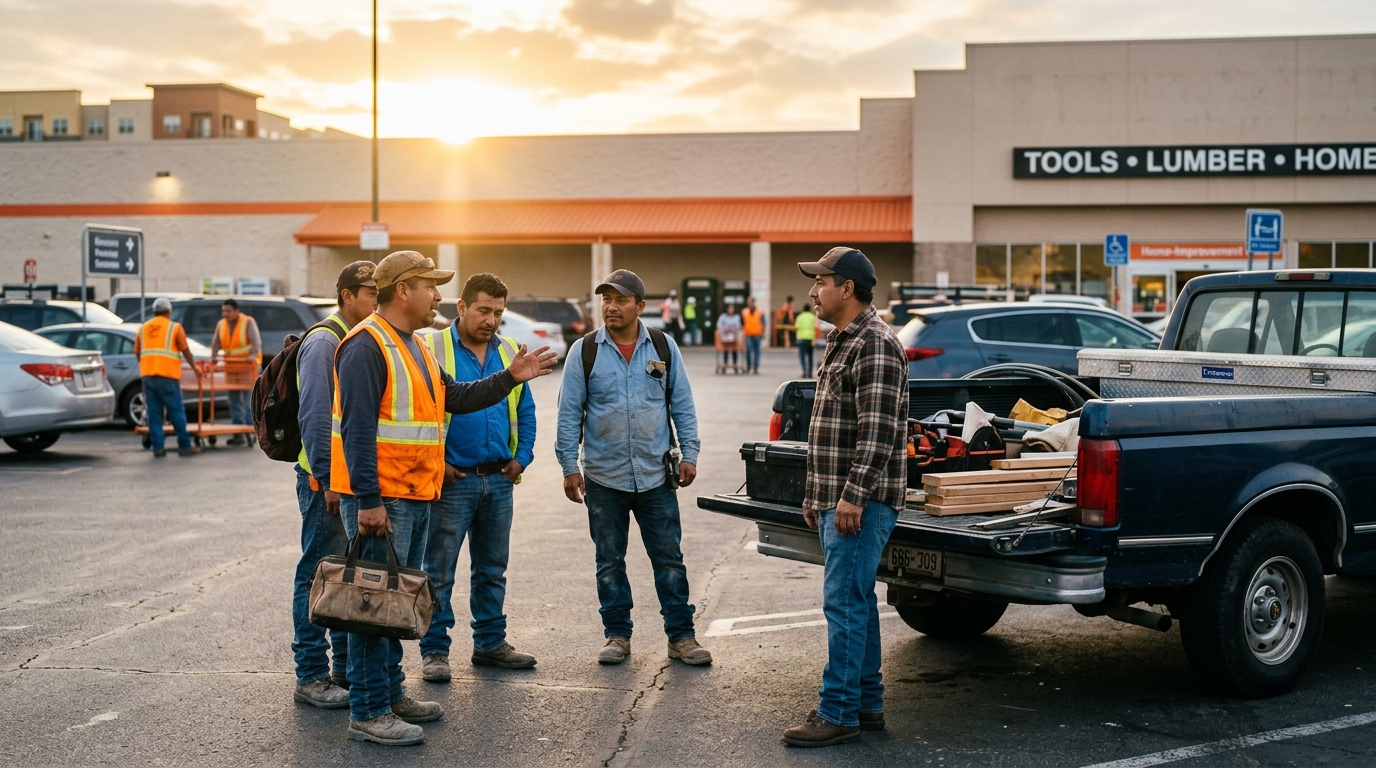
For generations, the traditional parking lot hustle has been one of the most visible and misunderstood parts of the day labor economy. Early in the morning, workers gather outside hardware stores, shopping centers, construction supply locations, and other familiar meeting points, hoping someone will arrive with a job. Contractors, homeowners, landscapers, movers, and small-business owners drive through looking for help, often under pressure to fill a position immediately.
Sometimes the system works. A worker gets picked up, a hirer gets the help they need, and both sides leave satisfied. But far too often, the process depends on luck, rushed conversations, unclear expectations, language barriers, and split-second decisions made in a parking lot.
ChambaNOW was created to offer a better way.
Founded by Barry Graham, ChambaNOW is an online day labor marketplace designed to help workers and hirers connect more quickly, clearly, and directly. The idea is not to erase the personal, hardworking spirit of the traditional hustle. It is to improve it by removing many of the obstacles that make the process stressful, uncertain, and inefficient for everyone involved.
A System Built Around Waiting
For workers, the parking lot hustle often begins before sunrise. Many arrive early because the best opportunities may come and go quickly. They may wait for hours in the cold, heat, wind, or rain without knowing whether work will appear. Some spend money on transportation just to reach a hiring location, with no guarantee they will earn anything that day.
The waiting itself is work.
A worker must remain alert, watch every vehicle, compete for attention, and make a strong first impression within seconds. If ten people approach the same truck, the hirer may choose based on who speaks first, who stands closest, or who can communicate most easily. Skills and experience may never be fully discussed.
For many workers, the hardest part is not a lack of willingness to work. It is a lack of reliable access to the people who need them.
A worker can be experienced, dependable, and ready to begin immediately, yet still go home without earning anything simply because the right hirer never drove into that particular parking lot. Another worker may miss an opportunity because they arrived a few minutes late or were standing in a different part of town.
The traditional system often rewards timing and visibility more than ability.
The Challenges Hirers Face
The traditional system also creates serious problems for hirers.
These needs are often urgent, but the hirer may not know where to find dependable help.
Driving to a parking lot and asking a group of strangers who is available can feel uncomfortable, especially for someone doing it for the first time. The hirer may not know how to compare skills or explain the job clearly. There may be no time to check availability, discuss transportation, or confirm whether the worker has the right experience.
The decision may be made in less than a minute.
That creates risk for both sides. The worker may misunderstand the location or duties. The hirer may assume the worker has experience using certain tools. The agreed rate may not be fully understood. The job may take longer than expected. At the end of the day, disagreement can arise because the original conversation was rushed and incomplete.
The parking lot system is built around urgency, but urgency is exactly when clearer communication is needed most.
A contractor dealing with a sudden absence cannot afford to spend half the morning driving around looking for someone. A homeowner may need help with moving, yard cleanup, demolition, hauling, or repairs but may have no idea where to begin. Small businesses may need temporary help without having the time or resources to use a traditional staffing agency.
Hirers need speed, but they also need enough information to make a responsible decision.
The Language Barrier
One of the biggest hurdles in day labor hiring is language.
Many highly skilled and hardworking laborers speak Spanish or another language more comfortably than English. Many hirers speak only English. In a traditional parking lot conversation, this can immediately put one person at a disadvantage.
This communication gap can affect safety, pay, timing, and trust.
Instructions about ladders, electrical areas, hazardous materials, protective equipment, heavy lifting, or restricted spaces must be clear. A worker should understand exactly what the job involves before accepting it. A hirer should be able to ask important questions and receive a meaningful answer.
ChambaNOW was built with real-time communication and automatic language translation to help reduce this barrier. Each person can communicate in the language they are most comfortable using, while the platform helps translate the conversation for the other party.
That does not replace respect, patience, or common sense. It creates a better starting point.
Instead of relying on gestures, partial explanations, or rushed translations from someone nearby, workers and hirers can communicate more directly. They can discuss the type of work, location, hours, pay, tools, transportation, and expectations before anyone agrees to the job.
When people understand one another, they are more likely to work safely, avoid disagreements, and build a professional relationship that may lead to future opportunities.
Why Barry Graham Created ChambaNOW

Barry Graham created ChambaNOW after recognizing that the traditional process was not serving workers or hirers as well as it could.
The problem was not that workers lacked ambition. Day laborers are often among the most motivated people in the local workforce. Many are ready to work immediately, take on physically demanding jobs, learn new skills, and support their families through determination and effort.
The problem was visibility.
Workers could be ready, experienced, and dependable, yet remain unseen by the person who needed them. Hirers could be searching desperately for help while qualified workers waited only a few miles away. The two sides were close, but disconnected.
Barry saw an opportunity to use technology to close that gap.
ChambaNOW was created around a simple idea: workers should be able to show that they are available, and hirers should be able to find people who are ready now. Instead of depending entirely on a chance meeting in a parking lot, both sides can connect through a dedicated marketplace built specifically for day labor and local hiring.
The goal is not to turn workers into numbers or remove the human side of hiring. The goal is to give people better tools before the first conversation begins.
ChambaNOW was also created with an understanding that many workers face barriers that have little to do with their ability to perform a job. Language differences, limited professional networks, transportation challenges, unfamiliar technology, and a lack of access to traditional employment systems can make it harder for a capable worker to be noticed.
At the same time, many small contractors, homeowners, and local businesses cannot afford expensive recruiting systems or lengthy hiring processes. They need a practical way to connect with available workers without adding more delays or administrative work.
ChambaNOW is intended to bring those two needs together.
From Chance Encounters to Direct Connections
The traditional parking lot hustle is unpredictable. A worker may be in one location while the hirer drives to another. A contractor may arrive after most workers have left. A homeowner may need help but not know where local workers gather. Geography and timing can prevent a connection before either side knows the other exists.
ChambaNOW allows workers to create a presence beyond one physical corner.
By showing that they are available, workers can make themselves visible to hirers searching for help. Hirers can review workers and post job opportunities rather than driving around and hoping to find the right person.
The conversation can begin with more information and less pressure.
A worker no longer has to depend entirely on being seen during a short window in the morning. A hirer does not have to approach a crowd and make an immediate decision without knowing anything about the people standing there.
Instead, both sides have an opportunity to connect more intentionally.
Clearer Expectations Before the Job Starts
Workers should know the type of work, expected hours, location, rate of pay, physical requirements, and any tools or transportation needs before accepting a job. Hirers should be able to explain what they need, ask about experience, and confirm availability.
When these details are handled early, both sides are more likely to have a successful experience.
This does not guarantee that every job will be perfect. Day labor can involve changing conditions, unexpected delays, and difficult work. But clearer expectations reduce the chance that someone arrives unprepared or feels misled.
Transparency creates trust, and trust is essential in any working relationship.
Workers should not have to travel across town only to discover that the job is completely different from what they expected. Hirers should not have to delay a project because the person who arrived did not understand the requirements.
A few clear messages before the job begins can prevent hours of frustration later.
More Dignity for Workers
The parking lot hustle can be physically and emotionally exhausting. Workers may feel they have to compete aggressively for attention. They may be judged in seconds based on appearance, language, age, or assumptions. Some may accept lower pay because they fear that asking questions will cost them the opportunity.
A better system gives workers more room to present themselves as individuals.
ChambaNOW is designed to help workers be discovered for what they can do, not only for where they happen to be standing that morning.
That can bring greater dignity to the hiring process. It gives workers another way to seek opportunity without spending the entire day waiting in public for someone to choose them.
A worker is more than a person standing beside a parking lot. They may be an experienced painter, concrete finisher, landscaper, mover, cleaner, carpenter, drywall installer, roofer, or general laborer. They may have spent years developing valuable skills without ever having a formal résumé or professional online profile.
ChambaNOW gives workers a way to become more visible on their own terms.
More Control for Hirers
Hirers benefit from greater control as well.
Instead of making a rushed decision from a vehicle window, they can post a job, describe the work, identify how many people are needed, and communicate before anyone travels to the site. They can look for workers who are available when the job begins, not only those who happen to be at one location.
This matters especially for small contractors and local businesses.
ChambaNOW gives these hirers a direct way to look for labor without relying entirely on staffing agencies, expensive job boards, or random referrals.
A small contractor may be managing customers, materials, transportation, scheduling, estimates, and employees at the same time. When someone calls out or a project suddenly requires extra help, the contractor needs a solution that is fast and simple.
Homeowners face a similar challenge. They may need a few hours of help but have no established hiring network. ChambaNOW can provide a more organized way to explain the project and connect with people who are actively looking for work.
A Marketplace Built for Real Life
Day labor does not always fit neatly into traditional employment systems.
ChambaNOW is built around this reality.
It recognizes that both workers and hirers often need speed. But speed should not require confusion. Technology can make the connection faster while still allowing important details to be discussed.
A worker can look for opportunity without standing in one place all day. A hirer can search for help without driving from parking lot to parking lot. Both sides can communicate directly, clarify expectations, and decide whether the job is a good match.
Some opportunities may last only a few hours. Others may continue for several days, several weeks, or even develop into permanent working relationships. ChambaNOW makes room for the unpredictable and flexible nature of local labor.
Changing the Future of Day Labor
The traditional parking lot hustle will not disappear overnight, and for some workers and hirers, it may continue to be part of how they connect. But it should not be the only option.
Technology has changed transportation, food delivery, banking, shopping, and communication. Local labor hiring deserves the same opportunity to improve.
ChambaNOW represents a shift from waiting to visibility, from rushed assumptions to clearer communication, and from chance encounters to direct connection.
For workers, it can mean more access to opportunity, less unpaid waiting, better communication, and a stronger ability to show when they are ready to work.
For hirers, it can mean faster access to available labor, clearer job discussions, and a practical way to respond when help is needed immediately.
For both sides, it can mean a hiring process that is more efficient, respectful, and transparent.
Barry Graham created ChambaNOW because he believed the hardworking people who need jobs and the hardworking people who need help should have a better way to find one another.
The parking lot hustle was built out of necessity. ChambaNOW was built to move beyond its limitations.
The future of day labor connection does not have to depend on who arrives first, who speaks the loudest, or who happens to be standing in the right place at the right time. It can be built around availability, communication, opportunity, and mutual respect.
That is the change ChambaNOW is working to create.
Building knowledge that works.