
The Jobsite Bathroom: A Delicate but Necessary Conversation
There are some topics everyone discusses before a job begins: pay, tools, materials, arrival time, and who is bringing the ladder.
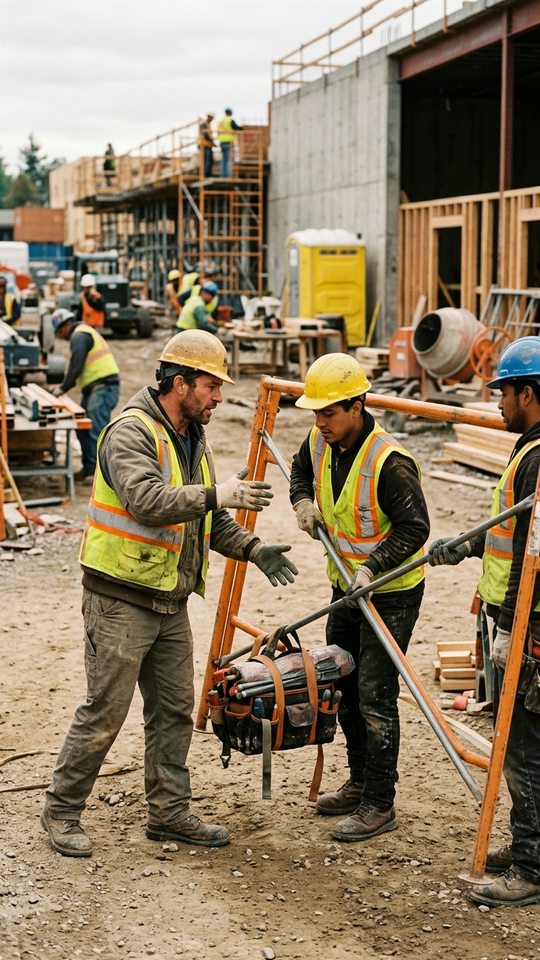
There are some topics everyone discusses before a job begins: pay, tools, materials, arrival time, and who is bringing the ladder.
Then there is the topic everyone avoids until someone has already finished a large coffee:
Where is the bathroom?
It may not be the most glamorous part of managing a jobsite, but access to a clean, usable restroom is a basic part of keeping workers comfortable, productive, and treated with dignity. Whether you are hiring one person to clean a yard or managing a full construction crew, the bathroom question should be answered before work begins—not after somebody starts eyeing the shrubbery.
“There’s a Gas Station Down the Street”
This sentence sounds reasonable until “down the street” turns out to mean a 12-minute drive each way.
Now the worker has to stop, secure the tools, find transportation, drive to the gas station, wait for the key attached to a hubcap, buy something to avoid looking suspicious, and then return to the jobsite.
A five-minute bathroom break has become a 35-minute expedition.
If an off-site restroom is the only option, make sure it is genuinely nearby, consistently open, and available to the workers. Explain the arrangement before the job begins so nobody is surprised.
Can Workers Use the Bathroom Inside the House?
For residential jobs, this should be discussed clearly.
Some homeowners are perfectly comfortable allowing workers to use a bathroom inside. Others may have pets, children, security concerns, flooring they want protected, or a bathroom that is already being remodeled and currently consists of three pipes and a bucket of screws.
Either answer is better than no answer.
If workers can use an indoor bathroom, show them which entrance to use and whether they should remove muddy boots or use floor coverings. Make sure there is a clear path that does not require navigating private bedrooms or stepping over the family’s laundry.
If the indoor bathroom is unavailable, arrange an alternative.
And no, telling workers to “just knock if you need anything” while locking every door does not count as an arrangement.
Portable Toilets: Nobody Loves Them, but Everyone Notices When They’re Missing
For longer projects, larger crews, or locations without plumbing, a portable toilet may be the most practical solution.
The goal is not luxury. Nobody expects marble countertops, scented candles, and a bathroom attendant. Workers do expect something usable.
A portable toilet should be:
- Placed somewhere reasonably accessible
- Serviced often enough to remain sanitary
- Supplied with toilet paper
- Positioned away from active vehicle traffic
- Stable and properly secured
- Located where workers can use it with reasonable privacy
Try not to place it at the farthest possible corner of a large property. A bathroom should not require a hiking permit.
It is also wise to provide handwashing facilities or sanitizer nearby—particularly when workers are handling food, waste, chemicals, soil, paint, or shared tools.
The Bathroom Is Not a Storage Closet
An available restroom is not particularly helpful if workers must climb over boxes, paint cans, broken tile, and a lawn mower to reach it.
Before the crew arrives, check that the restroom:
- Has running water, if plumbing is available
- Flushes properly
- Has toilet paper
- Has soap or hand sanitizer
- Has a functioning door and lock
- Is not being used to store hazardous materials
- Can be reached safely
This inspection takes two minutes and prevents a much more awkward conversation later.
The Privacy Problem
Workers should not have to ask permission in front of the entire crew every time they need to use the restroom.
At the start of the job, simply explain where the facilities are and how to access them. That removes uncertainty and allows everyone to handle the matter like adults.
Avoid policies that require workers to surrender identification, locate a supervisor, or explain why they need a break. Nobody should have to present a business case to visit the bathroom.
Privacy matters inside the facility too. Doors should close and lock. Windows should be covered where appropriate. Portable toilets should not be positioned so that everyone on the site can watch people enter and exit from three feet away.
A little thoughtful placement goes a long way.
Bathroom Breaks Are Not a Productivity Crisis
Most workers are not trying to destroy the project schedule one bathroom visit at a time.
Reasonable restroom breaks help people remain hydrated, comfortable, and focused. Restricting bathroom access can create health concerns—especially during hot weather, when workers should be drinking more water.
If one person is repeatedly disappearing for unusually long periods, address that specific behavior privately and respectfully. Do not respond by treating the entire crew like contestants in a bladder-control competition.
The problem is the individual behavior, not the existence of bathrooms.
Women on the Jobsite
Jobsite facilities are too often planned as if every worker is a man who has never required privacy, soap, or a locked door.
Women working on construction, landscaping, cleanup, moving, and maintenance jobs need safe, sanitary, private facilities. This becomes especially important during menstruation or pregnancy.
That means providing a properly enclosed restroom, a working lock, necessary supplies, and somewhere appropriate to dispose of sanitary products. It should not require a special request made in front of coworkers.
A well-managed jobsite plans for the people who may actually be working there—not an imaginary crew made entirely of identical men named Dave.
What About Very Short Jobs?
If someone is working for only an hour, you may assume restroom access will not matter.
Sometimes it will not. Sometimes that worker has already driven across town, completed another job, consumed two bottles of water, and arrived at your property needing a bathroom immediately.
For short residential jobs, simply tell the worker whether a restroom is available. If it is not, identify a nearby alternative before they arrive.
You do not necessarily need to rent a portable toilet for someon
Written by Barry Graham, Founder, ChambaNOW
Building knowledge that works.