How to Feed a Construction Crew Without Starting an Argument
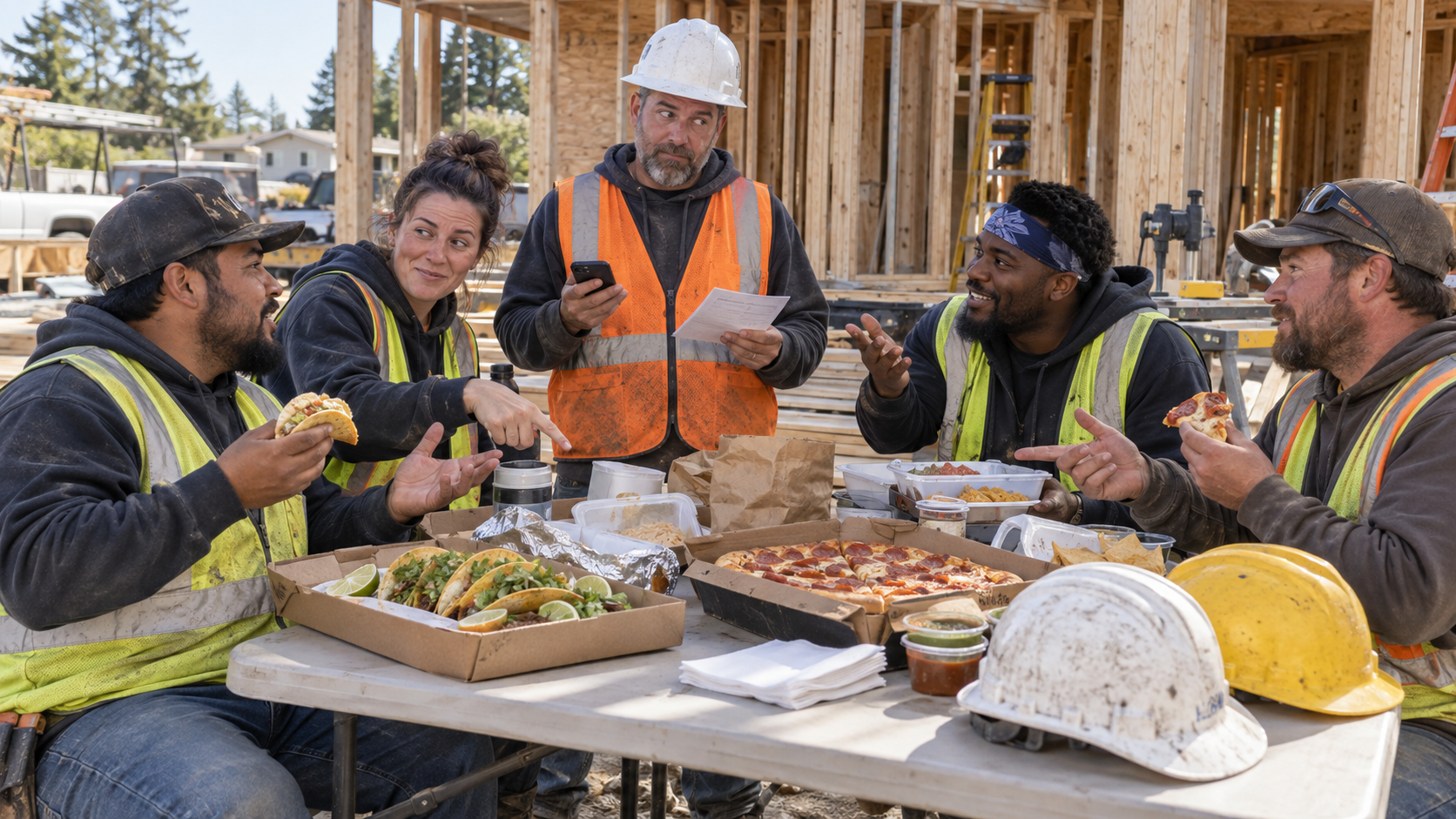
Feeding a construction crew sounds simple until someone asks the most dangerous question on the jobsite:
Feeding a construction crew sounds simple until someone asks the most dangerous question on the jobsite:
“So, what does everybody want for lunch?”
Suddenly, the same people who can frame a wall, pour concrete and operate heavy equipment are unable to agree on tacos.
One person wants burgers. Someone else had burgers yesterday. One worker wants something healthy. Another considers extra onions a vegetable. Somebody recommends a restaurant 25 minutes away, while the person paying quietly regrets bringing up lunch at all.
The good news is that feeding a crew doesn’t need to become a second construction project. With a little planning—and a few ground rules—you can keep everyone fed, happy and awake through the afternoon.
Rule No. 1: Never Ask an Open-Ended Lunch Question
“What does everyone want?” is not a lunch plan. It is an invitation to chaos.
Instead, give the crew two or three choices:
- Tacos or sandwiches?
- Chicken or burgers?
- Food truck or pizza?
- Eat here or bring your own?
Limited choices prevent a 30-minute debate that ends with everyone ordering separately anyway.
If the company is buying, the company gets to narrow the options. That is not dictatorship. That is project management.
Set the Budget Before People Start Adding Extras
There is always one person who hears “lunch is on me” and suddenly develops a taste for the most expensive combination plate on the menu.
Before ordering, make the limit clear:
“Lunch is covered up to $15 per person.”
That avoids awkwardness when someone orders two entrées, an appetizer, a premium drink and something “for later.”
If the crew wants extras, they can pay the difference. Simple, fair and no lunchtime accounting crisis.
Use the Rotation System
If the crew eats together regularly, rotate who chooses the restaurant.
Monday might be Carlos’s choice. Tuesday belongs to Mike. Wednesday goes to whoever showed up first all week.
The rotation prevents one person from controlling every lunch while everyone else silently develops a lifelong hatred of the same burrito truck.
There should be one rule: the restaurant must be reasonably close, affordable and capable of getting everyone fed during the actual lunch break.
A place with a 45-minute wait is not lunch. It is an afternoon field trip.
Keep a Crew Lunch List
Contractors save measurements, material lists and customer details. Why not save lunch orders?
Create a note on your phone with each worker’s usual order:
- Luis: carne asada burrito, no sour cream
- David: turkey sandwich, everything on it
- Marcus: cheeseburger, no onions
- Tony: whatever is cheapest, plus hot sauce
- Steve: says he isn’t hungry, then eats everybody’s fries
This makes group ordering much faster, especially when the crew returns to the same places.
Update the list whenever someone changes an order. Nobody wants to spend six months receiving mustard because they were too polite to correct the foreman.
Don’t Let the Food Truck Eat the Entire Lunch Break
Food trucks are convenient—until 40 workers from three nearby jobsites arrive at the same time.
If the truck is popular, order before the rush whenever possible. Some trucks accept text messages, phone orders or online orders. One person can collect the crew’s choices in the morning and submit everything before lunch.
Otherwise, half the break may be spent standing in line, leaving five minutes to eat and zero minutes to relax.
The food truck should feed the crew, not hold it hostage.
Consider the Afternoon Food Coma
A giant lunch might feel satisfying at noon, but by 1:30 p.m. the crew may be moving like the concrete already set around their boots.
Heavy, greasy meals can leave workers feeling sluggish—especially on hot days or during physically demanding work.
Better options include:
- Grilled chicken wraps
- Rice bowls
- Sandwiches with fruit
- Tacos with lighter sides
- Pasta salad with protein
- Yogurt, nuts and fresh fruit
- Cold chicken and vegetable salads
Nobody has to survive on lettuce and positive thoughts. The goal is simply to eat enough without needing a recovery nap in the work truck.
Plan for the Worker Who Brought Lunch
Not everyone wants takeout. Some workers bring food to save money, follow a specific diet or avoid spending half their paycheck at food trucks.
Make sure they have somewhere reasonable to eat. If possible, provide access to:
- A shaded area
- Clean drinking water
- A cooler
- A microwave
- A place to sit
- Handwashing supplies
- A trash container
A worker should not be balancing a container of leftovers on a stack of drywall while trying to eat with a utility knife because nobody remembered forks.
Keep an Emergency Food Supply
Jobs run late. Food trucks fail to appear. Restaurants close unexpectedly. Someone forgets their lunch.
A small emergency supply in the truck or job trailer can prevent hunger from turning the crew against one another.
Useful backup foods include:
- Protein bars
- Tuna or chicken packets
- Crackers
- Peanut butter
- Nuts
- Beef jerky
- Trail mix
- Apples or oranges
- Electrolyte packets
- Bottled water
- Disposable utensils
Choose foods that tolerate heat and do not expire quickly. A chocolate-covered snack bar left in a Sacramento work truck in July is no longer a snack bar. It is a beverage.
Label Everything in the Cooler
A shared cooler needs rules.
Write names on containers and drinks. Do not assume everyone will remember which identical sandwich belongs to whom. Most jobsite lunch disputes begin with the sentence:
“I thought that one was mine.”
Another useful rule: if you did not bring it and nobody clearly offered it to you, do not eat it.
This is especially important when dealing with homemade food. Accidentally taking someone’s chips is annoying. Accidentally eating the meal their spouse prepared can create a conflict that lasts until the final inspection.
Remember Dietary Needs Without Making It Weird
Ask workers privately whether they have allergies, medical restrictions, religious requirements or foods they cannot eat.
You do not need everyone’s full medical history. You simply need enough information to avoid ordering a crew lunch that excludes someone—or sends them to urgent care.
When possible, include at least one option that works for vegetarian workers and one that is not extremely spicy. “Just scrape it off” is not a serious dietary accommodation.
If the Company Buys Lunch, Keep It Simple
A company-provided lunch does not have to be elaborate. Workers usually appreciate food that arrives on time, tastes good and does not require a committee meeting.
Reliable crew-friendly choices include:
- Pizza with several topping options
- Taco trays
- Sandwich platters
- Grilled chicken with rice and beans
- Burgers with toppings on the side
- Barbecue with simple sides
Order a little more than the exact headcount requires. Construction work builds an appetite, and the person who says, “Just get me one taco,” may reconsider after seeing everyone else eat four.
Include plenty of water. Soda is fine, but it should not be the only drink available—particularly during hot-weather work.
Try the Friday Lunch Tradition
If buying lunch every day is not realistic, make it a weekly reward.
A Friday crew lunch can improve morale, give everyone something to look forward to and create an informal opportunity to talk about how the job is going.
It does not need to be expensive. Even a simple meal can communicate appreciation when it is offered consistently and sincerely.
Just avoid turning the lunch into an unpaid meeting. Workers should be able to eat without listening to a 40-minute speech about material waste.
The Final Rule: Decide Before Everyone Is Hungry
Hungry people are not famous for patient decision-making.
Choose the lunch plan during the morning break, place the order early and confirm when it will arrive. Waiting until noon almost guarantees long lines, delayed delivery and arguments over the last acceptable restaurant.
A good jobsite lunch system does more than feed people. It saves time, reduces unnecessary tension and helps the crew return to work with enough energy to finish the day safely.
You may never find one meal that makes every worker equally happy. That is probably impossible.
But if the food arrives on time, the orders are correct and nobody steals Steve’s sandwich, you can call the project a success.
Written by Barry Graham, Founder, ChambaNOW
Watch the video
Building knowledge that works.