
How to Be a Good Helper to a Tradesperson
A good helper makes a tradesperson faster, safer, and glad to bring you back.
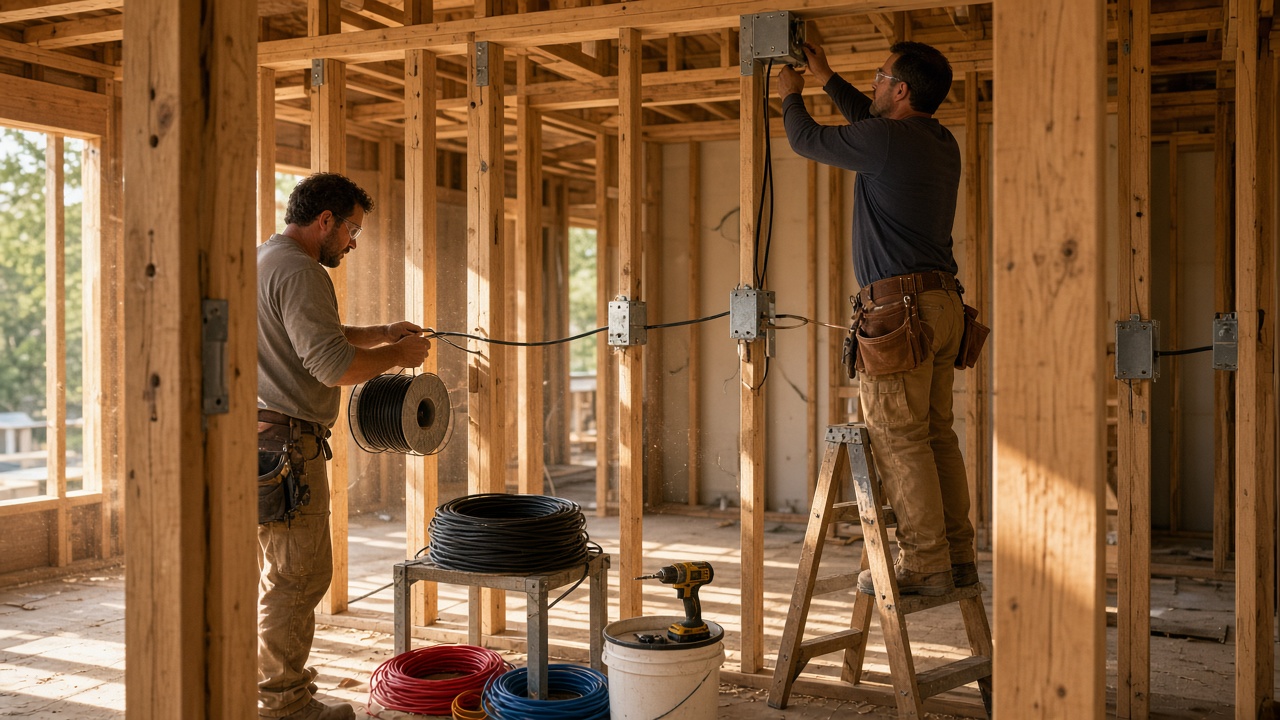
A good helper makes a tradesperson faster, safer, and glad to bring you back.
Helpers are part of almost every trade. The Bureau of Labor Statistics lists helper jobs for electricians, plumbers, carpenters, brickmasons and tile setters, painters, and roofers, with about 185,000 helper jobs in 2025 when you add up its helper categories (https://www.bls.gov/ooh/construction-and-extraction/construction-laborers-and-helpers.htm). Some helpers stay helpers for years. Others move into the trade quickly. The difference usually comes down to a few habits. Here is what good helpers do.
What a helper's job really is
BLS says helpers carry tools and materials, help set up equipment, help with tool maintenance, clean up sites, and dispose of waste. O*NET's description of carpenter helpers adds holding materials in place for fastening or cutting, cutting to specified dimensions, and selecting tools and materials and bringing them to the work area (https://www.onetonline.org/link/summary/47-3012.00).
The simplest way to say it: your job is to keep the tradesperson doing the skilled part of the work as much of the day as possible. Every minute they spend walking to the truck, hunting for a bit, or sweeping is a minute you could have saved them.
Learn the order of the work
Every trade has a sequence. Once you know it, you can have the next thing ready before it is needed.
- Electrical rough-in: boxes, then drilling, then pulling wire, then making up boxes
- Framing: layout, cut plates, cut studs, assemble walls, stand and brace
- Tile: prep, layout, mix, set, cut, grout, clean
- Plumbing: layout, cut, fit, glue or crimp, test
Ask the tradesperson to walk you through the steps once. Then watch for the pattern.
Stage materials and tools ahead of time
Staging means putting the right material and tools where they will be used, before they are needed.
- Bring the next box of fasteners when the current one is half empty
- Keep cut pieces stacked in order near where they go
- Set out the tool for the next step
- Keep a trash bag or bin close to the work
Learn the names of everything
A tradesperson should be able to say "hand me the 3-inch hole saw" and get it, not describe it. Learn tool, material, and fastener names fast. A notebook helps. If you do not know which one they mean, ask once and remember.
For electrical work, BLS lists color vision as an important quality for electricians' helpers, because they need to tell wire colors apart (https://www.bls.gov/ooh/construction-and-extraction/electricians.htm). Each trade has its own version of this. Learn it.
Hold things steady and exactly where asked
Holding is a skill. When you hold a board, a pipe, or a fixture, keep it still, at the mark, and out of the line of the cut or the fastener. Ask "Here?" before they drive the nail. Keep your fingers clear of saw blades and nail guns at all times.
Lift and carry smart
Helpers carry a lot. The NIOSH lifting equation, from a 2007 federal guide, starts from 51 pounds as the ideal load for a two-handed lift and lowers the safe limit when loads are far from the body, low, or twisted (https://www.cdc.gov/niosh/media/pdfs/Ergonomic-Guidelines-for-Manual-Material-Handling_2007-131.pdf). Carry long material with a partner, use carts, and do not twist under a load. An injured helper helps no one.
Keep the tools in good shape
Coil cords, clean blades, charge batteries, and put tools back in the same place every time. OSHA's construction rules require tools, whether owned by the employer or the worker, to be kept in safe condition (https://www.ecfr.gov/current/title-29/subtitle-B/chapter-XVII/part-1926/subpart-I/section-1926.300). If something is damaged, set it aside and say so.
Communicate clearly and briefly
Good helpers talk at the right moments and say exactly what is needed.
- Repeat back instructions: "Six at 92 and five-eighths, got it."
- Say when you are done: "Those are cut. What's next?"
- Speak up early about problems: "We're down to four sheets."
- Warn before moving something near someone: "Coming through with a sheet."
Protect the finished work
Nothing frustrates a tradesperson more than damage to work they just finished. Watch where you set ladders, buckets, and tools. Cover finished floors and counters. Keep wet boots off clean surfaces.
Keep the site clean all day
Do not wait until the end. Clean as you go. It is safer, it saves time, and it is one of the first things a tradesperson notices.
Stay in your lane on safety-critical jobs
Some jobs require specific qualifications, and helpers should not step into them. One clear example: on crane work, federal rules require that anyone giving signals to the operator meet signal person qualification requirements, including an oral or written test and a practical test (https://www.ecfr.gov/current/title-29/subtitle-B/chapter-XVII/part-1926/subpart-CC/section-1926.1428). Unless you are qualified, do not wave at a crane operator, even to help. The same goes for energized electrical work and any equipment you have not been trained on.
A good helper's day, as an example
This example shows what good helping looks like on a typical electrical rough-in day. It is an illustration, not a standard.
- 6:45 a.m.: arrive, put on gear, carry the wire spools and box of devices in from the truck
- 7:00 a.m.: listen to the plan for the day and ask where to start
- Morning: drill holes along the marked line, keep the bits sharp, and feed wire as the electrician pulls
- Late morning: notice the staples are running low and bring a new box before anyone asks
- After lunch: sweep the shavings, coil spare wire, and label nothing on your own unless told to
- End of day: walk the floor, pick up scraps, charge the batteries, and ask what is first tomorrow
What good helpers never do
- Use a tradesperson's tools without asking
- Wander off without saying where they are going
- Stand idle; if there is nothing to do, ask or clean
- Argue about the method in front of a client
- Pretend to understand an instruction they did not understand
- Rush to look busy and make mistakes
How to become the helper they always ask for
Keep showing up. Learn their preferences: how they like tools laid out, how they want cuts stacked, what they want done first in the morning. After a few jobs, ask what you could do better. Then do it.
If you want more helper work, list each trade you can help with in your free ChambaNOW worker profile at https://chambanow.com/for-workers. Hirers searching for carpentry help in Houston at https://chambanow.com/jobs/in/houston-tx/carpentry, electrical help in Austin at https://chambanow.com/jobs/in/austin-tx/electrical, or plumbing help in San Francisco at https://chambanow.com/jobs/in/san-francisco-ca/plumbing are often looking for exactly that.
From helper to tradesperson
BLS notes that helpers sometimes move into construction trades after gaining experience and completing required credentials or training. Being a great helper is how you earn the chance. ChambaMatters has separate guides on becoming a carpenter helper and on getting into an apprenticeship from day labor.
Key takeaways
- A helper's job is to keep the tradesperson on the skilled part of the work
- Learn the order of the work, stage materials early, and learn every tool name
- Hold work steady, lift smart, and keep tools in safe condition
- Communicate briefly: repeat instructions, report when done, flag problems early
- Never step into qualified-only tasks, such as signaling a crane, unless you are qualified
Sources
- U.S. Bureau of Labor Statistics, Construction Laborers and Helpers: https://www.bls.gov/ooh/construction-and-extraction/construction-laborers-and-helpers.htm
- O*NET OnLine, 47-3012.00 Helpers--Carpenters: https://www.onetonline.org/link/summary/47-3012.00
- U.S. Bureau of Labor Statistics, Electricians: https://www.bls.gov/ooh/construction-and-extraction/electricians.htm
- 29 CFR 1926.1428, Signal person qualifications: https://www.ecfr.gov/current/title-29/subtitle-B/chapter-XVII/part-1926/subpart-CC/section-1926.1428
- 29 CFR 1926.300, Tools general requirements: https://www.ecfr.gov/current/title-29/subtitle-B/chapter-XVII/part-1926/subpart-I/section-1926.300
- NIOSH, Ergonomic Guidelines for Manual Material Handling, 2007: https://www.cdc.gov/niosh/media/pdfs/Ergonomic-Guidelines-for-Manual-Material-Handling_2007-131.pdf
Written by Barry Graham, Founder, ChambaNOW
Building knowledge that works.