
Do You Need Your Own Tools to Work as a Day Laborer?
You can start day labor with only a few basic tools, but owning the right ones gets you hired faster.
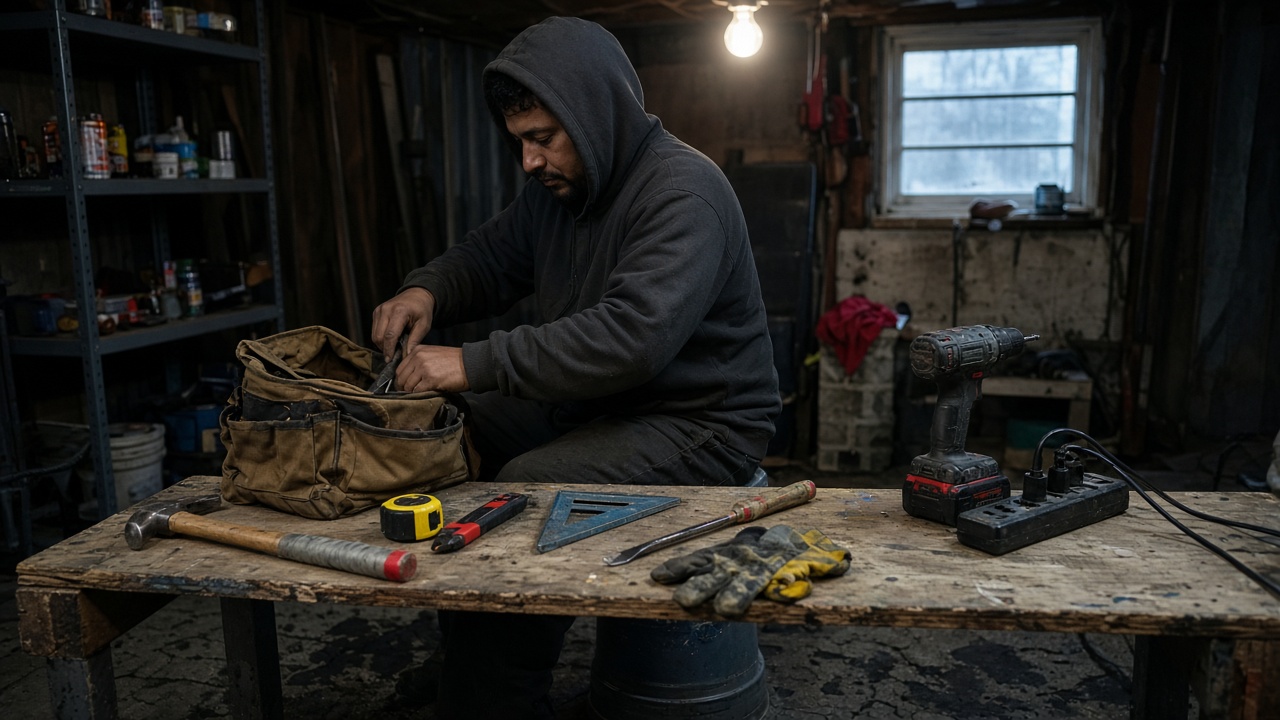
You can start day labor with only a few basic tools, but owning the right ones gets you hired faster.
Most general labor jobs do not require you to show up with a truck full of equipment. But hirers notice who arrives ready to work. A worker with gloves, a tape measure, a utility knife, and a pry bar can start right away; a worker with nothing has to wait. This guide covers what hirers usually provide, what the law says about tool costs and safety gear, and which tools are worth buying first.
The short answer
For most general labor, you do not need your own power tools. You should own a small kit of hand tools and personal gear. Skilled helper work often expects more. Independent contractors usually bring their own tools.
What the law says about tools and pay
If you are an employee, federal wage law protects your minimum wage from tool costs. Under 29 CFR 531.35, wages must be paid "free and clear," and if an employer requires you to provide tools for the job, it violates the law when the cost cuts into the minimum wage or overtime you are owed (https://www.ecfr.gov/current/title-29/subtitle-B/chapter-V/subchapter-A/part-531/subpart-C/subject-group-ECFRd42c2e4b995d7cd/section-531.35). In practice, this matters most for low-paid workers who are told to buy expensive tools.
Safety gear has its own rule. Under OSHA's construction rule on personal protective equipment, employers must provide required protective equipment, such as hard hats, safety glasses, and fall protection, at no cost to employees (https://www.osha.gov/laws-regs/regulations/standardnumber/1926/1926.95). Exceptions include everyday clothing, weather gear, and non-specialty safety-toe boots and prescription safety glasses that you can wear off the job.
Tools must also be safe, whoever owns them. OSHA's construction rule says hand and power tools, "whether furnished by the employer or the employee," must be kept in safe condition (https://www.ecfr.gov/current/title-29/subtitle-B/chapter-XVII/part-1926/subpart-I/section-1926.300). A cracked hammer handle or a saw with a missing guard can get you sent home.
Employee or independent contractor changes the picture
If you work for yourself, tools are part of running your business. The IRS notes in its 2026 household employer guide that a self-employed worker usually provides their own tools and offers services to the public (https://www.irs.gov/publications/p926). Many day laborers are paid as independent workers on homeowner jobs, so bringing your own basic tools is normal.
What hirers usually provide
This varies a lot, so always ask. As a general pattern based on common job types.
- Contractors on construction sites usually provide large power tools, ladders, scaffolds, and required safety gear
- Moving companies and homeowners on moving jobs usually provide the truck; dollies and straps vary
- Landscaping companies usually provide mowers, trimmers, and blowers; homeowners often expect you to bring hand tools
- Painting contractors usually provide paint and sprayers; BLS notes that some employers require painters to provide their own tools (https://www.bls.gov/ooh/construction-and-extraction/painters-construction-and-maintenance.htm)
- Carpentry crews often expect helpers to bring basic hand tools; BLS says many employers require carpenters to supply their own tools (https://www.bls.gov/ooh/construction-and-extraction/carpenters.htm)
A starter tool kit for day laborers
This list is a practical recommendation, not a legal or industry requirement. Start here and add tools as the work calls for them.
- Work gloves, at least two pairs
- Safety glasses
- Earplugs
- 25-foot tape measure
- Utility knife with spare blades
- Hammer
- Flat pry bar or cat's paw
- Adjustable wrench and a multi-bit screwdriver
- Pencil and a permanent marker
- Small tool bag or bucket organizer
- Knee pads if you do floors, tile, or concrete
Next tools to add, based on the work you want
Buy these only when your jobs need them.
- Demolition and cleanout: sledgehammer, larger pry bar, contractor bags, dust masks
- Yard work: shovel, rake, pruning shears, hand saw
- Moving: ratchet straps, furniture pads, a hand truck if you drive your own vehicle
- Carpentry help: speed square, chalk line, framing hammer, nail bag, level
- Painting prep: putty knives, sanding sponges, masking tape, a 5-in-1 tool
- Concrete: rubber boots, a mag float, edger, and waterproof gloves
Should you buy power tools?
Not right away. A cordless drill and impact driver are the most useful first power tools for many day laborers because they show up on assembly, demo, and repair jobs. Bigger tools, like circular saws and grinders, make sense once you have regular work that needs them and you have been trained to use them safely.
If a hirer asks you to bring power tools you do not own, it is fair to say so and ask if they can provide them. You can also ask for a higher rate if you bring a tool kit or a truck, since that is a real cost to you.
Taking care of your tools
Good tools last years if you look after them. ChambaMatters has full guides on this at https://chambanow.com/chambamatters/why-taking-care-of-your-tools-pays-off and on choosing the right tool at https://chambanow.com/chambamatters/choosing-the-right-tool-for-every-job. A few basics.
- Mark every tool with paint or tape in your color so it does not walk off
- Keep blades sharp and replace them before they dull
- Wipe off concrete, mud, and paint the same day
- Keep cords and batteries dry, and check cords for damage before every use
- Store tools locked and out of sight in your vehicle
Tell hirers what you bring
Tools can be the difference between you and the next worker. When you post your skills, mention your gear. On ChambaNOW, workers post skills and availability for free at https://chambanow.com/for-workers; adding "own hand tools" or "own truck and dolly" to your profile tells hirers you are ready to start.
Renting and borrowing instead of buying
You do not have to own every tool to take a job. Many home improvement stores and equipment rental shops rent larger tools by the day, such as floor sanders, jackhammers, tile saws, and trailers. If a homeowner asks you to bring a tool you do not have, renting it and building the cost into your rate can make more sense than buying.
Borrowing from other workers is common too, but treat a borrowed tool better than your own. Return it clean, charged, and on time. Break someone's tool and do not replace it, and word gets around fast.
A rule of thumb many workers use, offered as advice and not a rule: buy a tool after you have rented or borrowed it for paid work three or four times, because by then you know you will keep using it.
Questions to ask before the job
- What tools will be on site, and what should I bring?
- Will safety gear be provided?
- If I bring my own power tools or truck, is that reflected in the rate?
- Who is responsible if a tool breaks during the job?
Key takeaways
- Most general labor needs only a small kit of hand tools and personal gear
- If you are an employee, required tool costs cannot cut into your minimum wage or overtime under federal law
- Employers generally pay for required safety equipment under OSHA's PPE rule, with exceptions such as everyday clothing and ordinary safety-toe boots
- Tools must be safe whether you or the employer owns them
- Add tools based on the work you want, and tell hirers what you bring
Sources
- 29 CFR 531.35, "Free and clear" payment: https://www.ecfr.gov/current/title-29/subtitle-B/chapter-V/subchapter-A/part-531/subpart-C/subject-group-ECFRd42c2e4b995d7cd/section-531.35
- OSHA, 29 CFR 1926.95, Criteria for personal protective equipment: https://www.osha.gov/laws-regs/regulations/standardnumber/1926/1926.95
- 29 CFR 1926.300, Tools general requirements: https://www.ecfr.gov/current/title-29/subtitle-B/chapter-XVII/part-1926/subpart-I/section-1926.300
- U.S. Bureau of Labor Statistics, Carpenters: https://www.bls.gov/ooh/construction-and-extraction/carpenters.htm
- U.S. Bureau of Labor Statistics, Painters, Construction and Maintenance: https://www.bls.gov/ooh/construction-and-extraction/painters-construction-and-maintenance.htm
- IRS, Publication 926 (2026), Household Employer's Tax Guide: https://www.irs.gov/publications/p926
Written by Barry Graham, Founder, ChambaNOW
Building knowledge that works.