
Do You Need Workers’ Compensation When You Hire a Day Laborer?
It depends on who you are and where the job is. Workers' compensation is set by state law, not federal law. If you are a contractor or other business and the day laborer is your em
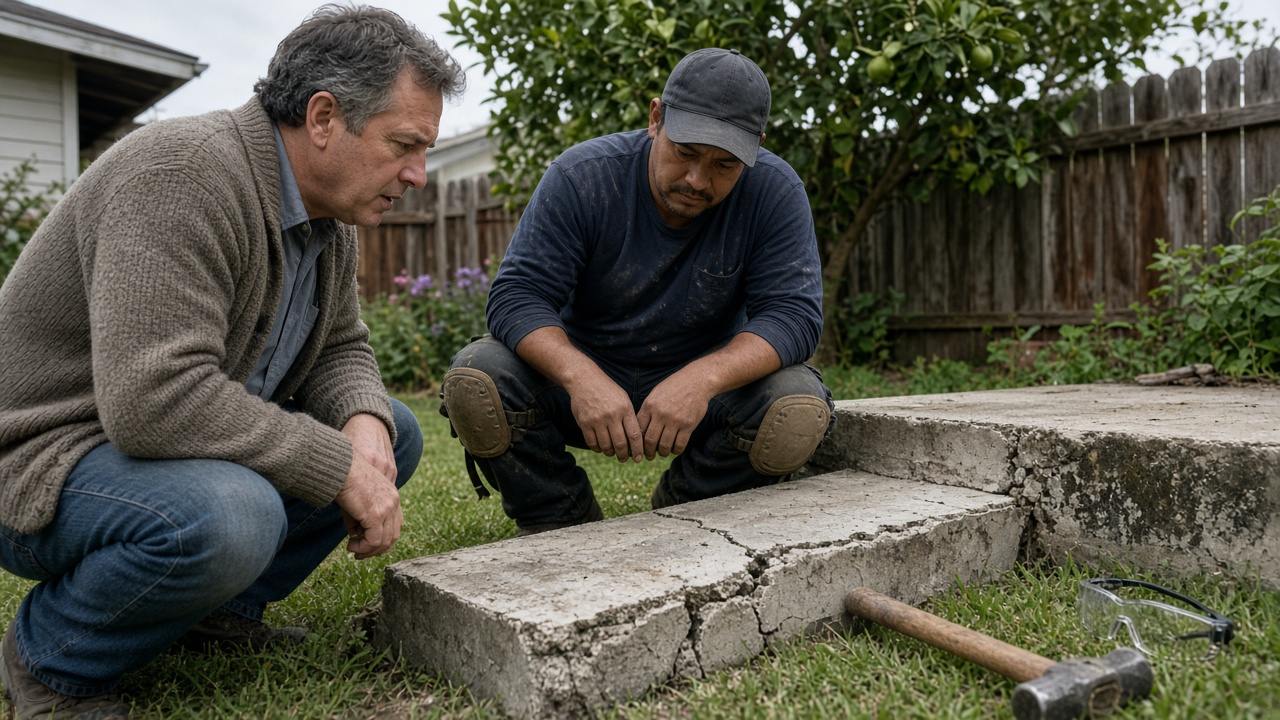
It depends on who you are and where the job is. Workers' compensation is set by state law, not federal law. If you are a contractor or other business and the day laborer is your employee, most states expect you to cover that worker the same way you cover any other employee, even for a single day. If you are a homeowner hiring help for your own home, many states apply special rules for household or "residential" employees, often with hours or earnings thresholds, and some states build that coverage into homeowners insurance. In every case, the first step is to check your state's workers' compensation agency and your own insurance policy.
This article is general information, not legal or insurance advice. Coverage rules, thresholds, and exemptions differ by state and change over time. Confirm your situation with your state agency, your insurance agent, or a licensed attorney.
What is workers' compensation?
Workers' compensation is a state-run insurance system that pays medical costs and part of lost wages for employees injured on the job, generally without anyone having to prove fault. In exchange, the injured employee usually cannot sue the employer in ordinary court for that injury.
Each state runs its own program. The US Department of Labor keeps a directory of every state's workers' compensation office at https://www.dol.gov/agencies/owcp/wc, which is the fastest way to find the official rules for your state.
Why does this matter so much for day labor?
Day labor is physical work, and injuries happen. A 2017 brief from the UCLA Labor Occupational Safety and Health Program and the National Day Laborer Organizing Network interviewed 64 day laborers injured at residential worksites in California. Three quarters lost work time, 70 percent sought medical attention, one third paid their own medical bills, and 82 percent were never paid for lost work time. Only 5 percent said workers' compensation paid their medical bills or lost wages, even though the researchers estimated many more were eligible (https://losh.ucla.edu/wp-content/uploads/sites/37/2016/01/On-The-Job-Injuries-And-Day-Laborers-April-2017.pdf).
The national "On the Corner" study from 2006 found that one in five day laborers had suffered a work-related injury, and more than two thirds of those injured had lost time from work.
Do contractors need workers' comp for a one-day helper?
Usually, yes, if the helper is your employee. State workers' compensation laws generally require businesses with employees to carry coverage, and a worker does not stop being an employee because the job lasts one day. The thresholds that exempt very small employers vary by state, and some states exempt certain categories, so check your state's rules.
The California brief above illustrates the gap between contractors and homeowners: it notes that day laborers hired by contractors for residential work in California are eligible for workers' compensation through the contractor-employer regardless of hours worked or amount earned.
If you hire a crew through another company, such as a staffing agency or a subcontractor, ask for a certificate of insurance showing current workers' compensation coverage before work starts. ChambaMatters explains how to read one at https://chambanow.com/chambamatters/subcontractor-certificate-of-insurance, and covers contractor coverage in depth at https://chambanow.com/chambamatters/workers-comp-for-contractors.
Do homeowners need workers' comp for a day laborer?
This is where state law varies the most. IRS Publication 926, the federal household employer guide, tells household employers to determine whether they need to carry workers' compensation insurance under state law (https://www.irs.gov/publications/p926). Here is how three large states handle it, based on official sources.
- California: every comprehensive personal liability policy, which typically means homeowners or renters insurance, issued or renewed since January 1, 1977 must include workers' compensation coverage for household employees, unless other valid workers' compensation applies (California Insurance Code section 11590). But a household employee is excluded from coverage if, in the 90 days before the injury, the employment was for less than 52 hours or for wages of not more than $100 (California Labor Code section 3352)
- New York: the Workers' Compensation Board says household employers must provide coverage for a domestic worker employed 40 or more hours per week by the same employer (https://www.wcb.ny.gov/content/main/coverage-required-wc.jsp)
- Florida: an owner acting as their own contractor must directly supervise all work not done by licensed contractors, and Florida's contractor law defines an employee as someone whose employer deducts FICA and withholding and provides workers' compensation (Florida Statutes section 489.103)
The 2017 UCLA brief reported that 26 states had legal provisions extending workers' compensation to residential employees, many with their own worktime or earnings thresholds. That count is from 2017, so verify your state's current rule.
What if a homeowner acts as their own contractor?
Owner-builder projects raise the stakes. California's Contractors State License Board warns owner-builders that they may be considered an employer if they hire unlicensed people to do the work, which can mean registering as an employer, withholding taxes, and providing workers' compensation insurance (https://www.cslb.ca.gov/Resources/GuidesAndPublications/OwnerBuildersPamphlet.pdf). Florida's owner-builder disclosure similarly says the owner may not hire an unlicensed person to act as their contractor or to supervise workers.
Does a day laborer who is an independent contractor need to be covered?
If the worker is genuinely an independent business, they are generally responsible for their own coverage under their state's rules. But labels do not decide this; the facts do. A worker you direct, using your tools, on your schedule may be your employee for workers' compensation purposes even if you call them a contractor. See the ChambaMatters guide on how one-day labor jobs are classified.
What does homeowners insurance cover?
That depends on your policy and your state. Outside states like California that require household workers' compensation within personal liability policies, a standard homeowners policy may or may not respond to an injury to someone you hired. Before a risky job, call your agent and ask these questions in writing:
- Does my policy include workers' compensation or employer's liability for household workers?
- Does medical payments coverage apply to someone I hire to work on my property?
- Are there exclusions for workers, contractors, or business activity?
- Should I buy a separate household employer workers' compensation policy?
- Does it matter whether I pay the worker by the hour or by the job?
Decision checklist before the job starts
- Find your state's workers' compensation office through the US Department of Labor directory
- Decide whether the worker is your employee or an independent business, and write down why
- If you are a business with employees, confirm your policy covers short-term and day workers
- If you are a homeowner, ask your insurer whether household workers are covered and under what thresholds
- If hiring a company or crew, get a current certificate of insurance before work begins
- Keep the job inside the scope you discussed; risky tasks like roofing, tree work, or demolition raise injury odds
- Keep records of dates, hours, and pay, because thresholds often depend on hours and wages
What should you do if a worker is injured?
Get medical help first and call 911 for anything serious. Then notify your insurer promptly, write down what happened, and keep records. ChambaMatters has a step-by-step article on what happens if a day laborer gets hurt on your property.
Where does ChambaNOW fit?
A marketplace does not replace insurance or state requirements. What it can do is make the job details clear up front. On ChambaNOW, posting a job is free, and the job post lets you describe the tasks, hours, and tools in English or Spanish so both sides know what work is planned. Hirers can learn more at https://chambanow.com/for-hirers, and workers can review know-your-rights guidance, including safety, at https://chambanow.com/worker-resources.
Key takeaways
- Workers' compensation is governed by state law; use the US Department of Labor's directory to find your state's rules
- Contractors usually must cover day laborers who are their employees, even for one day
- Homeowner rules vary: California builds coverage into homeowners policies but excludes workers under 52 hours or $100 in 90 days; New York requires coverage at 40 or more hours per week
- Owner-builders who hire unlicensed workers can become employers with full obligations
- Ask your insurer specific questions in writing before any risky job
Sources
- U.S. Department of Labor, State Workers' Compensation Officials directory
- IRS, Publication 926 (2026)
- California Insurance Code section 11590 and Labor Code section 3352
- New York State Workers' Compensation Board, Is Workers' Compensation Coverage Required?
- Florida Statutes section 489.103 (2025)
- California Contractors State License Board, Owner-Builders Beware
- UCLA-LOSH and NDLON, On-the-Job Injuries and Workers' Compensation Eligibility among Day Laborers in Residential Worksites in California, April 2017
- "On the Corner: Day Labor in the United States," 2006
Written by Barry Graham, Founder, ChambaNOW
Building knowledge that works.