
A Homeowner’s Guide to Hiring Labor for Repairs After a Storm
After a storm, hiring the right help in the right order protects your home, your insurance claim, and your crew.
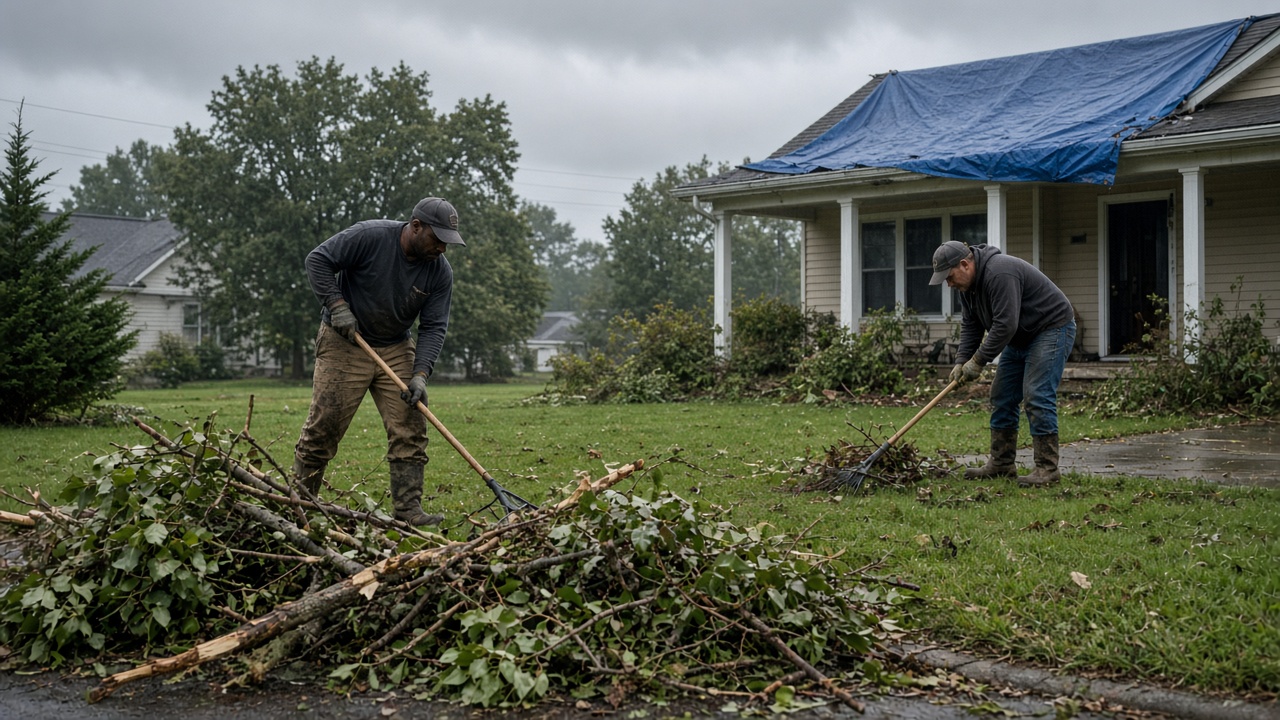
After a storm, hiring the right help in the right order protects your home, your insurance claim, and your crew.
When a storm passes, the to-do list is long and urgent: branches on the roof, soaked carpet, a fence down, debris everywhere. Demand for help spikes, and so do scams. Some storm work is perfect for day labor. Some is dangerous or regulated and belongs to licensed professionals. This guide helps you sort the work, protect your claim, and hire safely.
Step 1 Make the property safe first
Before anyone starts cleaning, deal with the hazards that can kill.
- Downed power lines. OSHA says to assume all power lines are energized, mark a danger zone, and stay at least 10 feet away. Call your utility company (https://www.osha.gov/sites/default/files/publications/OSHA_FS-3698.pdf)
- Gas smells. Leave the area and call your gas utility or 911
- Structural damage. If walls, ceilings, or the roof look unstable, keep everyone out until a qualified professional or your local building department checks it
- Floodwater. OSHA advises treating floodwater as contaminated unless proven otherwise (https://www.osha.gov/sites/default/files/publications/OSHA_FS-3698.pdf)
Do not let any hired worker go near these hazards. That is work for utilities, emergency services, and licensed pros.
Step 2 Document everything before cleanup
Your insurer will want to see the damage. Before anything is moved, take photos and video of every room and every side of the house, close-ups of damage, and serial numbers of damaged appliances. Keep receipts for emergency supplies and labor.
Call your insurer early and ask what you can do right away to prevent further damage, such as tarping or removing wet materials, and what they need you to keep for the adjuster.
Step 3 Sort the work into labor jobs and licensed jobs
Good jobs for hired general labor usually include the following.
- Picking up and hauling branches, shingles, and debris from the yard
- Moving furniture and belongings out of wet rooms
- Removing soaked carpet, pad, and damaged contents, once the area is safe
- Cleaning out garages, sheds, and basements
- Stacking cut wood after a professional has handled the tree
- Helping a licensed contractor with carrying and cleanup
These jobs belong to licensed and trained professionals.
- Any electrical repairs, including flooded outlets and panels
- Gas lines and appliances
- Roof repairs, which in many states require a licensed roofer or contractor
- Structural repairs to walls, framing, and foundations
- Tree work near power lines, which OSHA says only trained line-clearance tree trimmers should do within 10 feet of a line (https://www.osha.gov/sites/default/files/tree_trimming_safety.pdf)
- Large mold jobs. EPA says you can usually handle mold areas under about 10 square feet yourself, but larger areas or extensive water damage call for professional guidance (https://www.epa.gov/mold/brief-guide-mold-moisture-and-your-home)
Step 4 Watch for storm-repair scams
FEMA warns that out-of-town scam artists may be the first to arrive at your door after a disaster. Its advice for hiring contractors includes planning the project first, getting two or three written estimates, verifying the contractor's license and insurance, and not making a down payment or final payment until the job is complete, while being wary of anyone asking for large payments up front for materials (https://www.fema.gov/fact-sheet/beware-post-disaster-contractor-fraud). Some states add protections too. FEMA notes that under Texas law, after a disaster, door-to-door sellers may not require payment before starting work if the fee is not proportionate to the work performed.
For hired day labor, the same habits protect you.
- Agree on the tasks, rate, and hours in writing, even by text
- Pay at the end of each day for work completed, not in advance
- Keep a record of who worked, the hours, and what you paid
- Be wary of anyone who pressures you to decide on the spot
- Never hand a stranger your insurance check or sign it over
If you spot a scam, report it to the FTC at https://reportfraud.ftc.gov/, your state attorney general, or the FEMA Disaster Fraud Hotline at 866-223-0814, which FEMA lists in the same fact sheet.
Step 5 Know the lead rule's emergency provision
If your home was built before 1978, EPA's lead rule generally requires paid contractors who disturb painted surfaces to be lead-safe certified. EPA's emergency provision exempts certain requirements for work that is immediately necessary to protect property and public health, but not the cleaning and cleaning verification requirements (https://www.epa.gov/lead/post-disaster-renovations-and-lead-based-paint). Once the emergency is under control, regular rules apply to repairs.
Step 6 Equip and protect the cleanup crew
Storm cleanup is some of the most hazardous labor work. OSHA's disaster cleanup fact sheet lists hazards and protective steps that a homeowner can follow (https://www.osha.gov/sites/default/files/publications/OSHA_FS-3698.pdf).
- Provide gloves, eye protection, sturdy boots, and hard hats around overhead debris
- Use waterproof boots and rubber gloves around floodwater
- Use an N-95 respirator, at a minimum, when handling moldy materials
- Use mechanical help or extra people for heavy lifts
- Keep people away from chippers and never reach into one
- Make sure anyone using a chainsaw is trained, wears chaps and protective gear, and avoids cutting with the saw tip
OSHA also recommends that cleanup workers be up to date on tetanus shots, within the last 10 years. Keep clean water available for drinking and washing.
Take care of the people you hire
Storm work is exhausting, often in heat and humidity, and frequently in homes without power. Plan for it. Keep cool drinking water on hand, give regular breaks in shade, and start early. If your home has no running water, arrange a place for workers to wash up and use a restroom. Be honest in your job post about conditions, such as no power, standing water, or a strong smell, so workers can come prepared with the right boots and clothing.
Step 7 Hire and schedule in phases
Storm recovery happens in phases, and labor needs change with each one.
- Day 1 to 3: safety, documentation, emergency protection, and debris clearing
- After the adjuster visit: removal of damaged materials and contents
- During repairs: helpers for licensed contractors, and cleanup crews between trades
- At the end: final cleanup and haul-away
Post each phase as its own job with clear tasks. ChambaNOW is free to post at https://chambanow.com/for-hirers, and you can message the workers who apply about that job. Local pages like https://chambanow.com/hire/houston-tx/junk_removal, https://chambanow.com/hire/tampa-fl/cleaning, and https://chambanow.com/hire/orlando-fl/general_labor show local hiring in storm-prone areas.
Pay must meet your state and local minimum wage, and after a storm, expect to pay a fair rate to compete for workers (https://www.dol.gov/agencies/whd/minimum-wage/state).
Storm repair hiring checklist
- Power lines, gas, structure, and floodwater hazards handled by pros first
- Damage photographed and insurer called before cleanup
- Work sorted into general labor vs. licensed jobs
- Written agreements and pay after work, not before
- Pre-1978 home: lead rule emergency provision understood
- Gloves, boots, eye protection, and respirators for mold
- Trained chainsaw users only; no tree work near lines
- Each recovery phase posted as its own job
This guide is general information, not legal or insurance advice. Talk with your insurer, your local building department, and licensed professionals about your situation.
Sources
- OSHA, Keeping Workers Safe during Disaster Cleanup and Recovery (FS-3698): https://www.osha.gov/sites/default/files/publications/OSHA_FS-3698.pdf
- OSHA, Tree Trimming Safety: https://www.osha.gov/sites/default/files/tree_trimming_safety.pdf
- FEMA, Beware of Post-Disaster Contractor Fraud (Sept. 9, 2025): https://www.fema.gov/fact-sheet/beware-post-disaster-contractor-fraud
- FTC, ReportFraud: https://reportfraud.ftc.gov/
- EPA, Post-Disaster Renovations and Lead-Based Paint: https://www.epa.gov/lead/post-disaster-renovations-and-lead-based-paint
- EPA, A Brief Guide to Mold, Moisture and Your Home: https://www.epa.gov/mold/brief-guide-mold-moisture-and-your-home
- U.S. Department of Labor, State Minimum Wage Laws: https://www.dol.gov/agencies/whd/minimum-wage/state
Written by Barry Graham, Founder, ChambaNOW
Building knowledge that works.